


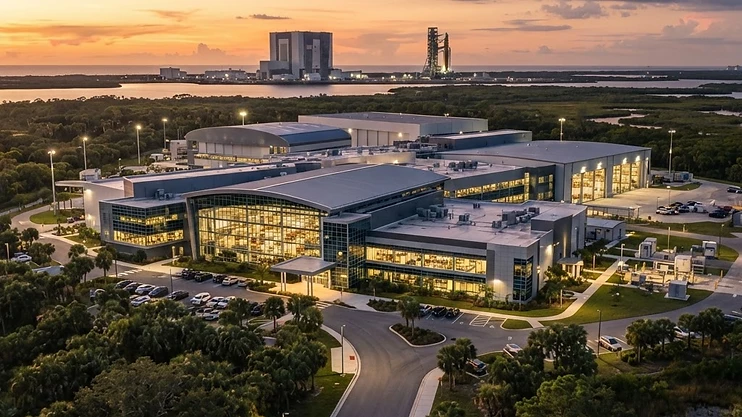
This is no longer just about the spectacle of a rocket clearing the tower; it is about the mundane, critical work of building the wastewater, power, and payload processing facilities.
The rapid acceleration of launch activity on Florida’s Space Coast has moved beyond the novelty of frequent liftoffs and into a phase of deep, structural industrialization. With the Space Coast Regional Airport in Titusville securing a $15 million grant from the Florida Department of Transportation’s Spaceport Improvement Program, the region is signaling a clear intent to move up the value chain. This is no longer just about the spectacle of a rocket clearing the tower; it is about the mundane, critical work of building the wastewater, power, and payload processing facilities required to sustain a permanent, high-frequency space economy.
This shift is being driven by a realization that the current infrastructure at Kennedy Space Center and Cape Canaveral Space Force Station is nearing its capacity for multi-modal operations. As companies like SpaceX, Blue Origin, and Relativity Space push for higher launch cadences, the bottleneck is shifting from the launch pad to the supporting industrial ecosystem. The development of the Space Coast Innovation Park, a collaboration between Hines and the Key Group, represents a strategic move to decentralize this growth, moving heavy manufacturing and processing into Titusville to alleviate pressure on the primary launch sites.
For the business leaders and engineers operating in Melbourne and Viera, this represents a fundamental change in the regional value proposition. The Space Coast is evolving into a 'quinta-modal' transportation network where space, air, sea, and land logistics are tightly integrated. This integration is not merely a convenience; it is a competitive necessity for companies looking to maintain the rapid iteration cycles that define the modern aerospace sector. The capital flowing into these projects is not just state-funded; it is a catalyst for billions in private investment that is fundamentally reshaping the economic geography of Brevard County.
What happened
The Titusville-Cocoa Airport Authority’s recent $15 million grant is the latest in a series of aggressive infrastructure investments managed by Space Florida. This funding, part of a broader strategy to support the state’s spaceport system, is specifically earmarked for infrastructure upgrades at the Space Coast Regional Airport. These upgrades are designed to attract aerospace companies that require proximity to the launch corridor but need dedicated space for manufacturing, payload integration, and testing. This follows the broader trend of Space Florida’s efforts to expand the spaceport territory, as evidenced by the passage of Senate Bill 968, which streamlined the authority’s ability to leverage tools across the state.
Simultaneously, the Space Florida board has been evaluating a massive $277 million investment package to support major players including Relativity Space, Blue Origin, and United Launch Alliance. A significant portion of this funding is directed toward critical utility infrastructure, such as a launch-exhaust treatment plant and wastewater system improvements at the NASA Causeway. These projects are essential for supporting the increased volume of launches and the associated industrial footprint. The emergence of 'Project Horseshoe,' an unidentified space infrastructure company seeking up to $200 million in bond financing, further underscores the scale of the capital requirements for these new facilities.
Relativity Space’s expansion at Launch Complex 16, formerly known as Project Forge, is a prime example of this trend. The company is investing over $565 million to build out payload processing and upper-stage testing capabilities, which will create nearly 600 high-paying jobs. This is not just a launch site; it is a comprehensive manufacturing and testing facility that requires a robust local supply chain and utility infrastructure. The coordination between state agencies, local municipalities, and private aerospace firms has created a feedback loop where infrastructure investment directly enables higher launch cadences, which in turn justifies further infrastructure spending.
Why it matters
The deeper implication of this infrastructure boom is the transition of the Space Coast from a transient launch site to a permanent industrial hub. When companies like Argotec open satellite production facilities in Melbourne, they are not just looking for a launch pad; they are looking for an ecosystem that includes specialized labor, clean-room facilities, and reliable logistics. This shift creates a 'gravity well' effect where the presence of launch infrastructure attracts manufacturing, which then attracts R&D and software engineering talent. This creates a self-sustaining cycle of economic growth that is less dependent on the success of any single launch provider.
However, this growth brings significant challenges, particularly regarding environmental impact and resource management. The concerns raised by groups like the Marine Resource Council regarding the Indian River Lagoon highlight the tension between rapid industrial expansion and environmental stewardship. As the region adds wastewater capacity and industrial zones, the pressure on local ecosystems will only increase. The ability of local leaders to balance this growth with sustainable infrastructure will determine whether the Space Coast remains a desirable place to live and work for the high-skilled workforce it is trying to attract.
In 2-3 years, we expect to see a more fragmented but highly specialized industrial landscape. The Space Coast will likely be divided into 'zones of specialization,' with Cape Canaveral remaining the primary launch hub, while Titusville and Melbourne become the centers for satellite manufacturing, payload processing, and autonomous space systems. This decentralization will reduce the risk of single-point failures in the supply chain and allow for more agile operations. Companies that can navigate this complex regulatory and infrastructure environment will be the ones that dominate the next decade of the space economy.
The breakdown
- Infrastructure as a competitive moat: The massive investment in wastewater, power, and payload processing facilities creates a high barrier to entry for competitors who lack the scale to build their own infrastructure. By controlling the 'pipes' of the space economy, the Space Coast is ensuring that it remains the primary destination for any company serious about high-frequency launch operations.
- The rise of the 'quinta-modal' network: The integration of space, air, sea, and land logistics is becoming the standard for modern aerospace operations. This connectivity allows companies to move hardware from manufacturing sites in Titusville to launch pads at the Cape with minimal friction, significantly reducing the time-to-orbit for new payloads.
- Decentralization of manufacturing: The development of the Space Coast Innovation Park in Titusville is a strategic move to move heavy industrial activity away from the sensitive launch environments of the Cape. This allows for more flexible manufacturing schedules and reduces the risk of operational delays caused by launch-related restrictions.
- The role of state-backed finance: Space Florida’s ability to leverage bond financing and state grants is a critical component of the region’s success. By de-risking infrastructure projects for private companies, the state is effectively subsidizing the growth of the entire aerospace sector, creating a multiplier effect on private investment.
- Environmental sustainability as a bottleneck: The increasing scrutiny from environmental groups regarding the Indian River Lagoon is not just a regulatory hurdle; it is a potential constraint on future growth. Companies that can demonstrate sustainable operations and invest in green infrastructure will have a significant advantage in securing permits and public support.
- The talent migration effect: The creation of hundreds of high-paying jobs at companies like Relativity Space is driving a shift in the local labor market. This is forcing local universities and technical colleges to align their curricula with the specific needs of the aerospace industry, creating a pipeline of talent that is deeply integrated into the local economy.
- The 'Project Horseshoe' mystery: The emergence of large, undisclosed infrastructure projects suggests that there is significant 'dark' investment happening in the region. This indicates that the market for space infrastructure is far larger than what is publicly disclosed, and that we are likely only seeing the tip of the iceberg in terms of planned capital expenditure.
Key takeaways
- The Space Coast is transitioning from a launch-only hub to a comprehensive industrial and manufacturing ecosystem.
- Infrastructure investment, particularly in utilities and payload processing, is the primary driver of current aerospace growth.
- Titusville is emerging as a critical node for manufacturing, relieving pressure on the primary launch sites at the Cape.
- Environmental sustainability is becoming a central issue that will dictate the pace and nature of future industrial development.
- The integration of multi-modal logistics is essential for maintaining the rapid iteration cycles required by modern space companies.
Our view
At Hermida Technologies, we believe the current focus on 'launch frequency' is a lagging indicator of the real story: the industrialization of the Space Coast. Most coverage focuses on the spectacle of the rocket, but the real value is being created in the boring, capital-intensive infrastructure that supports it. The $277 million in potential funding and the development of the Space Coast Innovation Park are the true signals of a maturing industry. We expect that within five years, the Space Coast will be the most efficient aerospace manufacturing hub in the world, not because of its launch pads, but because of its integrated logistics and utility infrastructure.
Those who argue that this growth is unsustainable due to environmental concerns are missing the point: the economic imperative is too strong. The state of Florida has made a strategic bet on aerospace, and it is doubling down. The winners will be the companies that partner with local authorities to build sustainable, high-capacity infrastructure, while the losers will be those who try to operate in isolation. The 'mystery' projects like Project Horseshoe are a sign of a market that is moving faster than the public discourse. We expect to see more of these large-scale, private-public partnerships that will effectively privatize the development of the region’s industrial backbone.
What to do about it
- Audit your supply chain proximity: If your business relies on aerospace logistics, evaluate the benefits of moving manufacturing or processing closer to the Titusville or Melbourne hubs to take advantage of the new infrastructure.
- Engage with local development authorities: Companies should actively participate in the planning processes for new industrial zones like the Space Coast Innovation Park to ensure their specific infrastructure needs are considered.
- Prioritize sustainable operations: Given the increasing environmental scrutiny, invest in green infrastructure and waste management systems now to avoid future regulatory bottlenecks.
- Invest in local talent pipelines: Partner with local universities and technical colleges to create specialized training programs that align with your company’s specific technical requirements.
The bottom line
The transformation of the Space Coast into a permanent industrial powerhouse is no longer a projection; it is a reality unfolding in real-time. By prioritizing infrastructure over mere launch capacity, the region is building a durable economic foundation that will sustain it for decades. For businesses in Melbourne and Viera, this represents a unique opportunity to participate in the most significant industrial expansion in Florida’s history. The future of the space economy is being built here, one wastewater pipe and payload facility at a time.