


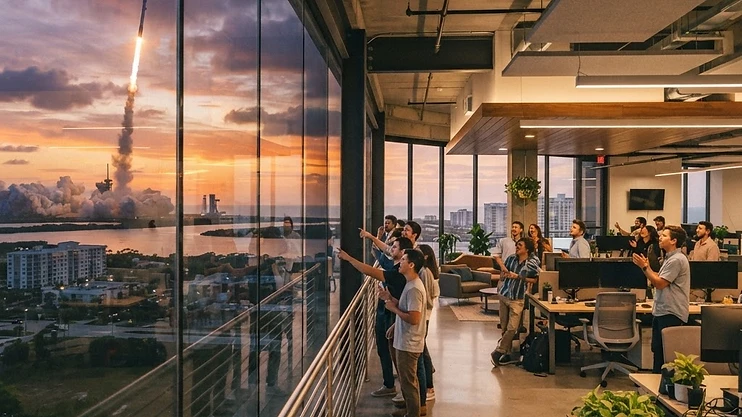
The Space Coast is undergoing a profound transformation, moving from a government-led launch site to a vibrant, startup-driven ecosystem.
The Space Coast is undergoing a profound transformation, moving from a government-led launch site to a vibrant, startup-driven ecosystem. While the giants like SpaceX and Blue Origin continue to dominate the headlines, a new generation of agile, specialized startups is quietly setting up shop in Melbourne and the surrounding areas. Companies like Spargo Space, which is developing autonomous in-space refueling depots, are proof that the next frontier of the space economy is being built right here in Florida.
This influx of startups is not accidental. It is the result of a deliberate strategy by local leaders to create an environment where deep-tech companies can thrive. By providing access to launch infrastructure, a skilled workforce, and a supportive regulatory environment, Melbourne has become the 'Silicon Valley of Space.' This shift is creating a more diverse and resilient economy, one that is less dependent on a single anchor tenant and more capable of driving innovation across the entire space value chain.
For investors and entrepreneurs, the message is clear: if you are building in the space sector, you need to be on the Space Coast. The proximity to launch sites, the density of aerospace expertise, and the availability of state-backed support make this the most logical place to scale. As we look toward the future, we expect to see even more startups choosing Melbourne as their home, further cementing the region's status as the global capital of the new space economy.
What happened
The emergence of startups like Spargo Space, founded in 2025 and based in Melbourne, marks a new chapter for the Space Coast. Unlike the traditional aerospace contractors that have long dominated the region, these new entrants are focused on specific, high-value niches within the space economy. Spargo Space, for instance, is tackling the critical challenge of in-space refueling, a technology that will be essential for the long-term sustainability of orbital operations. This is part of a broader trend of 'deep-tech' startups choosing the Space Coast not just for the launch capability, but for the ecosystem of suppliers and talent that has developed around it.
This startup activity is being actively encouraged by local and state initiatives. The $15 million grant for Space Coast Regional Airport and the ongoing development of the Space Coast Innovation Park in Titusville are designed to provide the physical space and infrastructure that these startups need to grow. Furthermore, the presence of established players like L3Harris provides a ready-made market for these startups to partner with or sell into. This creates a virtuous cycle where startups can scale faster by leveraging the existing industrial base, while the established players benefit from the innovation that these startups bring to the table.
Why it matters
The rise of a startup ecosystem is the final piece of the puzzle for the Space Coast's economic maturity. A region that relies solely on a few large contractors is vulnerable to shifts in government policy or corporate strategy. By fostering a diverse community of startups, Melbourne is building a more resilient economy that can weather the ups and downs of the aerospace industry. These startups are also the primary drivers of innovation, pushing the boundaries of what is possible in areas like autonomous operations, satellite manufacturing, and space-based logistics.
In 2-3 years, we expect to see the first wave of these startups reaching 'scale-up' status, creating hundreds of high-paying jobs and attracting even more investment to the region. This will create a 'flywheel effect' where the success of these companies attracts more talent, more capital, and more startups, further accelerating the growth of the local tech sector. The challenge for local leaders will be to ensure that the infrastructure—from housing to high-speed internet—can keep pace with this rapid growth, preventing the region from becoming unaffordable for the very people who are driving this innovation.
The breakdown
- Niche Innovation: Startups like Spargo Space are focusing on specific, high-value problems like in-space refueling, which are essential for the next generation of space operations.
- Ecosystem Density: The proximity of startups to established giants like L3Harris creates a unique environment for collaboration, partnership, and rapid innovation.
- Infrastructure Support: The development of the Space Coast Innovation Park and other facilities provides the necessary 'landing pad' for startups to scale their operations.
- State-Level Commitment: The $15 million grant for Space Coast Regional Airport is a clear signal that the state of Florida is committed to making the region a global hub for aerospace startups.
- Talent Attraction: The concentration of aerospace activity in Melbourne is a powerful magnet for top-tier engineering talent from across the country, creating a self-sustaining pool of expertise.
- Resilience Through Diversity: A startup-driven economy is more resilient than one dependent on a few large contractors, as it is less susceptible to the risks associated with any single company or government contract.
- The 'Silicon Valley of Space' Brand: The growing reputation of the Space Coast as a hub for space-tech is attracting venture capital and private equity, further fueling the growth of the local startup ecosystem.
Key takeaways
- Melbourne is becoming a global hub for space-tech startups, driven by a supportive ecosystem and access to launch infrastructure.
- Startups are focusing on high-value niches like in-space refueling, which are critical for the future of the space economy.
- The region's economic resilience is being strengthened by the diversity of its startup-driven aerospace sector.
- Local infrastructure development is the key to sustaining this growth and attracting more investment to the region.
Our view
Most coverage of the Space Coast focuses on the launch cadence, but the real story is the emergence of a vibrant, startup-driven ecosystem. We believe that Melbourne is on the verge of becoming the 'Silicon Valley of Space,' and the next decade will see a wave of innovation that will redefine the industry. The winners in this environment will be the startups that can successfully navigate the transition from 'prototype' to 'production' by leveraging the unique resources available on the Space Coast.
We think the most successful startups will be those that integrate deeply with the local community, rather than operating in isolation. The companies that succeed will be those that build strong partnerships with local universities, established aerospace firms, and government agencies. The Space Coast has the potential to be the most important aerospace hub in the world, but it requires a commitment to collaboration and infrastructure that goes beyond the current focus on launch. The future of the space economy is being built in Melbourne, and it is a future that is being driven by the agility and innovation of its startups.
What to do about it
- Engage with the Startup Ecosystem: Established firms should look for opportunities to partner with or acquire promising space-tech startups in the region.
- Invest in Local Infrastructure: For those in the construction and real estate sectors, focus on projects that support the needs of high-tech startups, such as flexible office and lab space.
- Support Workforce Development: Local businesses should partner with institutions like Florida Tech to create programs that prepare students for careers in the startup-driven aerospace sector.
- Monitor Emerging Trends: Keep a close eye on the technologies being developed by local startups, as these will be the key drivers of innovation in the space economy over the next decade.
The bottom line
The Space Coast is no longer just a launch site; it is a thriving hub for the next generation of space-tech startups. This shift toward a more diverse and innovative economy is the most significant development in the region's history. By fostering this startup ecosystem, Melbourne is positioning itself as the global capital of the new space economy. The challenges of growth are real, but the potential for long-term prosperity is immense. For those who are part of this journey, the next decade promises to be one of the most exciting in the history of the region.