


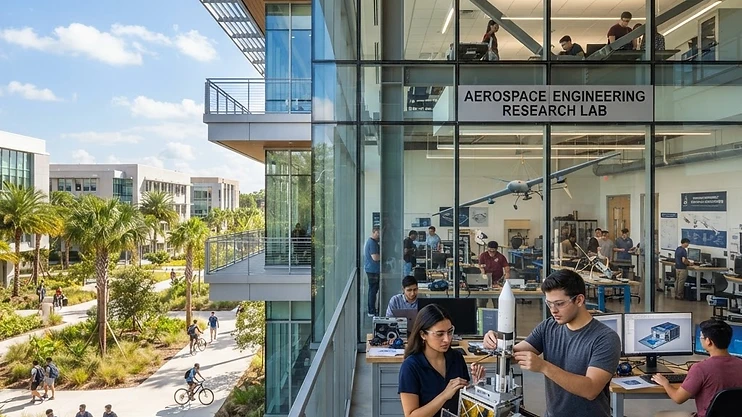
The most significant challenge facing the Space Coast today is not a lack of capital or infrastructure, but a lack of specialized talent.
The most significant challenge facing the Space Coast today is not a lack of capital or infrastructure, but a lack of specialized talent. As the region transitions into a global aerospace manufacturing and operations hub, the demand for engineers, software developers, and technicians with space-specific expertise is outstripping supply. The proposed U.S. Space Academy, a legislative initiative championed by Florida Senator Ashley Moody, is a direct response to this crisis. By creating a dedicated institution to train the next generation of space professionals, Florida is attempting to secure its position as the nation’s premier aerospace hub for the long term.
This initiative is part of a broader, aggressive strategy to consolidate the aerospace industry in Florida. From the 'CAPE Canaveral Act'—which seeks to relocate NASA headquarters to the Space Coast—to the massive infrastructure investments in Titusville, the state is betting everything on the idea that the future of space is here. The Space Academy is the final piece of this puzzle: the human capital required to operate the facilities being built today. For businesses in Melbourne, Viera, and the surrounding areas, this is a critical development that will change the labor market for years to come.
As we look toward 2027, the success of the Space Coast will depend on its ability to attract and retain the best minds in the industry. The Space Academy is not just an educational institution; it is an economic engine designed to create a self-sustaining ecosystem of talent. For local leaders and business owners, the message is clear: the region is doubling down on its commitment to the aerospace sector, and the opportunities for those who can adapt to this new reality are immense. This is the next chapter of the Space Coast story, and it is being written in the classrooms and labs of tomorrow.
What happened
Florida Senator Ashley Moody has introduced legislation aimed at bringing the newly created United States Space Academy to Florida's Space Coast. This proposal is part of a larger legislative package that includes the 'CAPE Canaveral Act,' which seeks to relocate NASA headquarters from Washington, D.C., to the Space Coast. The goal of the Space Academy is to leverage the region's existing aerospace growth and NASA presence to create a world-class training institution for the next generation of space professionals. This initiative comes on the heels of a record-breaking year for the Space Coast, which saw 109 launches in 2025, nearly triple the volume of prior years. The economic impact of this growth is massive, with Kennedy Space Center generating billions in annual economic activity. The Space Academy is designed to ensure that the region has the workforce to sustain this growth, addressing the critical talent gap that has become the primary bottleneck for many aerospace firms. The proposal has received strong support from local leaders and industry bodies, who see it as a vital step in securing the region's long-term competitiveness. By creating a dedicated pipeline of talent, the Space Academy would not only benefit the aerospace sector but would also have a ripple effect across the entire local economy, attracting more high-tech businesses and creating a more resilient, knowledge-based workforce.
Why it matters
The deeper significance of the Space Academy is that it represents a shift from 'attracting' talent to 'creating' it. Historically, the Space Coast relied on recruiting experienced professionals from other parts of the country. While this has been successful, it is not a sustainable model for the long-term growth of the industry. The Space Academy would create a local pipeline of talent, reducing the reliance on external recruitment and fostering a more stable, long-term workforce. This is a structural change that will make the region more attractive to companies looking to establish a permanent presence. Furthermore, the Academy would serve as a hub for research and development, fostering collaboration between academia, industry, and government. This is the 'innovation ecosystem' model that has made places like Silicon Valley so successful, and it is exactly what the Space Coast needs to reach the next level. In 2-3 years, we expect to see the first graduates of the Space Academy entering the workforce, providing a much-needed boost to local aerospace firms. The threat, however, is to regions that fail to invest in their own talent pipelines; as the competition for aerospace talent intensifies, those that rely on external recruitment will find themselves at a significant disadvantage. The Space Academy is a bold, forward-looking investment that will pay dividends for decades to come.
The breakdown
- Solving the talent bottleneck: The primary goal of the Space Academy is to address the critical shortage of specialized aerospace talent. By creating a dedicated training institution, the region is taking control of its own workforce destiny.
- The 'CAPE Canaveral Act' synergy: The proposal to relocate NASA headquarters to the Space Coast is a powerful complement to the Space Academy. Together, these initiatives would create an unparalleled concentration of aerospace expertise and influence in the region.
- Building an innovation ecosystem: The Space Academy is designed to be more than just a school; it is a hub for research, development, and collaboration. This will attract more high-tech firms to the region, creating a virtuous cycle of growth.
- Reducing reliance on external recruitment: By training talent locally, the region will become less dependent on the volatile national labor market. This will provide a more stable and predictable workforce for local aerospace firms.
- Attracting high-tech investment: The presence of a world-class space academy will be a major draw for other high-tech industries. It will signal to the world that the Space Coast is a serious, long-term player in the global technology economy.
- Fostering collaboration: The Academy will provide a platform for collaboration between academia, industry, and government, which is essential for driving innovation in the aerospace sector.
- Long-term economic resilience: By investing in human capital, the region is building a more resilient and adaptable economy that can weather the cyclical nature of the aerospace industry.
Key takeaways
- The proposed U.S. Space Academy is a strategic investment to solve the Space Coast's critical aerospace talent shortage.
- The initiative is part of a broader legislative push to consolidate the aerospace industry in Florida, including the potential relocation of NASA headquarters.
- The Academy will create a local pipeline of talent, reducing reliance on external recruitment and fostering long-term economic stability.
- The project aims to build an innovation ecosystem that attracts high-tech investment and fosters collaboration between academia and industry.
- The success of the Space Coast depends on its ability to create a self-sustaining talent pipeline, and the Academy is the key to that future.
Our view
Most coverage of the Space Academy focuses on the political maneuvering, but the real story is the desperate need for a local talent pipeline. We believe that the Space Academy is the most important initiative currently being proposed for the Space Coast. The region has the infrastructure, the capital, and the launch volume, but it lacks the human capital to sustain this growth over the long term. The critics who argue that this is just another government project are missing the point: this is an investment in the region's most valuable asset—its people. We expect that the Space Academy will become the cornerstone of the Space Coast's economic strategy, attracting the best and brightest from around the world and creating a new generation of aerospace leaders. The biggest mistake local businesses can make is to wait for the Academy to be built before they start investing in their own talent development. The companies that are already building partnerships with local universities and technical colleges will be the ones that benefit the most when the first class of graduates enters the workforce. The future of the Space Coast is being built in the classroom, and the time to start investing in that future is now.
What to do about it
- Partner with local education: Don't wait for the Space Academy to be built. Start building partnerships with local universities and technical colleges now to help shape their curricula and secure a pipeline of talent.
- Invest in internal training: If you are struggling to find the talent you need, invest in training your existing employees. This is often more cost-effective than recruiting from outside the region.
- Support the legislative effort: The Space Academy is a critical initiative for the region's long-term success. Support the efforts of local leaders and industry bodies to bring this institution to the Space Coast.
- Focus on retention: Once you have the talent you need, focus on keeping it. Create a culture of innovation and provide opportunities for professional development to ensure your best people stay with your organization.
The bottom line
The proposed U.S. Space Academy is a visionary project that addresses the most critical challenge facing the Space Coast: the talent gap. By creating a dedicated institution to train the next generation of space professionals, Florida is securing its position as the global leader in aerospace. For local businesses, this is a once-in-a-generation opportunity to build a sustainable, high-tech workforce. The future of the Space Coast is being built today, and those who invest in talent will define the next era of aerospace innovation.