


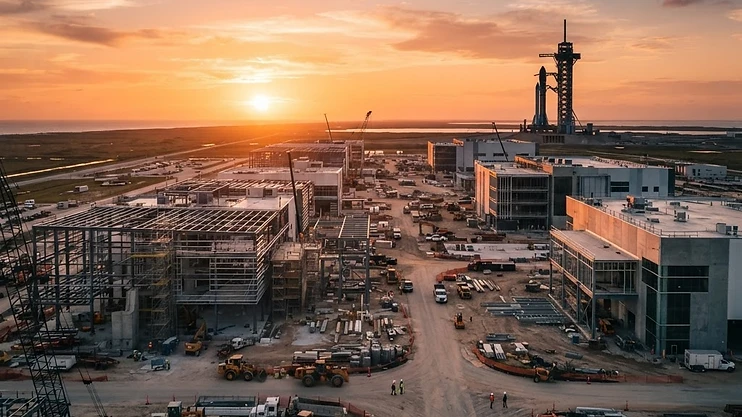
The landscape of the Space Coast is undergoing a profound physical transformation that extends far beyond the launch pads of Kennedy Space Center.
The landscape of the Space Coast is undergoing a profound physical transformation that extends far beyond the launch pads of Kennedy Space Center. As of October 2026, the quiet expansion of industrial infrastructure in Titusville has become the most significant indicator of the region's transition from a launch-centric economy to a full-scale aerospace manufacturing powerhouse. With the development of the Space Coast Innovation Park, the region is effectively creating a new 'factory floor' for the next generation of space-faring hardware, moving beyond mere assembly to deep-tier production.
This shift is not merely about real estate; it is about the strategic consolidation of the supply chain. By leveraging state grants and private investment, local authorities are creating a gravitational pull for aerospace firms that require proximity to both the Launch and Landing Facility (LLF) and a robust, specialized workforce. The arrival of mystery entities like 'Project Horseshoe' underscores the urgency with which major players are seeking to secure their footprint in the shadow of the Cape, ensuring they are positioned to capture the massive demand generated by the record-breaking launch cadence of the last two years.
For businesses in Melbourne, Viera, and the surrounding areas, this development represents a critical inflection point. The infrastructure being laid today—from wastewater capacity to specialized logistics corridors—will dictate the competitive landscape for the next decade. As we move into the final quarter of 2026, the question is no longer whether the Space Coast can handle the volume of the new space economy, but whether local firms can adapt their operations to integrate with this rapidly expanding industrial ecosystem.
What happened
The Titusville-Cocoa Airport Authority, in partnership with global real estate firm Hines and the local Key Group, is currently developing the Space Coast Innovation Park at the Space Coast Regional Airport. This project, which gained significant momentum following a $15 million grant from the Florida Department of Transportation’s Spaceport Improvement Program in early 2026, is designed to provide the necessary infrastructure for high-tech aerospace manufacturing. The site is currently the subject of intense speculation, particularly regarding 'Project Horseshoe,' a mystery aerospace company seeking up to $200 million in bond financing to establish a major facility within the park. This follows a broader trend of state-backed investment, with Space Florida managing over $64 million in recent infrastructure upgrades at the nearby LLF, including a mile-long utility corridor essential for heavy industrial operations. The scale of this development is massive, with permitting records revealing that Space Florida has already begun environmental mitigation and site preparation across 217 acres near the LLF to accommodate future commercial aerospace facilities. These efforts are part of a larger, coordinated strategy to ensure that Florida remains the primary hub for the global space economy, a goal reinforced by Governor Ron DeSantis’s recent budget recommendations which prioritize both operational funding for Space Florida and critical utility infrastructure like wastewater capacity. The convergence of these projects—the Innovation Park in Titusville and the expansion at the LLF—creates a contiguous industrial corridor that is fundamentally changing the economic profile of Brevard County.
Why it matters
The structural significance of this expansion lies in the transition from 'launch-only' to 'launch-and-build' operations. Historically, the Space Coast served as a transit point where hardware arrived, was integrated, and was launched. The current build-out suggests that the region is becoming a permanent home for the entire lifecycle of aerospace products. This shift creates a 'sticky' economic environment; once a company invests hundreds of millions in a manufacturing facility, they are unlikely to relocate, providing long-term stability for the local economy. Furthermore, the focus on infrastructure—specifically wastewater and utility corridors—addresses the 'growing pains' that have historically limited industrial density in the region. By proactively solving these bottlenecks, local leaders are lowering the barrier to entry for Tier 1 and Tier 2 suppliers who previously found the Space Coast too difficult to navigate. In 2-3 years, we expect to see a fully integrated supply chain where components are manufactured in Titusville, tested at the LLF, and launched from the Cape, all within a 30-mile radius. This creates a massive multiplier effect for local service providers, from specialized logistics and cybersecurity firms in Melbourne to precision engineering shops in Palm Bay. The threat, however, is to firms that fail to modernize; as the industry shifts toward autonomous and high-volume production, legacy manufacturing processes will be squeezed out by the high-efficiency, state-of-the-art facilities currently being built.
The breakdown
- Infrastructure-first development: The strategy of using state grants to build utility corridors and wastewater capacity before the tenants arrive is a masterclass in economic development. By de-risking the site for private companies, the Titusville-Cocoa Airport Authority is attracting high-capital-expenditure projects that would otherwise go to states with more established industrial zones.
- The 'Project Horseshoe' effect: The mystery surrounding this entity highlights the intense competition for space on the Space Coast. Whether it is a new launch vehicle manufacturer or a satellite constellation operator, the sheer scale of the $200 million financing request signals a long-term commitment to the region that will anchor the local economy for years.
- Supply chain localization: The shift toward manufacturing in Titusville reduces the reliance on long-distance logistics for critical components. This localization is essential for the high-cadence launch schedules now common at the Cape, where a single supply chain delay can cost millions in launch window slippage.
- Environmental mitigation as a hurdle: The extensive permitting required for the 217-acre site at the LLF, including protections for the Florida scrub-jay and gopher tortoise, demonstrates the complexity of modern industrial growth. Companies that can navigate these regulatory environments efficiently will have a significant competitive advantage over those that struggle with compliance.
- State-level strategic alignment: The partnership between Space Florida, the Florida Department of Transportation, and local municipalities is creating a unified front that is difficult for other states to compete with. This alignment ensures that funding is not just reactive but is part of a long-term master plan for the region.
- The role of private-public partnerships: The involvement of Hines, a global real estate firm, alongside local players like Key Group, brings a level of professional development expertise that is crucial for scaling. This ensures that the facilities being built are not just functional but are designed to meet the high standards of modern aerospace tenants.
- Economic diversification: While the focus is on aerospace, the infrastructure being built—particularly the utility and wastewater systems—will inevitably attract other high-tech industries to the region. This diversification is the key to ensuring that the Space Coast remains resilient even if the aerospace sector experiences a cyclical downturn.
Key takeaways
- Titusville is emerging as the new industrial heart of the Space Coast, shifting the region from a launch site to a manufacturing hub.
- Infrastructure investment, particularly in wastewater and utility corridors, is the primary driver of current aerospace expansion.
- The 'Project Horseshoe' development signals a massive, long-term capital commitment to the region by a major aerospace player.
- Local businesses must prepare for a more dense, high-tech industrial environment that demands higher standards of operational efficiency.
- Regulatory navigation, particularly regarding environmental compliance, remains a critical success factor for new facility development.
Our view
Most coverage of the Space Coast focuses on the spectacle of the launch, but the real story is the boring, essential work of industrial zoning and utility expansion. We believe that the Titusville-Cocoa Airport Authority and Space Florida are executing a brilliant strategy that will make the Space Coast the most efficient aerospace manufacturing hub in the world. The critics who worry about the environmental impact of this growth are missing the bigger picture: the consolidation of the industry here is actually more sustainable than the alternative of shipping components across the country. We expect that within three years, the 'Space Coast' will be synonymous with 'Space Manufacturing,' and the companies that are currently setting up shop in the Innovation Park will be the dominant players in the next generation of the space economy. The biggest mistake local businesses can make is to view this as a temporary boom; this is a structural shift in the global aerospace supply chain, and the winners will be those who integrate themselves into this new, high-tech ecosystem now, rather than waiting for the dust to settle.
What to do about it
- Audit your supply chain: If your business provides services to the aerospace sector, evaluate whether your current capacity can handle the increased volume of local manufacturing. You may need to invest in new equipment or software to meet the higher standards of the new tenants.
- Engage with local economic development councils: Organizations like the Economic Development Commission of Florida's Space Coast are the best source of information on upcoming projects. Proactive engagement can help you position your firm as a preferred vendor for the new facilities.
- Invest in specialized talent: The influx of high-tech manufacturing will create a massive demand for skilled labor. Start building relationships with local universities and technical colleges now to secure a pipeline of talent before the competition intensifies.
- Focus on compliance and sustainability: As the region grows, regulatory scrutiny will increase. Ensure your operations are not just compliant but are leaders in environmental and safety standards to avoid being caught in the crossfire of future regulatory crackdowns.
The bottom line
The industrial transformation of Titusville and the broader Space Coast is the most significant economic development in Florida’s recent history. By building the infrastructure to support high-volume aerospace manufacturing, the region is cementing its status as the global center of the space economy. For local businesses, this represents a once-in-a-generation opportunity to scale alongside the industry. The future of the Space Coast is being built today, and those who participate in this expansion will define the next era of aerospace innovation.