


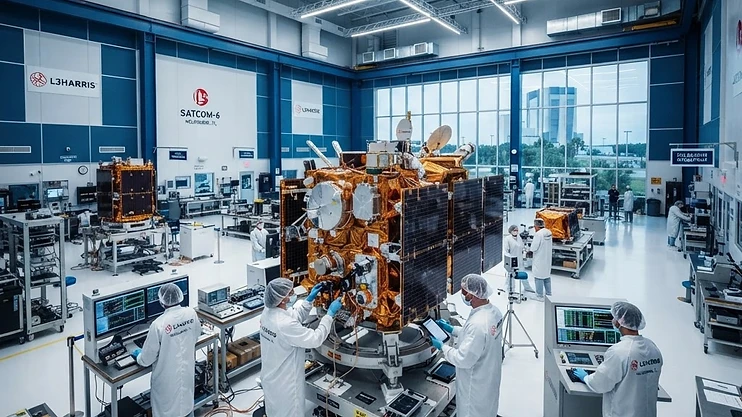
The landscape of Florida’s Space Coast is undergoing a profound transformation that extends far beyond the historic launch pads.
The landscape of Florida’s Space Coast is undergoing a profound transformation that extends far beyond the historic launch pads of the Kennedy Space Center. As of October 2026, the region surrounding Melbourne has transitioned from a launch-centric corridor into a sophisticated, high-density manufacturing hub. This shift is not merely about the frequency of rockets ascending into orbit; it is about the industrialization of space, where the infrastructure for satellite production, testing, and integration is being built at an unprecedented scale.
This evolution is driven by a convergence of international investment and domestic policy. When Argotec, an Italian aerospace leader, inaugurated its first U.S.-based satellite production facility in Melbourne in April 2026, it signaled a new era of global integration for the region. This was not a peripheral move; it was a strategic decision to place manufacturing at the heart of the Space Coast’s ecosystem, ensuring proximity to launch providers and a specialized workforce. The subsequent expansion plans announced by Relativity Space in July 2026, promising thousands of high-paying jobs by 2034, confirm that the region is no longer just a service provider for NASA—it is a primary engine of the global aerospace economy.
For business leaders and engineers in Brevard County, this matters because the supply chain is localizing. The presence of major players like L3Harris Technologies, combined with the influx of international firms, creates a multiplier effect. We are witnessing the formation of a "space cluster" where the proximity of R&D, manufacturing, and launch capabilities reduces the friction of innovation. This is the moment where the Space Coast moves from being a place where things are launched to a place where the future of orbital infrastructure is designed and built.
What happened
The recent surge in industrial activity on the Space Coast is anchored by two major developments in 2026. First, the April 2026 opening of Argotec’s satellite manufacturing hub in Melbourne marked a significant milestone in foreign direct investment. The facility, designed for rapid, scalable satellite delivery, is projected to triple its local workforce within two years, representing a $25 million capital investment. This facility is specifically optimized for the high-consequence requirements of both U.S. government and commercial missions, bridging the gap between European aerospace expertise and American launch capacity.
Second, the July 2026 announcement by Relativity Space to expand its footprint on the Space Coast represents a long-term commitment to the region. This expansion is expected to create thousands of jobs over the next eight years, a move that Space Florida President and CEO Rob Long described as a strategic imperative for companies looking to compete globally. This growth is supported by new international partnerships, such as the agreement between Space Florida and the United Kingdom’s Department for Science, Innovation and Technology, which aims to fund joint aerospace research and commercialization projects. These developments are not isolated; they are part of a broader trend of "gravitational pull" that Lynda Weatherman, President and CEO of the Economic Development Commission of Florida’s Space Coast, has identified as the defining characteristic of the region’s current economic trajectory.
Why it matters
The structural change occurring in Melbourne is the transition from "boutique" aerospace to "industrial" aerospace. Historically, satellite manufacturing was a slow, bespoke process. The new facilities in Melbourne are built for throughput. This shift has second-order consequences for the local economy: it demands a massive upgrade in technical vocational training, supply chain logistics, and specialized software engineering. The local workforce is no longer just supporting launch operations; they are managing complex, automated production lines that require a deep understanding of both hardware and software integration.
For the next 2-3 years, we expect to see a "clustering" effect where smaller, specialized component manufacturers move to the Space Coast to be near these anchor tenants. This will likely lead to a surge in demand for industrial real estate in Viera and Palm Bay, as well as increased pressure on local infrastructure. The companies that win in this environment will be those that can integrate their manufacturing processes with the rapid launch cadences now possible at the Cape. The threat here is to legacy aerospace firms that cannot adapt to the speed of these new, agile competitors. If you are a local business, the opportunity lies in becoming a critical node in this new, high-velocity supply chain.
The breakdown
- Localized Manufacturing Ecosystem: The arrival of Argotec and the expansion of Relativity Space create a dense network of aerospace manufacturing that reduces logistics costs and accelerates the product development lifecycle for satellite constellations.
- International Strategic Partnerships: The collaboration between Space Florida and the UK government demonstrates that the Space Coast is now a global destination for aerospace R&D, attracting foreign capital and expertise that would otherwise go to other aerospace hubs.
- Workforce Scaling Challenges: With thousands of high-paying jobs projected, the region faces a significant challenge in scaling its technical workforce, necessitating deeper integration between the Florida Institute of Technology and local industry partners.
- Industrial AI Integration: As manufacturing becomes more automated, the adoption of industrial AI for quality control and predictive maintenance is becoming a competitive necessity for local firms, as seen in the work of leaders like Aaron Sneed at Leak Testing Specialists.
- Supply Chain Resilience: By concentrating manufacturing near the launch site, companies are insulating themselves from global supply chain disruptions, creating a more resilient and responsive production model that is highly attractive to defense contractors.
- Capital Investment Surge: The $25 million investment by Argotec and the broader commitments from Relativity Space signal a long-term "buy-in" from the private sector, which provides a stable foundation for local economic growth through the 2030s.
- Infrastructure and Real Estate Pressure: The rapid influx of high-tech talent will necessitate significant investment in housing and commercial infrastructure in Viera and Melbourne, shifting the region’s urban planning priorities toward supporting a high-density, high-tech workforce.
Key takeaways
- Melbourne is transitioning from a launch site to a global manufacturing hub for satellites and aerospace components.
- International partnerships are driving significant capital investment, making the region a magnet for global aerospace firms.
- The shift to high-throughput manufacturing requires a new generation of technical talent and automated production systems.
- Local businesses should pivot to support the specialized supply chain needs of these large-scale aerospace anchor tenants.
Our view
Most coverage of the Space Coast focuses on the spectacle of the launch. This is a mistake. The real story is the quiet, industrial revolution happening inside the manufacturing facilities in Melbourne. We believe that the "gravitational pull" described by the EDC is not just a marketing term; it is a structural reality. In the next five years, we expect Melbourne to become the most important satellite manufacturing hub in the United States, surpassing older, more expensive aerospace corridors.
Many analysts underestimate the importance of the "audit-ready" culture being fostered by local leaders. In an industry where failure is not an option, the ability to prove compliance and quality at scale is the ultimate competitive advantage. Companies that are currently moving to the Space Coast are not just looking for launch pads; they are looking for an ecosystem that understands the intersection of high-consequence engineering and regulatory rigor. The winners will be the firms that successfully integrate AI-driven quality assurance into their production lines, effectively turning the "audit" into a feature of their manufacturing process rather than a hurdle. We expect to see a wave of consolidation among smaller, local aerospace startups as they are acquired by these larger, international players looking to secure their supply chains.
What to do about it
- Audit your supply chain readiness: If you are a local manufacturer, assess whether your quality control processes meet the stringent requirements of the new aerospace anchor tenants.
- Invest in technical training: Partner with local institutions like the Florida Institute of Technology to create specialized training programs that align with the specific needs of satellite manufacturing.
- Adopt industrial AI: Move beyond basic automation and implement AI-driven predictive maintenance and quality assurance tools to remain competitive in a high-throughput environment.
- Engage with the EDC: Actively participate in the Economic Development Commission’s initiatives to understand the shifting needs of the region’s aerospace ecosystem and identify potential partnership opportunities.
The bottom line
The transformation of Melbourne into a global aerospace manufacturing powerhouse is no longer a projection; it is a current, accelerating reality. By aligning local industrial capabilities with the demands of the new space economy, the region is securing its position as a critical node in the global supply chain. For businesses and leaders in the Space Coast, the path forward is clear: embrace the rigor of high-consequence manufacturing and scale alongside the industry giants. The future of space is being built in our backyard, and the opportunity for those ready to meet the challenge is immense.