


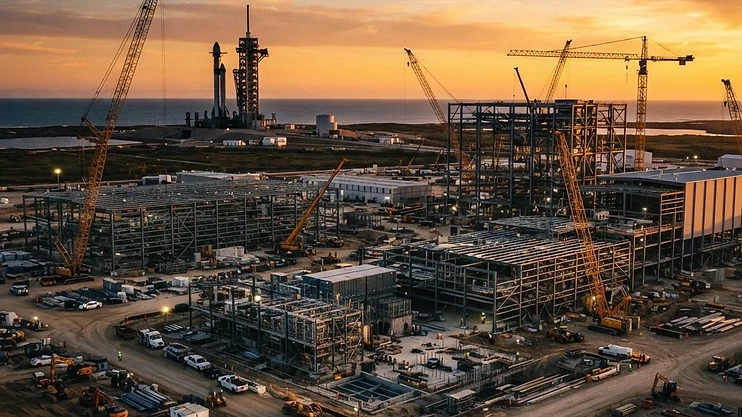
The Space Coast Innovation Park is the physical manifestation of this integration, providing the necessary facilities to house both established defense contractors and agile startups.
The landscape surrounding the Space Coast Regional Airport in Titusville is undergoing a transformation that signals a shift from mere launch operations to a comprehensive industrial ecosystem. With the recent announcement of the $230 million Space Coast Innovation Park, the region is positioning itself to capture the next wave of aerospace manufacturing, moving beyond the assembly of rockets to the creation of a high-tech, automated industrial zone. This development is not just a construction project; it is a strategic response to the global demand for localized, high-reliability manufacturing that can support the rapid cadence of modern space flight.
For businesses in Melbourne, Viera, and the surrounding Brevard County area, this project represents a critical infrastructure upgrade that will likely dictate the regional economic trajectory for the next decade. As global supply chains face increasing volatility, the ability to manufacture, test, and integrate complex aerospace components within a single, cohesive geography becomes a competitive advantage. The Innovation Park is designed to be the physical manifestation of this integration, providing the necessary facilities to house both established defense contractors and agile startups that are currently reshaping the space economy.
This shift is happening at a time when the Space Coast is already seeing record-breaking launch activity, necessitating a parallel surge in ground-based support and manufacturing capabilities. By concentrating resources in Titusville, the Titusville-Cocoa Airport Authority is creating a gravitational pull for capital and talent that will ripple outward, impacting everything from local workforce development programs at Florida Tech to the logistical requirements of companies operating out of Port Canaveral. The stakes are high, as the region attempts to balance this rapid industrial expansion with the environmental and infrastructure constraints of a growing coastal community.
What happened
The Space Coast Innovation Park, a $230 million industrial development project, is currently under construction at the Space Coast Regional Airport in Titusville. This project, which gained significant momentum throughout 2026, is designed to create over 900 high-skill jobs and serve as a dedicated hub for aerospace manufacturing and technology development. The initiative is supported by a $15 million grant from the Florida Department of Transportation’s Spaceport Improvement Program, which was awarded in February 2026 to facilitate essential infrastructure upgrades. This funding is part of a broader state-level strategy, with Space Florida playing a central role in coordinating the investment of over $531 million in state funds and $3.3 billion in private capital into the region’s aerospace sector in recent years.
The park is intended to provide a specialized environment for companies that require proximity to launch facilities but also need advanced manufacturing capabilities, such as clean rooms, high-bay assembly areas, and secure logistics corridors. The project team is currently navigating the complex requirements of permitting, site access, and workforce development, ensuring that the infrastructure can support the high-reliability standards required by the aerospace and defense industries. This development follows a trend of significant capital investment in the region, including the expansion of companies like Relativity Space and the ongoing efforts of organizations like Groundswell Startups to foster a local innovation pipeline. The park is expected to be a cornerstone of the region’s strategy to maintain its status as the global leader in launch frequency and aerospace innovation.
Why it matters
The development of the Space Coast Innovation Park represents a structural shift in how the region approaches the aerospace economy. Historically, the Space Coast has been defined by its launch infrastructure—the pads, the fuel farms, and the range safety systems. However, the Innovation Park signals a transition toward a 'full-stack' aerospace economy where the entire lifecycle of a vehicle or satellite—from design and prototyping to manufacturing and final integration—occurs within a concentrated geographic footprint. This reduces the reliance on external supply chains, which have become increasingly fragile in the face of global geopolitical tensions and logistical bottlenecks.
For local businesses in Melbourne and Viera, this means a significant increase in demand for specialized services, ranging from precision machining and advanced materials testing to cybersecurity and logistics management. The 900-plus jobs created by the park will not only provide employment but will also necessitate a more robust workforce development pipeline, likely deepening the existing partnerships between local industry and institutions like Florida Tech. Furthermore, the park serves as a hedge against the cyclical nature of the space industry; by diversifying the types of companies that can operate in the region—including those focused on autonomous systems and deep-tech applications—the Space Coast is building a more resilient economic base that can withstand fluctuations in launch demand.
In the next two to three years, we expect to see a 'clustering effect' where the presence of the Innovation Park attracts secondary and tertiary suppliers to the area. This will likely lead to increased pressure on local infrastructure, particularly in terms of housing and transportation, but it will also provide the critical mass necessary to sustain a permanent, high-tech workforce. The success of this project will be a litmus test for whether the region can successfully transition from a launch-centric economy to a diversified, high-value manufacturing hub that can compete on a global scale.
The breakdown
-
Infrastructure as a catalyst: The $15 million state grant is not merely a subsidy; it is a strategic investment in the foundational utilities—power, water, and high-speed data—that modern aerospace manufacturing requires. By upgrading these systems at the Space Coast Regional Airport, the region is lowering the barrier to entry for companies that would otherwise be deterred by the high cost of site development. This creates a 'plug-and-play' environment that is essential for attracting both venture-backed startups and established defense contractors.
-
Supply chain localization: The park is designed to mitigate the risks associated with global supply chain disruptions by bringing critical manufacturing processes closer to the point of launch. This 'near-shoring' of aerospace production allows for faster iteration cycles, as engineers can move from the factory floor to the launch pad in a matter of hours rather than days. This agility is a significant competitive advantage for companies operating in the fast-paced NewSpace sector.
-
Workforce integration: The project is closely tied to regional workforce initiatives, including the $1.5 million NASA-backed hub announced in August 2026. By co-locating manufacturing facilities with training centers, the park ensures that the local workforce is being trained on the exact equipment and processes used by the companies in the park. This creates a virtuous cycle of talent development that keeps the region’s human capital at the cutting edge of aerospace technology.
-
Economic diversification: While the park is anchored by aerospace, the infrastructure is flexible enough to support related sectors such as advanced materials, robotics, and autonomous systems. This diversification is crucial for the long-term stability of the Brevard County economy, as it prevents the region from being overly dependent on a single industry or a handful of large prime contractors. It also provides a landing spot for startups that are looking to scale their operations beyond the prototype phase.
-
Strategic state support: The involvement of Space Florida and the Florida Department of Transportation highlights the state’s commitment to maintaining its competitive edge in the aerospace sector. By providing a coordinated framework for investment and development, the state is effectively de-risking the project for private investors. This level of government-industry partnership is a hallmark of the Space Coast’s success and is a model that other regions are attempting to emulate.
-
Environmental and community impact: The expansion of industrial zones brings with it the challenge of managing environmental impact, particularly regarding water usage and waste management. The inclusion of $5 million for wastewater capacity in the state’s budget recommendations shows that policymakers are aware of these constraints. Balancing industrial growth with the preservation of the region’s natural beauty will be a key challenge for local leaders in the coming years.
-
The 'Space Coast' brand: The park reinforces the region’s identity as the premier destination for aerospace innovation, which in turn attracts more talent and capital. This branding effect is self-reinforcing; as more companies move to the area, the ecosystem becomes more attractive to others, creating a powerful network effect. The Innovation Park is the physical manifestation of this brand, providing a tangible space for the next generation of aerospace breakthroughs.
Key takeaways
- The $230M Space Coast Innovation Park is a major step toward a full-stack aerospace manufacturing ecosystem in Titusville.
- State-level funding and coordination are de-risking the project, making it highly attractive for private aerospace investment.
- The park will create over 900 high-skill jobs, necessitating a stronger focus on local workforce development and training.
- Proximity to launch facilities combined with advanced manufacturing capabilities provides a unique competitive advantage for local companies.
- Long-term success depends on balancing rapid industrial growth with infrastructure and environmental sustainability.
Our view
The Space Coast Innovation Park is the most significant development in the region’s industrial history since the expansion of the Kennedy Space Center. Most coverage of this story focuses on the job numbers or the dollar amount, but the real story is the shift toward industrial autonomy. By creating a dedicated zone for manufacturing, the region is effectively insulating itself from the volatility of global supply chains. We believe this will lead to a massive influx of mid-sized aerospace firms that are currently struggling to find the right balance between cost and proximity to launch sites. The biggest risk is not the construction or the funding, but the potential for infrastructure bottlenecks—specifically housing and transportation—to stifle the growth that this park is designed to foster. If local leaders in Melbourne and Titusville do not get ahead of the housing and transit requirements, they risk creating a 'boom-town' scenario that could lead to long-term instability. We expect the park to be fully occupied within three years, and the companies that secure space there will be the ones that dominate the next decade of space flight. The critics who worry about the environmental impact are right to be concerned, but the solution is not to stop the development; it is to mandate the highest standards of sustainable industrial design from the outset.
What to do about it
- For local business leaders: Evaluate your supply chain dependencies and consider whether relocating or expanding operations to the Titusville area could provide a competitive advantage in terms of logistics and proximity to launch partners.
- For technical managers: Invest in workforce training programs that align with the specific manufacturing and engineering needs of the aerospace sector, leveraging the resources available through the new workforce hub and local partnerships.
- For investors: Look for companies that are moving into the Innovation Park, as these firms are likely to benefit from the infrastructure and ecosystem advantages that will drive their growth over the next several years.
- For policymakers: Prioritize the development of supporting infrastructure, particularly housing and public transit, to ensure that the region can accommodate the influx of talent that this project will inevitably attract.
The bottom line
The Space Coast Innovation Park is more than just a collection of new buildings; it is the foundation for a new era of industrial autonomy in Florida. By concentrating manufacturing, testing, and integration in one location, the region is positioning itself to lead the global aerospace industry for decades to come. The success of this project will depend on the ability of local leaders to manage the rapid growth and infrastructure demands that come with such a massive investment. If executed correctly, this park will cement the Space Coast’s status as the undisputed center of the global space economy.