


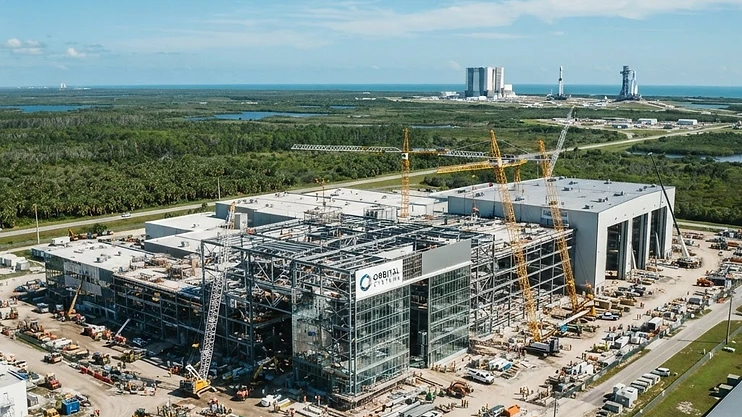
The focus is shifting from the spectacle of the launch to the consistency of the supply chain.
The landscape of the Space Coast is undergoing a structural transformation that extends far beyond the launch pads of the Kennedy Space Center. As the cadence of orbital missions reaches unprecedented levels, the demand for ground-side infrastructure—processing facilities, manufacturing hubs, and logistics centers—has created a secondary, terrestrial space race. Titusville, once defined by its proximity to the shuttle program, is now the primary beneficiary of this industrial expansion, anchored by the massive development of the Space Coast Innovation Park.
This shift represents a fundamental change in how the aerospace industry operates in Florida. It is no longer enough to simply have access to a launch site; companies now require integrated, high-capacity manufacturing environments that can support the rapid iteration cycles of the modern New Space economy. The $230 million investment into the Space Coast Innovation Park is not merely a real estate play; it is a strategic bet on the long-term viability of the region as a self-sustaining aerospace ecosystem that can handle everything from satellite assembly to deep-space hardware processing.
For business leaders and local stakeholders, this development signals that the Space Coast is moving into a phase of industrial maturity. The focus is shifting from the spectacle of the launch to the consistency of the supply chain. As we look toward the next decade, the ability of cities like Titusville to provide the necessary power, connectivity, and workforce housing will determine which companies thrive and which are left behind in the increasingly crowded race for orbital dominance.
What happened
The Titusville-Cocoa Airport Authority has become the focal point of a massive infrastructure surge, underscored by a $15 million grant from the Florida Department of Transportation’s Spaceport Improvement Program. This funding is the catalyst for the broader Space Coast Innovation Park, a project slated to deliver 1.1 million square feet of specialized space for aerospace tenants. The project, which broke ground on its initial phases, is designed to accommodate the specific needs of modern space companies that require proximity to both the Kennedy Space Center and the Space Coast Regional Airport.
According to recent reports, the project is expected to generate more than 900 high-skilled jobs, creating a significant ripple effect through the local economy. The development is not happening in a vacuum; it is part of a larger, state-wide strategy managed by Space Florida to shore up private investment. The infrastructure includes not just manufacturing floors, but also the logistical support systems required to move sensitive aerospace components. This follows a trend of aggressive expansion in the region, where companies like Extant Aerospace in Melbourne have also recently broken ground on new, state-of-the-art manufacturing facilities, signaling a region-wide commitment to scaling production capacity.
Why it matters
The significance of this infrastructure boom lies in the transition from 'experimental' to 'industrial' aerospace. Historically, the Space Coast was a place where hardware arrived to be launched. Today, it is becoming a place where hardware is conceived, built, and tested. This shift reduces the logistical friction for companies, allowing them to iterate faster and lower the cost of access to space. By concentrating these facilities in Titusville and Melbourne, the region is creating a 'network effect' where suppliers, engineers, and launch providers are within a short drive of one another.
In two to three years, we expect to see a consolidation of the supply chain. Companies that are currently operating out of disparate locations will likely move their primary operations to the Space Coast to take advantage of the specialized infrastructure. This will create a 'moat' around the region, making it increasingly difficult for other states to compete for aerospace contracts. The long-term consequence is a more resilient, locally-integrated economy that is less susceptible to the boom-and-bust cycles of individual launch programs.
The breakdown
- Infrastructure as a Competitive Advantage: The $15 million grant and the $230 million investment in the Innovation Park provide the physical foundation for high-tech manufacturing. By building specialized facilities that meet the stringent requirements of aerospace hardware, the region is lowering the barrier to entry for startups and scale-ups.
- Job Creation and Workforce Development: The projected 900 jobs are not just numbers; they represent a demand for specialized engineering, logistics, and manufacturing talent. This will force local universities and technical colleges to align their curricula with the specific needs of the aerospace sector, creating a self-sustaining talent pipeline.
- Logistical Synergy: Proximity to the Space Coast Regional Airport and the Kennedy Space Center allows for a seamless flow of materials and finished products. This reduces the 'time-to-pad' for satellite manufacturers and launch providers, which is a critical metric in the competitive commercial space market.
- State-Level Strategic Planning: Space Florida’s role in managing these projects ensures that the development is not fragmented. By coordinating infrastructure across the state, they are creating a unified aerospace corridor that is more attractive to international players like Impulso.Space USA Corp.
- The 'New Space' Industrialization: The shift toward large-scale manufacturing facilities reflects the maturation of the industry. As companies move from prototypes to constellations, they need the square footage and power capacity that only purpose-built industrial parks can provide.
- Economic Resilience: By diversifying the types of companies in the region—from satellite manufacturers to launch service providers—the Space Coast is insulating itself from the volatility of any single company or program. This creates a more stable tax base and a more robust local economy.
- Future-Proofing the Region: The investment in stormwater management, road access, and utility capacity at sites like the Kennedy Space Center ensures that the region can handle the next 20 years of growth. This proactive approach to infrastructure is what separates the Space Coast from other regions that are merely reacting to growth.
Key takeaways
- Titusville is emerging as the primary industrial hub for the Space Coast, supported by $230 million in new infrastructure.
- The focus has shifted from launch-only operations to full-cycle manufacturing and processing.
- Proximity to the Kennedy Space Center and regional airports is creating a powerful, localized supply chain.
- State-level coordination by Space Florida is successfully attracting both domestic and international aerospace investment.
Our view
Most coverage of the Space Coast focuses on the 'spectacle' of the launch—the fire, the noise, and the record-breaking frequency of missions. This misses the real story: the boring, essential, and highly profitable work of building the infrastructure that makes those launches possible. The real winners in the next decade will not necessarily be the companies with the flashiest rockets, but the ones that have secured the best real estate and the most efficient manufacturing workflows in the Space Coast Innovation Park.
We believe that the 'Space Coast' brand is currently undervalued. As more companies realize that they cannot effectively compete while operating out of high-cost, distant hubs, we will see a massive migration of aerospace manufacturing to Florida. The critics who argue that this is a 'bubble' are ignoring the fundamental shift in the global economy toward space-based data and services. The demand for satellite capacity is not going away, and the infrastructure being built in Titusville today is the bedrock of that future economy. The biggest risk is not over-building, but failing to build fast enough to keep up with the demand.
What to do about it
- For Aerospace Executives: Evaluate your current manufacturing footprint. If you are not within a 50-mile radius of a major launch site, you are likely incurring unnecessary logistical costs that will hurt your margins as the market commoditizes.
- For Local Business Leaders: Focus on the service and supply chain needs of these new facilities. The 900 new jobs at the Innovation Park will require housing, specialized logistics, and professional services that are currently in short supply.
- For Investors: Look beyond the launch providers. The real estate developers and infrastructure firms building the 'picks and shovels' of the space industry are the ones who will capture the most stable, long-term value.
The bottom line
The transformation of Titusville and the broader Space Coast is a testament to the power of strategic infrastructure investment. By moving beyond the launch pad and into the factory, the region is cementing its status as the global capital of the aerospace industry. This is not just a temporary boom; it is the foundation of a new, space-based industrial economy. For those who understand the value of this infrastructure, the opportunities on the Space Coast are only just beginning.