


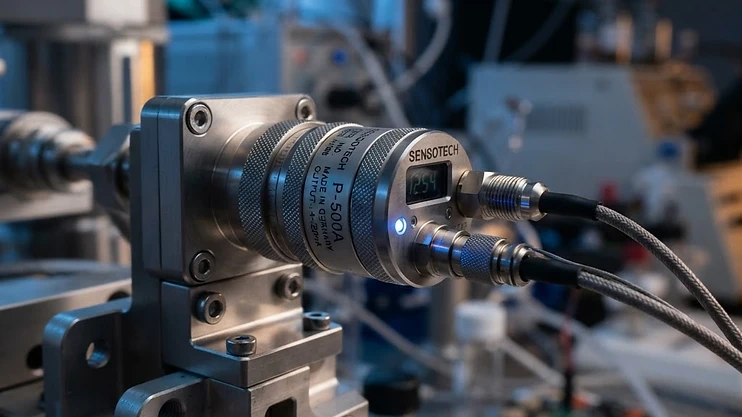
The future of industrial AI will not be won by the loudest demo. It will be won by the systems that can pass the audit.
The narrative surrounding Artificial Intelligence in 2026 has largely been dominated by consumer-facing chatbots and creative automation. However, on Florida’s Space Coast, a different, more consequential application of AI is taking root. Here, the focus is not on generating text, but on generating evidence. In industries like aerospace, defense, and high-precision manufacturing, the value of AI is measured by its ability to pass an audit, ensure safety, and provide an immutable record of quality in high-consequence environments.
This shift is best exemplified by the recent leadership transition at Leak Testing Specialists (LTS) in Brevard County. When Aaron Sneed took the helm as President in February 2026, he brought a philosophy that challenges the status quo of industrial technology. Sneed’s approach is rooted in the belief that the future of industrial AI will not be won by the loudest demo or the most impressive generative capabilities, but by the systems that can provide the most rigorous, verifiable data. This is a critical distinction for the Space Coast, where the cost of failure is measured in millions of dollars and human lives.
For organizations in Melbourne, Viera, and the surrounding areas, this represents a fundamental change in how they approach digital transformation. It is no longer enough to simply adopt AI tools; businesses must now ensure that these tools are integrated into a framework of compliance and reliability. As the region continues to attract high-tech manufacturing, the ability to leverage AI for industrial-grade precision will become the primary differentiator between companies that thrive and those that are left behind by the rapid pace of the new space economy.
What happened
On February 16, 2026, Aaron Sneed assumed the role of President at Leak Testing Specialists (LTS), a long-standing firm in Brevard County specializing in nondestructive testing. This move was significant because Sneed has been a vocal advocate for the practical application of industrial AI in regulated manufacturing. His leadership at LTS is not just about managing a testing company; it is about transforming it into a data-driven entity that uses AI to enhance the reliability of high-consequence work. Sneed has consistently argued that AI should be viewed as a tool that helps people do their jobs with better evidence and fewer blind spots, rather than a replacement for human expertise.
This development occurs against a backdrop of increasing demand for high-precision testing and quality assurance on the Space Coast. As companies like Argotec and Relativity Space scale their operations in Melbourne, the need for rigorous, audit-ready testing services has skyrocketed. LTS is positioning itself at the center of this demand, using AI to streamline the testing process while maintaining the strict documentation required by aerospace and defense regulators. Sneed’s public commentary, including his op-ed in Florida Today, has emphasized that reshoring and regulated manufacturing are the pillars of the region’s future, and that AI is the key to making these processes both efficient and compliant.
Why it matters
The deeper significance of this shift lies in the "audit-ready" requirement of the aerospace and defense sectors. In these industries, the ability to prove that a component was tested correctly is as important as the test itself. Traditional AI models, which are often "black boxes," struggle to meet these requirements. The next generation of industrial AI, which is being pioneered by companies like LTS, focuses on explainability and traceability. This structural change means that the companies that win in the next 2-3 years will be those that can provide a clear, AI-verified audit trail for every step of their manufacturing process.
This has profound consequences for the local economy. It creates a new category of "high-consequence AI" jobs in Brevard County, requiring a workforce that understands both the technical aspects of AI and the regulatory landscape of aerospace. It also threatens companies that rely on legacy, manual testing processes, as they will be unable to match the speed and reliability of AI-enabled competitors. In the long term, this will lead to a more robust and resilient industrial base on the Space Coast, as the region becomes known not just for its launch capabilities, but for its world-class, AI-verified manufacturing standards.
The breakdown
- Evidence-Based AI: The shift toward AI that provides verifiable data rather than just predictive insights is critical for industries where safety and compliance are paramount.
- Audit-Ready Infrastructure: Companies are now prioritizing systems that can automatically generate the documentation required for aerospace and defense audits, reducing the administrative burden on engineers.
- Human-in-the-Loop Systems: The most successful industrial AI implementations on the Space Coast are those that augment human expertise, providing better evidence for decision-making rather than attempting to replace the human operator.
- Regulatory Compliance as a Feature: By building AI systems that are inherently compliant with industry standards, companies can gain a significant competitive advantage in the defense and aerospace sectors.
- Reshoring and Localized Manufacturing: The ability to perform high-consequence testing locally, supported by AI, makes the Space Coast a more attractive destination for companies looking to reshore their manufacturing operations.
- Data Integrity and Security: As AI becomes more integrated into the manufacturing process, the security and integrity of the data generated become a top priority, driving demand for secure, local cloud and network infrastructure.
- Competitive Differentiation: Companies that can demonstrate superior quality assurance through AI-enabled testing will be able to command higher margins and secure more lucrative contracts with major aerospace and defense firms.
Key takeaways
- Industrial AI on the Space Coast is focused on auditability and safety, not just automation.
- Leadership at firms like Leak Testing Specialists is setting a new standard for AI-enabled, high-consequence manufacturing.
- The ability to provide verifiable, AI-backed evidence is the new competitive baseline for aerospace suppliers.
- Local businesses must prioritize data integrity and regulatory compliance to succeed in the evolving Space Coast ecosystem.
Our view
Most coverage of AI in the enterprise focuses on the potential for cost-cutting through automation. We believe this is a shallow view. The real value of AI in the industrial sector, particularly on the Space Coast, is in risk mitigation and quality assurance. We expect that the companies that succeed in the next five years will be those that treat AI as a "compliance engine." The most common mistake we see is companies trying to implement "off-the-shelf" AI solutions that lack the necessary rigor for high-consequence work.
We believe that the Space Coast is uniquely positioned to lead this transition. Because of the high concentration of aerospace and defense firms, there is a natural demand for the kind of high-precision, audit-ready AI that companies like LTS are developing. We expect to see a surge in local startups that focus on "niche" industrial AI—tools that are specifically designed for the unique testing and manufacturing requirements of the space industry. These companies will be the ones that define the next phase of the Space Coast’s growth, moving the region from a place where we launch rockets to a place where we define the standards for the entire aerospace industry.
What to do about it
- Prioritize explainability: When evaluating AI tools, ensure they provide clear, traceable data that can be used in an audit environment.
- Focus on data integrity: Invest in secure, local infrastructure to ensure that the data generated by your AI systems is protected and immutable.
- Augment, don't replace: Design your AI implementations to support your human experts, providing them with better evidence to make critical decisions.
- Engage with industry standards: Stay informed about the evolving regulatory requirements for AI in aerospace and defense, and ensure your systems are built to meet these standards from the ground up.
The bottom line
The future of industrial AI on the Space Coast is not about the flashiest demo, but about the most reliable evidence. By focusing on audit-ready, high-consequence applications, local leaders are setting a new standard for the entire aerospace industry. For businesses in Melbourne and beyond, the path to success lies in integrating AI into a framework of rigorous compliance and human-centric decision-making. The Space Coast is proving that the most effective AI is the kind that you can trust with your most critical missions.