


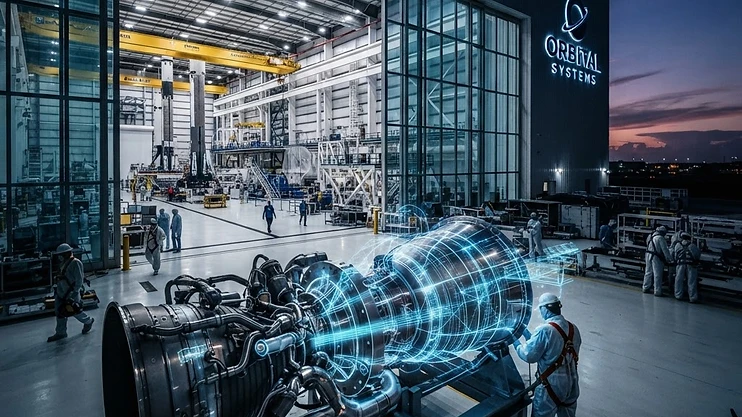
The future of the Space Coast isn't being written in a remote sprint retrospective; it’s being forged on the assembly lines of Melbourne.
The era of “move fast and break things” is being quietly retired on Florida’s Space Coast, replaced by a much more rigorous mandate: “build it right the first time or lose the contract.” As Melbourne, Florida transitions from a regional aerospace hub to a critical node in a $6-billion THAAD propulsion production cycle and international firms like Argotec plant satellite flags in our soil, the local technology sector is undergoing a massive, structural pivot. We are no longer just supporting launches; we are becoming the command center for the next generation of American industrial resilience. This shift is not merely academic. While software-as-a-service startups continue to chase ephemeral valuations in northern tech hubs, Melbourne’s engineering and defense firms are securing long-term, multi-year contracts that prioritize traceability, precision, and physical performance over rapid code deployment. The arrival of massive, high-capital-expenditure facilities—such as the new Extant Aerospace site in Melbourne—signals a decisive return to tangible, high-value manufacturing. This is the new “tech” for the Space Coast: a convergence of AI-driven supply chain management, advanced materials, and an ironclad commitment to regulated output. For local business leaders and technical innovators, the implications are profound. The competitive advantage here is no longer defined by how quickly you can iterate a user interface, but by how effectively you can integrate AI-assisted quality control and secure manufacturing workflows into the defense-industrial base. The future of the Space Coast isn't being written in a remote sprint retrospective; it’s being forged on the assembly lines of Melbourne and the launch pads of Kennedy Space Center. ## What happened In the first week of October 2026, the industrial landscape of Melbourne was seismically altered by two major announcements. First, L3Harris Technologies, the titan of the region’s defense tech economy, confirmed a $6-billion contract from Lockheed Martin to expand propulsion production for the Terminal High Altitude Area Defense (THAAD) system. This deal, spanning seven years, isn't just a win for the company’s bottom line; it is a long-term anchor for the Melbourne economy, cementing the city’s role as the primary engine for America’s defensive posture in space and air. Simultaneously, the broader Space Coast has seen an influx of international and domestic capital aimed at localizing the supply chain. Italian aerospace firm Argotec successfully ramped up its first U.S. satellite production facility in Melbourne this year, focusing on small satellites for defense and scientific missions. These moves come on the heels of Extant Aerospace’s massive $75-million investment in a 376,000-square-foot facility in the city, which is set to employ hundreds of high-skilled technicians. The common thread between these developments is a departure from “lean” startup methodologies toward a model of “hardened” industrial capacity. The recent NASA Office of the Inspector General reports highlighting the aging status of launch infrastructure at Kennedy Space Center have only accelerated this investment. The government and private contractors are no longer just maintaining legacy assets; they are aggressively building modern, automated production centers that leverage, rather than ignore, the constraints of regulated, high-stakes manufacturing. ## Why it matters The structural change occurring in Melbourne is the professionalization and automation of the “defense-industrial complex.” For the past decade, “tech” on the Space Coast was synonymous with either legacy defense contracting or speculative software startups. Today, we are seeing the emergence of a third category: the AI-integrated, high-precision manufacturer. This matters because it creates a “moat” around the local economy that is significantly harder to replicate than a software ecosystem. When you build a $75-million jet maintenance facility or a multi-billion dollar propulsion assembly line, you are tethered to the local workforce and infrastructure for decades. This shift also forces a change in how local businesses view AI adoption. Instead of the surface-level AI seen in general business (like chatbots or marketing tools), companies like Leak Testing Specialists (LTS) are proving that the real value lies in “Industrial AI”—using machine learning to document decisions, ensure compliance, and prove traceability in environments where mistakes have catastrophic consequences. In two to three years, the Space Coast will look fundamentally different. The “launch capital of the world” will also be the “assurance capital of the world.” Businesses that have spent the last few years retrofitting their workflows for this level of scrutiny will thrive, while those clinging to outdated, manual, or purely software-centric models will find themselves increasingly locked out of the supply chain. The region is moving from an “experimental” phase of commercial space exploration to an “operational” phase of mass production, and that transition favors those who can master the intersection of digital intelligence and physical execution. ## The breakdown - The L3Harris Anchor: The $6-billion THAAD contract provides a massive, multi-year revenue floor for the local supply chain. This stability allows local Tier 2 and Tier 3 suppliers to invest in long-term equipment and training rather than chasing short-term projects. It essentially de-risks the capital expenditure required for local businesses to modernize their own operations. - International Integration: The arrival of firms like Argotec indicates that Melbourne’s reputation as an aerospace hub is now global. This attracts foreign engineering talent and encourages the cross-pollination of European aerospace standards with American defense requirements. It puts Melbourne on the map for global industrial partnerships, not just domestic ones. - The Regulatory-AI Convergence: Industrial AI isn't about automating a task to save a few hours; it’s about meeting a regulatory standard that was previously human-impossible to maintain. Systems like TITAN-AI demonstrate that the next phase of tech growth here is in "record-keeping for robots." If you can automate the audit trail, you win the contract. - Infrastructure as Destiny: The current push by NASA and private partners to modernize shared launch infrastructure is a signal that the "bottleneck" phase is over. When the infrastructure expands, the output of local firms must scale with it. Companies are currently racing to upgrade their own internal systems to ensure they can feed the new, larger capacity of the spaceport. - Workforce Specialization: We are seeing a shift away from generalist coding roles toward “Digital Engineering.” This is the synthesis of systems engineering, traditional mechanics, and software-defined manufacturing. Universities and local accelerators are being pressured to produce graduates who understand both the code and the cold, hard realities of aerospace metallurgy and pressure testing. - Supply Chain Hardening: The recent investments in precision metrology and dimensional verification mean that the "soft" edges of the supply chain are being eliminated. Every bolt, circuit, and propellant tank now requires digital verification of its provenance and performance. This is creating a lucrative sub-sector for local specialized inspection and testing firms. - Resilience as a Marketable Feature: Domestic industrial resilience is no longer just a government mandate; it is a competitive advantage. Companies that can guarantee they are not reliant on vulnerable global supply chains—by manufacturing right here in Melbourne—are finding that they can charge a premium for the certainty they provide to their defense partners. ## Key takeaways - Follow the Capital Expenditure: The big money is moving into physical infrastructure, not just software. Look for opportunities in the support services—facilities management, specialized industrial automation, and secure networking—that keep these massive facilities running. - Traceability is the New Marketing: In the defense-tech sector, your ability to prove your process is more important than the product itself. If you aren't using data to document your production, you aren't playing the game. - Pivot to "Hardened" AI: Move away from conversational AI experiments and toward "Industrial AI"—systems that ensure compliance, safety, and traceability. That is where the institutional budget is focused. - Geography is Still Competitive: Proximity to Kennedy Space Center and the main L3Harris sites is becoming even more critical as "just-in-time" delivery demands move into the aerospace sector. If you are in Melbourne or Viera, you have a natural advantage; leverage it. ## Our view Most tech reporting misses the story in Melbourne because it is looking for the next SaaS unicorn. That is a mistake. The real innovation happening on the Space Coast right now is "Boring Tech"—the kind that works perfectly, adheres to rigid safety standards, and generates billions in revenue. We believe that the current obsession with generative AI in the broader market will eventually cool, but the demand for industrial AI in the defense sector is just beginning its multi-decade ascent. The companies that win in the next five years will be the ones that understand that high-tech is not about the latest web framework; it’s about the integration of software into the physical reality of aerospace manufacturing. The startups that fail will be the ones that try to apply “move fast” energy to a sector that demands “move safely.” If you want to see the future of American tech, stop looking at Silicon Valley and start looking at the industrial parks of Melbourne. The winning bet for the next decade is on companies that can handle the complexity of regulated, high-stakes, precision engineering, while leveraging software to keep the lights on and the documentation clean. ## What to do about it - Audit Your Compliance Tech: If you are a local supplier, review your internal record-keeping systems. Can they handle the rigorous, automated audits required by modern defense contracts? If not, prioritize the integration of systems that automatically generate audit logs. - Seek Strategic Partnerships: Smaller engineering firms should look to align themselves with the Tier 1 contractors. Don't try to compete; integrate your specialized service (e.g., specialized leak testing or custom software for assembly lines) into their broader workflow. - Upskill for Digital Engineering: Encourage your technical staff to gain certifications in systems engineering and cybersecurity, particularly the standards required for defense-industrial base operations. - Invest in Local Networking: The deals being made in Melbourne are not happening on public job boards. They are happening in local incubators like Groundswell Startups. Get involved in the physical, professional networks that are actually facilitating these aerospace partnerships. ## The bottom line The transformation of Melbourne, Florida from a satellite community to the central brain of a massive aerospace machine is now undeniable. We are witnessing the birth of a hardened, AI-integrated industrial base that will define American aerospace for decades. For leaders and innovators here, the path is clear: embrace the rigor of regulated manufacturing, lean into industrial automation, and recognize that our geography is now our greatest asset. The Space Coast is building the future, one perfectly documented, precision-engineered part at a time.