


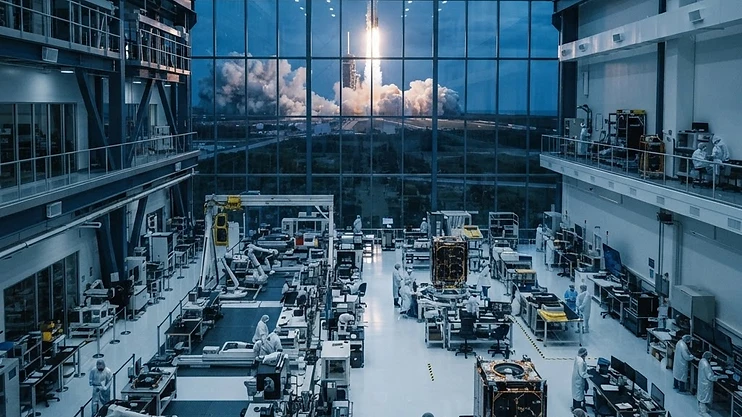
The true economic transformation of Melbourne, Viera, and the surrounding region is happening quietly on the ground.
The frantic pace of rocket launches from Cape Canaveral and Kennedy Space Center has become the new normal, but the true economic transformation of Melbourne, Viera, and the surrounding region is happening quietly on the ground. While the world watches the skies, a multi-billion dollar industrial pivot is underway, turning the Space Coast from a transient launch site into a permanent manufacturing and integration hub. This shift represents a fundamental change in how aerospace companies view their supply chains, moving from 'launch-and-forget' to 'build-and-sustain' models that require deep local roots.
This transition is not merely about more concrete and steel; it is about the integration of high-tech manufacturing into the local fabric of Brevard County. With companies like Argotec establishing satellite production facilities in Melbourne and the ongoing development of the Launch and Landing Facility (LLF) at KSC, the region is effectively becoming the 'factory floor' for the next generation of the space economy. This evolution is critical for local businesses, as it demands a shift in workforce development, utility planning, and regional logistics that will define the area's prosperity for the next decade.
For leaders in Viera and Melbourne, the implications are profound. The influx of capital—evidenced by the $15 million grant for Space Coast Regional Airport and the massive investments by firms like Blue Origin—is creating a gravitational pull for secondary and tertiary suppliers. The challenge now is to ensure that this rapid industrialization is supported by the necessary infrastructure, from power grids to specialized technical training, to prevent the region from becoming a victim of its own success.
What happened
The Space Coast has moved beyond the experimental phase of the commercial space race into a period of sustained industrial scaling. In 2025, the region shattered records with 109 rocket launches, a cadence that has forced a rethink of ground operations. The most significant development is the shift toward localized manufacturing. Argotec, the Italian aerospace firm, recently opened a 5,400-square-foot satellite production site in Melbourne, signaling that international players now view the Space Coast as a primary manufacturing base rather than just a launch destination. This is supported by massive state-level investment, including the $15 million grant awarded to the Titusville-Cocoa Airport Authority to upgrade infrastructure specifically to attract aerospace tenants.
Simultaneously, Space Florida has been aggressively preparing for future growth. Recent permitting activity reveals plans for a 217-acre commercial aerospace facility near the LLF at KSC. While the specific tenant remains a mystery, the scale of the project—involving significant environmental mitigation and utility corridor development—suggests a major anchor tenant is expected. This follows the $140 million Amazon Kuiper satellite processing facility, which has already set a precedent for high-volume, automated satellite integration on the Space Coast. The combination of these projects, alongside the $600 million Blue Origin expansion, creates a dense ecosystem of aerospace activity that is unprecedented in the region's history.
Why it matters
The structural change here is the transition from a 'launch-only' economy to a 'full-lifecycle' aerospace economy. Historically, companies would ship hardware to the Space Coast, launch it, and leave. Today, they are building, testing, and integrating hardware here. This creates a 'sticky' economic environment where companies are less likely to relocate because their capital-intensive manufacturing facilities are physically anchored to the local geography. For Melbourne and Viera, this means a more stable tax base and a higher demand for specialized engineering talent.
However, this growth creates significant pressure on local infrastructure. The need for reliable power, high-speed data, and specialized logistics at the LLF and surrounding industrial parks is outpacing current capacity. In 2-3 years, we expect to see a 'bottleneck' phase where the primary constraint on growth will not be launch availability, but the ability of the local grid and transportation networks to support high-volume manufacturing. Organizations that can solve these 'last-mile' infrastructure problems—such as specialized logistics firms or energy management startups—will find themselves in a prime position to capture value from the aerospace giants.
The breakdown
- Localized Manufacturing Dominance: The arrival of companies like Argotec proves that the Space Coast is now a viable site for high-precision satellite assembly. This reduces the reliance on long-distance supply chains and keeps high-value engineering jobs within Brevard County.
- Infrastructure-Led Growth: The $15 million grant for Space Coast Regional Airport is a blueprint for how local governments can attract industry. By de-risking the site through infrastructure upgrades, Titusville and surrounding areas are making themselves irresistible to aerospace firms.
- The LLF as a Strategic Asset: The Launch and Landing Facility at KSC is becoming the most valuable piece of real estate in the region. With Space Florida managing the site, the ability to integrate large-scale processing facilities directly next to the runway is a competitive advantage that few other global spaceports can match.
- Workforce Integration Challenges: As AI and automation take over routine tasks, the local workforce must pivot toward high-level systems integration and maintenance. The $1.5 million NASA-backed workforce hub is a necessary first step, but it must scale rapidly to meet the demand of the 500+ jobs expected from the Blue Origin expansion.
- Environmental Mitigation as a Barrier to Entry: The 217-acre project at KSC highlights the increasing complexity of land development. Companies must now navigate significant environmental hurdles, such as protecting scrub-jay habitats, which adds a layer of regulatory risk that requires sophisticated local legal and environmental expertise.
- The 'Mystery Tenant' Effect: The secrecy surrounding projects like 'Project Horseshoe' indicates that the competition for space on the Space Coast is fierce. This creates a seller's market for industrial land, which will likely drive up property values in areas like Titusville and Rockledge.
- Supply Chain Density: The concentration of companies like L3Harris in Melbourne, combined with new entrants, creates a 'cluster effect.' This density allows for shared services, specialized labor pools, and faster innovation cycles that will make the Space Coast a global leader in aerospace technology.
Key takeaways
- The Space Coast is shifting from a launch site to a permanent manufacturing hub, creating long-term economic stability.
- Infrastructure upgrades, such as those at the Space Coast Regional Airport, are the primary drivers of new aerospace investment.
- The region faces a critical need for specialized workforce training to keep pace with the rapid industrialization of the space sector.
- Regulatory and environmental hurdles are becoming as significant as technical challenges for new aerospace developments.
Our view
Most coverage of the Space Coast focuses on the spectacle of the launch, but the real story is the boring, essential work of industrial integration. We believe the region is on the verge of a 'manufacturing boom' that will dwarf the economic impact of the launch cadence itself. The winners in this environment will be the local firms that provide the 'picks and shovels'—the logistics, the specialized power infrastructure, and the technical training programs that allow these aerospace giants to operate at scale.
We think most analysts underestimate the difficulty of scaling this infrastructure. The 'bottleneck' we foresee in 2028 will be the result of current planning failures. If local leaders in Melbourne and Viera do not prioritize the expansion of utility corridors and technical education now, they will see the next wave of aerospace investment move to other states. The 'Space Coast' brand is strong, but it is not a substitute for functional, scalable industrial infrastructure. The companies that succeed will be those that integrate deeply with the local community, rather than treating it as a temporary outpost.
What to do about it
- Invest in Localized Logistics: Businesses should look for opportunities to provide specialized logistics and supply chain services that cater to the unique needs of satellite and rocket manufacturing.
- Prioritize Technical Partnerships: Local firms should partner with institutions like Florida Tech to create apprenticeship programs that bridge the gap between academic theory and the specific needs of the aerospace industry.
- Monitor Regulatory Shifts: Keep a close eye on Space Florida’s permitting activities, as these are the leading indicators of where the next major industrial hubs will be located.
- Focus on Infrastructure Resilience: For those in the construction and utility sectors, focus on projects that enhance the reliability of power and data networks, as these will be the most sought-after services by incoming aerospace tenants.
The bottom line
The Space Coast is no longer just a place where rockets go to leave the planet; it is becoming the place where the future of the space economy is built. This transition to a permanent manufacturing base is the most significant economic development in the region's history. While the challenges of infrastructure and workforce development are real, the momentum is undeniable. For those positioned to support this industrial evolution, the next decade offers unprecedented opportunity.