


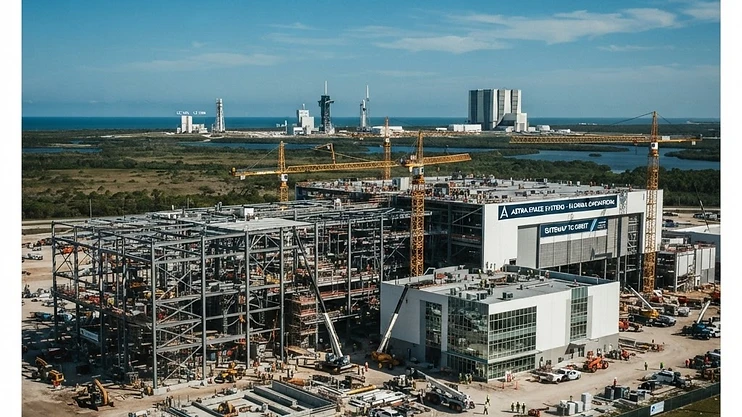
The rapid transformation of the Space Coast from a launch-centric corridor into a comprehensive manufacturing powerhouse has reached a critical inflection point.
The rapid transformation of the Space Coast from a launch-centric corridor into a comprehensive manufacturing powerhouse has reached a critical inflection point. With the recent groundbreaking of the Space Coast Innovation Park in Titusville, the region is signaling that it is no longer content to simply host launch pads; it intends to own the entire supply chain of the modern space economy. This shift represents a fundamental change in how aerospace companies view their operational footprint, moving from temporary staging areas to permanent, high-density industrial hubs.
This development is not merely about adding square footage; it is about solving the existential bottleneck of the current space race: the lack of specialized, high-tech industrial space. As companies like Blue Origin and Relativity Space continue to scale their operations across Brevard County, the demand for integrated testing, manufacturing, and logistics facilities has outpaced supply. Titusville, once a quiet neighbor to the Kennedy Space Center, is now positioned as the primary relief valve for this pressure, creating a new industrial corridor that links the airport directly to the global space market.
For business leaders and investors, this represents a shift in the geography of innovation. The concentration of capital and talent in North Brevard is creating a self-reinforcing cycle of growth that will define the region's economic trajectory for the next decade. Understanding the mechanics of this expansion is essential for any organization looking to participate in the next phase of the Space Coast's evolution, as the infrastructure being laid today will dictate the competitive landscape for years to come.
What happened
In September 2026, local and state officials broke ground on the Space Coast Innovation Park, a 50-acre development at the Space Coast Regional Airport in Titusville. This project, a collaborative effort between Florida Commerce, Space Florida, and the Florida Department of Transportation, is designed to accommodate up to 1 million square feet of workspace, including hangars, office space, and advanced testing facilities. The project is expected to generate between 1,500 and 2,000 high-tech aerospace jobs, significantly bolstering the North Brevard economy.
This development follows a series of strategic investments, including a $5.8 million state grant to construct 3,200 feet of roadway, effectively linking Grissom Parkway to the airport’s Perimeter Road. The infrastructure push is part of a broader state strategy to ensure that Florida remains the global leader in launch frequency and aerospace manufacturing. According to state data, the Space Coast has seen over $3.3 billion in private investment and $531 million in state funding poured into the region’s aerospace ecosystem in recent years, a figure that continues to climb as companies seek to consolidate their R&D and production capabilities near the launch site.
Simultaneously, the region is managing the mystery of 'Project Horseshoe,' an undisclosed space infrastructure project that has been the subject of intense speculation among local developers and economic planners. While details remain sparse, the project is currently navigating the complex web of permitting, workforce development, and infrastructure requirements that define the current era of Space Coast expansion. These projects are not happening in a vacuum; they are the result of a deliberate, state-led effort to create a 'plug-and-play' environment for aerospace firms, reducing the time-to-market for new rockets and satellite constellations.
Why it matters
The significance of the Titusville expansion lies in the transition from 'launch-only' to 'full-lifecycle' operations. Historically, companies would manufacture components elsewhere and ship them to the Space Coast for final assembly and launch. Today, the goal is to manufacture, test, and refurbish on-site. This reduces the logistical risks associated with transporting sensitive hardware and allows for a much faster iteration cycle. When a company can test an upper-stage engine in the morning and integrate it into a rocket by the afternoon, the pace of innovation accelerates exponentially.
This structural change creates a massive competitive advantage for the Space Coast. By clustering manufacturing, testing, and launch facilities within a short radius, the region is effectively creating a 'super-cluster' that is difficult for other states to replicate. The second-order consequence is a massive demand for specialized labor and support services. We are seeing a shift where the local workforce is no longer just technicians and launch operators, but advanced manufacturing engineers, software developers, and supply chain experts. This will likely lead to a permanent increase in the region's median income and a diversification of the local economy.
In 2-3 years, we expect the Titusville-Melbourne corridor to be the most dense aerospace manufacturing hub in the United States. The companies that secure space in these new parks will have a distinct advantage in terms of operational efficiency and proximity to the launch infrastructure at Kennedy Space Center and Cape Canaveral Space Force Station. Those who are late to the table will find themselves competing for limited industrial real estate, driving up costs and potentially forcing them to look outside the region, which would be a strategic error in the current climate.
The breakdown
- Infrastructure as a Service: The state of Florida is treating industrial land as a critical utility, investing heavily in roads, power, and water to ensure that aerospace companies can move in and start production immediately without waiting for municipal upgrades.
- The Titusville-Melbourne Corridor: The development of the Space Coast Innovation Park creates a continuous industrial zone that links the northern and southern parts of Brevard County, effectively creating a unified aerospace manufacturing ecosystem that spans the entire region.
- Supply Chain Localization: By encouraging companies to build manufacturing facilities on-site, the region is reducing its reliance on external suppliers, which mitigates the risks of global supply chain disruptions and lowers the cost of logistics for major aerospace contractors.
- Workforce Agglomeration: The influx of 1,500 to 2,000 high-tech jobs in Titusville will create a critical mass of talent that will attract further investment, as companies prefer to locate where the labor pool is already established and highly skilled.
- Regulatory Streamlining: The partnership between Space Florida and the Florida Department of Transportation is creating a streamlined permitting process that is significantly faster than what is found in other states, making the Space Coast the path of least resistance for new projects.
- Testing Facility Density: The inclusion of dedicated testing facilities within the park allows companies to perform high-risk R&D in a controlled environment, which is a major selling point for startups that cannot afford to build their own private testing ranges.
- Long-term Economic Resilience: By diversifying the types of companies moving into the region—from launch providers to satellite manufacturers and component suppliers—the Space Coast is building a more resilient economy that can withstand the cyclical nature of the aerospace industry.
Key takeaways
- Titusville is becoming the primary industrial hub for the Space Coast, shifting the center of gravity for aerospace manufacturing.
- State-led infrastructure investment is the primary driver of this growth, reducing barriers to entry for new companies.
- The focus is shifting from launch frequency to full-lifecycle manufacturing, which requires a different type of industrial real estate.
- Companies that fail to secure a footprint in the region now will face significant competitive disadvantages as land becomes scarce.
Our view
Most analysts view the Space Coast's growth as a simple function of launch demand, but this is a fundamental misunderstanding of the current trend. The real story is the industrialization of the region. We believe that the 'launch-only' era is effectively over. The winners in the next decade will be the companies that successfully integrate their manufacturing and testing into the local ecosystem. The Space Coast is no longer just a place to launch; it is a place to build.
We expect that the Titusville-Melbourne corridor will eventually become the 'Silicon Valley of Aerospace.' The current pace of development is not a bubble; it is a structural realignment of the global aerospace supply chain. Critics who point to the high cost of real estate or the potential for market saturation are missing the point: the value of being in the center of this ecosystem far outweighs the cost of entry. The companies that are currently building in Titusville are not just buying land; they are buying a seat at the table of the future of space exploration.
What to do about it
- Audit your supply chain: If your company relies on aerospace components, evaluate whether you can move your manufacturing or assembly to the Space Coast to take advantage of the local ecosystem.
- Engage with local economic development: Reach out to the Economic Development Commission of Florida's Space Coast to understand the current pipeline of industrial space and how your company can fit into the regional strategy.
- Invest in local talent partnerships: Establish relationships with local universities and technical colleges to ensure a pipeline of skilled labor for your operations, as the competition for talent will only intensify.
- Prioritize proximity: If you are a startup or a scale-up, prioritize securing a location within the established aerospace clusters in Brevard County, even if it requires a higher initial investment, to benefit from the network effects.
The bottom line
The industrial expansion in Titusville is the most significant development on the Space Coast in a generation. It marks the transition of the region from a launch site to a comprehensive manufacturing hub that will define the future of the aerospace industry. For companies and investors, the message is clear: the infrastructure for the next century of space exploration is being built right now in Brevard County. Those who recognize the scale of this transformation will be the ones to lead the industry forward.