


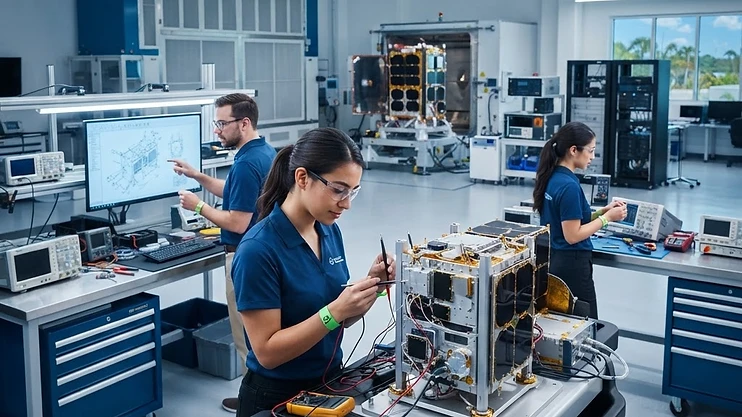
The arrival of CesiumAstro in Melbourne is not merely another corporate expansion; it is a structural shift in the DNA of the Space Coast’s industrial base.
The arrival of CesiumAstro in Melbourne, Florida, is not merely another corporate expansion; it is a structural shift in the DNA of the Space Coast’s industrial base. By committing $25 million to a new engineering and manufacturing hub, the Austin-based firm is moving beyond the traditional 'launch-and-forget' model that has historically defined the region. This investment, announced in mid-October 2026, brings critical semiconductor design and AI-driven signal analysis capabilities directly into the heart of Brevard County, signaling that the region is maturing into a full-stack aerospace powerhouse.
For local leaders and the workforce, this development represents a transition from assembly-line manufacturing to high-value intellectual property creation. As the Space Coast continues to attract global players, the integration of mission-critical software and hardware design into local facilities ensures that the region remains resilient against the cyclical nature of launch schedules. This is the new reality of the Space Coast: a sophisticated, multi-layered ecosystem where the hardware is built, the software is coded, and the AI is trained, all within a few miles of the Atlantic coast.
This shift matters because it insulates the local economy from the volatility of the commercial space race. While launch cadence is subject to weather, regulatory hurdles, and market demand, the demand for advanced, AI-integrated satellite components is constant and growing. By anchoring these high-tech capabilities in Melbourne, the region is effectively 'future-proofing' its workforce, ensuring that the next generation of engineers is not just bolting rockets together, but architecting the digital nervous systems that will power the next decade of orbital operations.
What happened
On October 15, 2026, the Economic Development Commission of Florida's Space Coast officially announced that CesiumAstro would invest $25 million to establish a major engineering and manufacturing facility in Melbourne. This expansion is expected to create 100 high-paying jobs, focusing on the development, integration, and testing of space and defense technologies. The move follows a period of rapid growth for the company, which now employs over 850 people globally. According to Brett Paulson, Chief Operating Officer of CesiumAstro, the Melbourne site will leverage the company’s recent acquisitions in semiconductor design and AI-driven signal analysis to provide a more comprehensive suite of services to its defense and commercial clients.
This decision was not made in a vacuum. It follows a series of strategic investments in the region, including the expansion of infrastructure at the Space Coast Regional Airport in Titusville and the ongoing development of industrial parks in Palm Bay. The company’s leadership cited the existing aerospace talent pool and the proximity to key launch infrastructure as primary drivers for selecting Melbourne. By bringing these capabilities in-house, CesiumAstro aims to shorten the development cycle for mission-critical software, a move that aligns with the broader trend of vertical integration seen across the aerospace sector in 2026.
Why it matters
The deeper significance of this investment lies in the diversification of the Space Coast’s economic portfolio. For years, the region was defined by its proximity to the Kennedy Space Center and the Cape Canaveral Space Force Station, focusing heavily on launch services. However, the arrival of companies like CesiumAstro suggests that the 'Space Coast' is becoming a 'Tech Coast.' This transition is critical because it creates a more stable economic foundation. When a region relies solely on launch, it is vulnerable to the boom-and-bust cycles of the space industry. By adding semiconductor design and AI-driven software development, Melbourne is creating a more robust, year-round demand for specialized labor.
In two to three years, we expect to see a 'clustering effect' where smaller, specialized software and hardware firms move to Melbourne to support the larger players. This will likely lead to a surge in demand for local office space and specialized laboratory facilities. Furthermore, the presence of these high-tech firms will force local educational institutions, such as Florida Tech, to accelerate their curriculum updates to match the specific needs of these companies. The long-term consequence is a self-sustaining cycle of innovation where the talent stays in the region, rather than migrating to traditional tech hubs like Austin or Silicon Valley.
The breakdown
- Vertical integration of hardware and software: CesiumAstro is moving beyond simple component manufacturing by bringing semiconductor design and AI-driven signal analysis in-house. This allows the company to control the entire development lifecycle, reducing reliance on third-party suppliers and accelerating time-to-market for complex satellite systems. This shift is essential for maintaining a competitive edge in the rapidly evolving defense and commercial space markets.
- Diversification of the local economy: By moving away from a pure focus on launch services, the Space Coast is building a more resilient economic base that can withstand fluctuations in launch demand. This diversification is crucial for long-term stability, as it creates a broader range of high-paying jobs that are not tied to the success or failure of a single rocket program. The region is effectively becoming a hub for the entire aerospace value chain.
- Talent retention and development: The creation of 100 high-paying engineering jobs provides a strong incentive for local graduates to remain in the area. This helps to mitigate the 'brain drain' that has historically affected smaller regional hubs, as young professionals can now find career-defining work without leaving the Space Coast. The presence of these roles also encourages local universities to invest in specialized training programs.
- Infrastructure and industrial growth: The investment is part of a larger trend of infrastructure development across the Space Coast, including the expansion of industrial parks in Palm Bay and Titusville. These projects are designed to accommodate the growing demand for high-tech manufacturing space, ensuring that the region can support the influx of new companies. This infrastructure is the backbone of the region's long-term growth strategy.
- Strategic proximity to launch sites: While the focus is on engineering and manufacturing, the proximity to Kennedy Space Center and Cape Canaveral remains a key competitive advantage. Being able to test and integrate components in close proximity to the launch site provides a logistical advantage that few other regions can match. This 'proximity premium' is a major factor in attracting companies like CesiumAstro to Melbourne.
- AI-driven innovation in defense: The focus on AI-driven signal analysis highlights the growing importance of software in modern defense systems. As satellite constellations become more complex, the ability to process and analyze data in real-time is becoming a critical capability. By investing in this area, CesiumAstro is positioning itself at the forefront of the next generation of defense technology.
- The 'Florida Model' of growth: This investment is a testament to the effectiveness of the state’s focus on substance over subsidies. By fostering an environment that supports innovation and provides the necessary infrastructure, Florida is attracting companies that are looking for long-term growth opportunities. This approach is proving to be a successful strategy for building a sustainable aerospace industry.
Key takeaways
- CesiumAstro’s $25M investment marks a shift toward high-value engineering in Melbourne.
- The move diversifies the Space Coast economy beyond launch-only operations.
- 100 new high-paying jobs will focus on semiconductor design and AI-driven software.
- Local infrastructure expansion in Palm Bay and Titusville is supporting this growth.
- The region is successfully transitioning into a full-stack aerospace technology hub.
Our view
Most analysts view this as a simple 'jobs announcement,' but that misses the forest for the trees. This is a clear signal that the Space Coast has reached a critical mass of intellectual capital. The real story is not the 100 jobs; it is the fact that CesiumAstro is moving its core R&D and design capabilities to Melbourne. This is a vote of confidence in the region’s ability to support high-end engineering, not just assembly. We believe this will trigger a wave of similar moves by other mid-sized aerospace firms looking to escape the high costs of traditional tech hubs while staying close to the action at the Cape.
Critics often argue that the Space Coast is too dependent on government contracts, but this ignores the rapid growth of the commercial sector. The 'Florida Model'—focusing on infrastructure and workforce development rather than just tax breaks—is working. We expect to see Melbourne emerge as the primary hub for satellite component design in the Southeast within the next five years. The winners here are the local businesses that provide specialized services to these firms, and the losers are the traditional aerospace hubs that are failing to adapt to the new, faster-paced, software-defined reality of the industry.
What to do about it
- For local business leaders: Evaluate your service offerings to see if you can support the specialized needs of high-tech aerospace firms, such as precision manufacturing, specialized logistics, or software integration services.
- For technical professionals: Focus on upskilling in areas like AI-driven signal analysis, semiconductor design, and mission-critical software development to align with the shifting demands of the local job market.
- For educational institutions: Partner with incoming firms to develop specialized training programs that provide students with the exact skills needed for these new, high-paying roles.
- For real estate developers: Prioritize the development of high-quality, flexible industrial and office space that can accommodate the specific needs of engineering and R&D teams.
The bottom line
CesiumAstro’s expansion into Melbourne is a definitive marker of the Space Coast’s evolution into a sophisticated, full-stack aerospace technology hub. By anchoring high-end engineering and AI-driven design in the region, the company is helping to build a more resilient and diverse economic future. This shift from launch-centric operations to comprehensive technology development ensures that the Space Coast will remain a critical player in the global aerospace industry for decades to come. The region is no longer just a place where rockets launch; it is a place where the future of space technology is being designed and built.