


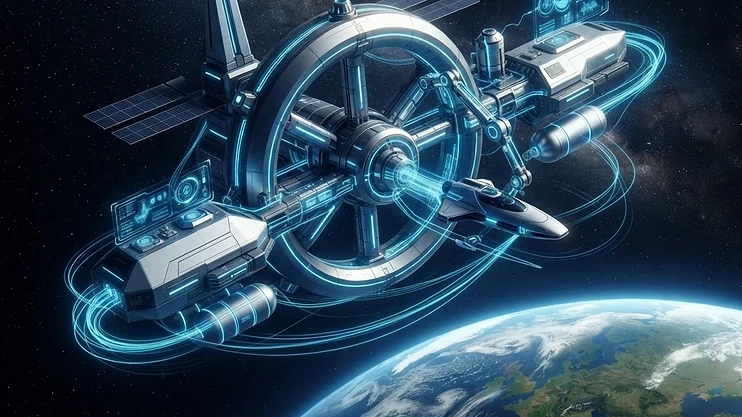
Spargo Space is pioneering the development of autonomous in-space refueling depots, a critical piece of infrastructure.
The concept of 'in-space logistics' has long been the domain of science fiction, but in the industrial parks of Melbourne, Florida, it is becoming a tangible business model. As the frequency of launches from the Space Coast increases, the bottleneck is no longer just getting to orbit—it is what happens once you are there. Startups like Spargo Space are pioneering the development of autonomous in-space refueling depots, a critical piece of infrastructure that will allow satellites and spacecraft to extend their operational lives and perform more complex missions. This is the next frontier of the space economy, and it is being built by a new wave of entrepreneurs who see the Space Coast not just as a launch site, but as a command center for orbital operations.
This shift toward autonomy is not limited to space. On the ground, the integration of AI-driven logistics and automated manufacturing is changing how local aerospace companies operate. The ability to manage complex, multi-vehicle missions with minimal human intervention is the holy grail of modern aerospace engineering. As we see companies like Joby Aviation pushing the boundaries of autonomous flight across the continental United States, the lessons learned in these high-stakes environments are being applied to the local aerospace supply chain in Melbourne and Viera.
For the business community in Florida, this represents a massive opportunity to lead in the 'Space Economy 2.0.' The transition from manual, ground-controlled missions to autonomous, self-correcting orbital systems requires a new breed of software, hardware, and operational expertise. By positioning the Space Coast as the epicenter of this autonomous revolution, local leaders can ensure that the region remains at the forefront of the global aerospace industry for decades to come.
What happened
The emergence of companies like Spargo Space, founded in 2025 and based in Melbourne, marks a significant pivot in the local aerospace sector. Spargo Space is focused on building autonomous in-space refueling depots, a technology that addresses the fundamental limitation of current satellite missions: fuel capacity. By enabling in-orbit refueling, these depots will allow for longer mission durations and more flexible orbital maneuvers. This development is occurring alongside broader industry trends, such as the successful coast-to-coast autonomous flight completed by Joby Aviation in September 2026, which demonstrated the viability of long-range, pilotless operations.
These technological leaps are supported by a growing ecosystem of seed-stage and early-stage funding. While companies like Epic Aerospace have been operating in the region since 2017, the recent influx of interest from groups like New World Angels Space Coast is providing the capital necessary to move these ambitious projects from the drawing board to the test bench. The focus is increasingly on 'dual-use' technologies—systems that have applications in both commercial satellite servicing and national defense. This dual-use strategy is a hallmark of the current Space Coast startup scene, allowing companies to tap into multiple revenue streams while building the foundational infrastructure for the future of space commerce.
Why it matters
The move toward autonomous in-space logistics is a structural change that will redefine the economics of space. Currently, the cost of a mission is heavily front-loaded into the launch and the initial hardware. If a satellite runs out of fuel, it becomes space debris. Autonomous refueling changes this equation entirely, turning a 'disposable' asset into a 'renewable' one. This has massive implications for the commercial viability of orbital manufacturing, data centers, and research labs. For the Space Coast, this means that the demand for ground-based support will shift from launch-day logistics to 24/7 mission control and maintenance operations.
In two to three years, we expect to see the first successful demonstrations of autonomous refueling in low-Earth orbit, with the command and control centers located right here in Melbourne. This will create a new class of high-tech jobs—not just for rocket scientists, but for AI engineers, cybersecurity experts, and remote operations specialists. The region will become a hub for 'orbital operations management,' a sector that will likely grow faster than the launch sector itself. This shift also threatens legacy aerospace firms that are slow to adopt autonomous systems, as they will find themselves unable to compete with the efficiency and flexibility of the new, software-defined space infrastructure.
The breakdown
- Autonomous refueling: The development of in-space refueling depots by companies like Spargo Space will fundamentally extend the operational life of satellites, reducing the cost of orbital missions and enabling more complex, long-term research and commercial activities.
- AI-driven mission control: The shift toward autonomous operations requires sophisticated AI systems that can handle real-time decision-making in the harsh environment of space. This creates a massive demand for local software engineering talent with expertise in edge computing and machine learning.
- Dual-use market strategy: By focusing on technologies that serve both commercial and defense needs, local startups are building a resilient business model that can withstand fluctuations in federal spending and commercial market demand.
- Infrastructure for the future: The Space Coast is becoming the primary testbed for these autonomous technologies, which will eventually become the standard for all orbital operations. This gives local companies a 'first-mover' advantage in the global space economy.
- Cybersecurity requirements: As space assets become more autonomous and interconnected, the need for robust, space-hardened cybersecurity solutions will skyrocket. This is a major growth area for local tech firms that can provide secure communication and control protocols.
- Capital influx: The emergence of specialized investment groups like New World Angels Space Coast is providing the necessary fuel for these early-stage startups, ensuring that the innovation stays within the region rather than migrating to traditional tech hubs.
- Regulatory leadership: The Space Coast is uniquely positioned to influence the development of international regulations for autonomous space operations, given its concentration of industry, government, and academic stakeholders.
Key takeaways
- Autonomous in-space refueling is the next major milestone for the space economy.
- Melbourne is becoming a global center for orbital operations and mission control.
- The 'dual-use' strategy is essential for the long-term viability of local aerospace startups.
- AI and edge computing are the new 'must-have' skills for the local engineering workforce.
- Cybersecurity for space assets will be a massive growth sector for local tech firms.
Our view
Most industry observers are still too focused on the 'launch' aspect of the space economy. We believe this is a mistake. The real value in the coming decade will be created in the 'orbital operations' layer. Companies that can manage, refuel, and maintain assets in space will be the true winners of the next space race. Melbourne is perfectly positioned to lead this transition because it already has the infrastructure and the talent pool to support these complex operations.
We expect that within three years, the most successful companies on the Space Coast will be those that provide the 'plumbing' for the space economy—the refueling, the data relay, and the autonomous maintenance systems. The biggest risk to this vision is a lack of focus on the software and cybersecurity side of the equation. If the region fails to attract and train enough AI and security engineers, it will lose its competitive edge to other emerging space hubs. The most common misconception is that space tech is primarily about hardware. It is not. It is about the software that makes the hardware intelligent, autonomous, and resilient. The winners will be the ones who treat space as a software-defined environment.
What to do about it
- Upskill your workforce: Local businesses should invest in training programs that focus on AI, machine learning, and cybersecurity, as these will be the most in-demand skills in the coming years.
- Partner with startups: Established aerospace firms should look to partner with or acquire early-stage startups that are developing autonomous technologies to accelerate their own innovation cycles.
- Focus on software-defined infrastructure: If you are building hardware, ensure that it is designed with a 'software-first' mindset, allowing for remote updates and autonomous operation.
- Advocate for local policy: Support local and state policies that encourage the growth of the space tech sector, including investments in high-speed data networks and specialized educational programs.
The bottom line
The autonomous revolution in space is not a distant future; it is being engineered today in the labs and offices of Melbourne, Florida. By embracing the shift toward in-space logistics and autonomous operations, the Space Coast is securing its role as the command center for the next era of human exploration and commerce. The transition from a launch-focused economy to an operations-focused one is the most significant development in the region's history, and it promises to deliver unprecedented growth and innovation for those who are ready to lead.