


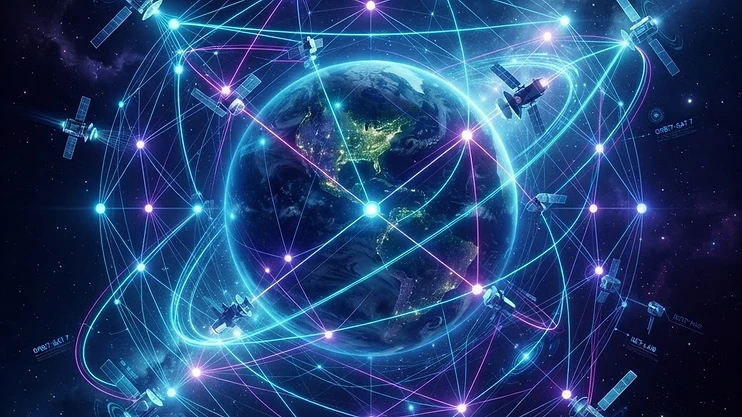
The challenge of space exploration has always been one of distance, but in 2026, the challenge has shifted from physical distance to data latency.
The challenge of space exploration has always been one of distance, but in 2026, the challenge has shifted from physical distance to data latency. As we push further into the solar system and increase the density of satellite constellations, the traditional model of sending data back to Earth for processing is becoming a bottleneck. The solution is emerging from the quiet tech corridors of Merritt Island and Melbourne, where companies like Space AI are pioneering the use of edge computing and artificial intelligence to process data directly on the spacecraft. This is not just a technical upgrade; it is a fundamental shift in how we manage space-based assets.
This shift toward "intelligent space" is being driven by the need for real-time decision-making in environments where communication with ground control is intermittent or delayed. By embedding sophisticated AI models into the operating systems of satellites and probes, these local firms are enabling spacecraft to perform autonomous navigation, anomaly detection, and data prioritization without human intervention. This capability is becoming the new gold standard for both commercial and defense missions, and it is placing the Space Coast at the center of the next wave of space-based software innovation.
For organizations in Melbourne and the surrounding region, this trend represents a massive opportunity to leverage local expertise in deep tech and software engineering. The convergence of AI and aerospace is creating a new category of enterprise technology that has applications far beyond the vacuum of space. From predictive maintenance for industrial machinery to autonomous logistics in complex environments, the lessons learned in the harsh conditions of space are being brought back to Earth, providing a competitive edge to local businesses that are quick to adopt these advanced methodologies.
What happened
Space AI, a Merritt Island-based developer of computer and operating systems for space solutions, has been at the forefront of this movement since its founding in 2015. The company has focused on the critical intersection of edge computing and deep tech, creating software that allows satellites to function as autonomous nodes in a larger network. This is a departure from the legacy approach where satellites were essentially "dumb" sensors that relayed raw data to ground stations. Today, the focus is on "on-orbit processing," where the AI filters, analyzes, and acts on data in real-time, drastically reducing the bandwidth required for communication and increasing the mission's overall efficiency.
This development is occurring alongside broader industry trends, such as the U.S. Space Command’s recent "Apollo Maneuvers 2026" exercise, which tested the resilience and responsiveness of space assets in contested environments. The ability to process data at the edge is a key component of these defense strategies, as it allows for faster reaction times in the face of potential threats. Furthermore, the FAA’s recent decision to remove caps on flights passing through space debris risk zones highlights the increasing complexity of orbital management, a problem that can only be solved through the kind of AI-driven, autonomous systems that companies like Space AI are developing. The integration of these technologies is no longer a theoretical exercise; it is a practical necessity for the modern space economy.
Why it matters
The deeper significance of this shift lies in the democratization of space-based data. When processing power is moved to the edge, the cost of operating a satellite constellation drops, and the utility of the data increases. This allows smaller, more agile companies to enter the space market, as they no longer need to invest in massive ground-based data centers to manage their assets. For the Space Coast, this means that the barrier to entry for space-tech startups is lowering, which will likely lead to a surge in new ventures in the Melbourne and Merritt Island areas.
In the next two to three years, we expect to see a proliferation of "AI-native" satellites that can adapt to changing mission parameters on the fly. This will create a new market for software-as-a-service (SaaS) models in space, where companies pay for the capability to run their own AI models on existing satellite infrastructure. This will fundamentally change the business model of space, moving it from a hardware-centric industry to a software-centric one. Organizations that can master the deployment of AI at the edge will be the ones that define the next decade of space exploration and commercialization. For local businesses, this means that the demand for software engineers with experience in edge computing, machine learning, and real-time systems will skyrocket, creating a high-value job market that is distinct from the traditional aerospace manufacturing sector.
The breakdown
- On-orbit data processing: By moving AI models to the satellite, we eliminate the need for constant ground-link communication, which is the primary bottleneck for current space missions. This allows for near-instantaneous decision-making in critical situations.
- Reduced bandwidth requirements: Processing data at the edge means only the most relevant information is sent back to Earth, saving massive amounts of bandwidth and reducing the cost of satellite operations.
- Autonomous mission management: AI-driven systems can handle routine tasks like station-keeping and debris avoidance, freeing up human operators to focus on higher-level mission objectives.
- Defense and security applications: In contested space environments, the ability to operate autonomously is a strategic imperative. AI-enabled satellites can detect and respond to threats without waiting for instructions from ground control.
- Cross-industry technology transfer: The techniques developed for space-based edge computing are directly applicable to terrestrial industries like autonomous vehicles, remote sensing, and industrial IoT, providing a massive growth opportunity for local tech firms.
- New software-as-a-service models: The ability to run third-party AI models on satellite hardware creates a new revenue stream for satellite operators and a new platform for software developers.
- Talent demand shift: The focus is shifting from mechanical and aerospace engineering to software, AI, and data science, requiring a significant pivot in local educational and training programs.
Key takeaways
- Edge computing and AI are solving the data latency issues that have long plagued space operations.
- Merritt Island and Melbourne are becoming hubs for this new wave of space-based software innovation.
- The shift to software-centric space operations is lowering the barrier to entry for new startups.
- Local businesses should look for ways to apply these edge-computing methodologies to their own operations to gain a competitive edge.
Our view
Most industry observers are still too focused on the hardware—the rockets and the satellites themselves. We believe this is a mistake. The real value in the space economy is moving rapidly toward the software layer. Companies like Space AI are the true pioneers of this era, and their success will be measured not by how many satellites they launch, but by how effectively they can manage the data those satellites produce. We expect to see a wave of acquisitions in the coming years, where traditional aerospace giants buy up these smaller, AI-native software firms to modernize their own aging fleets.
What most people get wrong is the idea that space AI is just about "smarter" satellites. It is actually about the creation of a distributed, autonomous network that functions like a planetary-scale computer. The companies that control the operating system for this network will be the most powerful players in the space economy. If you are a local tech leader, you should be looking at how your software stack can be adapted for edge environments. The future of the Space Coast is not just in the air; it is in the code that controls the air.
What to do about it
- Invest in edge-computing expertise: If your company is involved in software development, start building a team with experience in edge computing and real-time AI. This is the most valuable skill set in the current market.
- Explore partnerships with space-tech firms: Look for opportunities to collaborate with local companies like Space AI to see how their technology can be applied to your specific industry.
- Focus on data-driven decision-making: Even if you aren't in the space industry, the principles of edge computing—processing data where it is generated—can be applied to your own business to improve efficiency and reduce latency.
- Advocate for tech-focused education: Support local initiatives that promote computer science and AI education in schools and universities to ensure a steady pipeline of talent for the region.
The bottom line
The integration of AI and edge computing is the most significant development in space operations since the dawn of the satellite era. By processing data at the source, companies in Merritt Island and Melbourne are unlocking new levels of efficiency and autonomy that were previously impossible. This shift is not just changing the space industry; it is creating a new, software-driven economic engine for the Space Coast. Organizations that embrace this transition will be the ones that lead the next generation of technological innovation.