


The modern enterprise is drowning in software complexity.
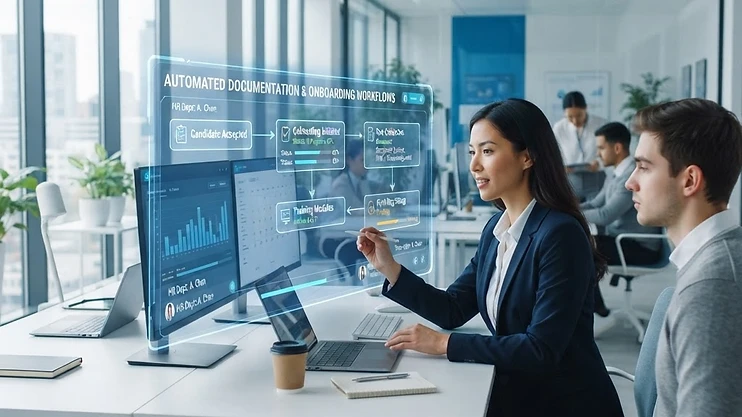
The modern enterprise is drowning in software complexity. With the average company utilizing dozens of SaaS platforms, the cognitive load on employees to learn, maintain, and support these tools has become a significant drag on productivity. In Florida, a new wave of AI-driven startups is tackling this 'complexity crisis' head-on, using generative AI to automate the most tedious parts of software onboarding and documentation. Among these, HereisHow.ai is leading the charge, turning the chaotic process of software adoption into a streamlined, automated workflow.
This is not just about better documentation; it is about fundamentally changing how organizations interact with their software stack. By connecting directly to GitHub repositories and other development tools, these platforms can generate real-time, context-aware guides and knowledge bases that evolve alongside the software itself. For businesses in the Space Coast and beyond, this represents a critical opportunity to reclaim the time and energy lost to software friction.
As we look toward the future of enterprise technology, the ability to automate the 'human' side of software—onboarding, training, and support—will become a key differentiator. Companies that can successfully implement these AI-driven solutions will be able to scale faster, onboard new talent more efficiently, and maintain a higher level of operational agility. This is the next phase of the AI revolution: moving from 'generative' to 'operational' AI that actually does the work of managing our digital tools.
What happened
Founded in 2025, HereisHow.ai has quickly emerged as a leader in the AI-driven onboarding space. The company’s platform connects directly to a business's GitHub repositories to automatically generate documentation, onboarding guides, and live knowledge bases. This solves a perennial problem in software engineering: the 'documentation gap,' where the speed of development far outpaces the ability of the team to document and explain the changes to the rest of the organization.
This development is part of a broader trend of 'AI-native' enterprise software that is emerging from the Florida tech ecosystem. By leveraging the latest in large language models, these tools can understand the context of a codebase and translate it into human-readable instructions, effectively acting as an 'always-on' support team for developers and end-users alike. This is a significant departure from traditional, static documentation methods that are often outdated the moment they are published.
For the Florida tech scene, this represents a shift toward high-value, SaaS-based enterprise solutions. While the Space Coast is known for its aerospace prowess, the growth of companies like HereisHow.ai shows that the region is also becoming a hub for the software and AI tools that support the broader digital economy. This diversification is essential for building a resilient and multifaceted technology ecosystem that can thrive in any economic climate.
Why it matters
Software complexity is the silent killer of enterprise productivity. When employees spend hours trying to figure out how to use a new tool or how to navigate a complex codebase, that is time that could be spent on high-value innovation. By automating the onboarding and support process, AI-driven tools like HereisHow.ai free up that time, allowing teams to focus on what they do best. This is a direct boost to the bottom line, as it reduces the 'time-to-value' for new software investments.
For organizations in the Space Coast region, this is particularly relevant as they scale their operations to meet the demands of the growing aerospace industry. As these companies grow, they will need to onboard hundreds of new engineers and technical staff. The ability to do this efficiently, without overwhelming the existing team with training and support requests, will be a critical factor in their success. AI-driven onboarding is not just a 'nice to have'; it is a strategic necessity for any company that wants to scale rapidly.
In 2-3 years, we expect AI-driven onboarding to become the industry standard. The days of static, manual documentation will be over, replaced by dynamic, AI-generated guides that are always up-to-date. This will fundamentally change the role of technical writers and support staff, shifting them from 'content creators' to 'AI curators' who oversee the systems that generate the documentation. This is a positive shift, as it allows these professionals to focus on higher-level strategy and user experience design.
The breakdown
- Automated documentation: By connecting to GitHub, the platform ensures that documentation is always in sync with the latest code changes, eliminating the 'outdated docs' problem.
- Reduced onboarding time: New employees can get up to speed on complex software stacks in a fraction of the time, as they have access to real-time, context-aware guides.
- Scalable support: The AI can handle the vast majority of routine support questions, freeing up human support staff to focus on complex, high-value issues.
- Context-aware learning: The AI understands the specific context of the company's codebase, providing answers that are relevant and actionable, rather than generic documentation.
- Operational agility: By reducing the friction of software adoption, companies can pivot and adopt new tools more quickly, maintaining a competitive edge in a fast-moving market.
- Talent retention: Providing employees with the tools they need to succeed, without the frustration of poor documentation, is a key factor in retaining top technical talent.
- Enterprise-grade security: As these tools become more integrated into the development workflow, they are being built with the security and compliance standards required by large enterprises.
Key takeaways
- Software complexity is a major drag on enterprise productivity, and AI-driven onboarding is the solution.
- Florida-based startups like HereisHow.ai are leading the way in automating the documentation and support process.
- AI-driven onboarding reduces 'time-to-value' for new software and allows companies to scale more efficiently.
- The role of technical writers and support staff is shifting from content creation to AI curation.
- AI-driven onboarding will become the industry standard within the next 2-3 years, making static documentation obsolete.
Our view
We believe that the 'documentation crisis' is one of the most overlooked problems in enterprise technology. Most companies treat documentation as an afterthought, but it is actually the foundation of operational efficiency. We think that the companies that win in the next decade will be those that treat their internal knowledge as a 'product' that is managed with the same rigor as their code. AI-driven onboarding is the first step in this direction, and we expect to see a massive wave of innovation in this space.
We think that most coverage of this story misses the point by focusing on the 'AI' aspect rather than the 'operational' aspect. The real value is not that the AI is 'smart,' but that it is 'integrated.' By connecting directly to the development workflow, these tools become a part of the fabric of the organization. We expect to see a consolidation of the market, with a few key players emerging as the 'operating system' for enterprise knowledge. Florida is well-positioned to be a leader in this space, given its growing tech ecosystem and focus on practical, enterprise-grade solutions.
What to do about it
- Audit your onboarding process: Take a hard look at how long it takes for a new employee to become productive and identify the bottlenecks in your current documentation and training.
- Pilot AI-driven tools: Start experimenting with AI-driven onboarding and support tools to see how they can improve your team's efficiency.
- Treat documentation as code: Adopt a 'docs-as-code' philosophy, where documentation is managed, versioned, and tested with the same rigor as your software.
- Invest in AI curation: Start training your technical writers and support staff to become AI curators who can manage and optimize the systems that generate your documentation.
The bottom line
The software complexity crisis is real, but it is also solvable. By leveraging AI to automate the onboarding and support process, companies can reclaim the time and energy lost to software friction and focus on what really matters: innovation. For businesses in Florida and beyond, the path to operational agility is clear: embrace the AI-driven future of enterprise knowledge management.