


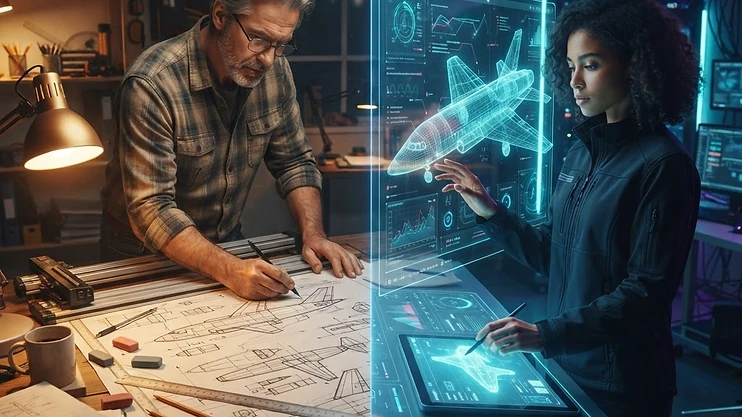
The adjustment for young workers appears to come mainly through reduced hiring.
The rapid integration of artificial intelligence into the aerospace and defense sectors is creating a complex workforce paradox on Florida’s Space Coast. While the region is experiencing an unprecedented boom in high-tech investment—evidenced by the recent opening of the Aerospace Center of Excellence in Titusville and the expansion of major contractors like Northrop Grumman—the underlying nature of the work is changing. AI is beginning to handle the 'bottom rungs' of engineering and manufacturing tasks, forcing a re-evaluation of how the next generation of aerospace professionals is trained and hired.
This matters because the Space Coast is currently in a race to build a workforce that can support the next decade of space exploration. If local employers design their AI adoption strategies poorly, they risk creating a 'hollowed-out' workforce where entry-level roles disappear, leaving a gap that prevents junior talent from gaining the experience necessary to become senior engineers. The recent warning from local workforce experts highlights that while widespread displacement is not yet the reality, the adjustment for young workers is already manifesting as reduced hiring in entry-level positions.
For organizations in Melbourne, Viera, and the surrounding areas, the challenge is to integrate AI as a force multiplier rather than a replacement for human development. This requires a fundamental shift in how companies partner with local educational institutions like Eastern Florida State College. The goal must be to create a pipeline that produces 'AI-augmented' engineers who can leverage these new tools from day one, rather than relying on traditional, slower training methods that may no longer be relevant in an automated environment.
What happened
On August 21, 2026, Space Florida announced a $1.5 million NASA-backed workforce hub aimed at building technical talent in aerospace, advanced manufacturing, cybersecurity, and logistics. This initiative is a direct response to the growing demand for a highly skilled workforce as companies like Blue Origin and Relativity Space expand their operations in the region. However, this push for talent is occurring simultaneously with a global shift toward AI-driven automation. A recent study by Stanford researchers, utilizing payroll data from millions of workers, found that while AI has not yet caused widespread economy-wide displacement, it is significantly altering the hiring landscape for young workers. In the context of the Space Coast, this means that while the total number of jobs is increasing, the entry requirements for those jobs are rising, and the traditional 'apprenticeship' model of learning on the job is being disrupted. Local employers are now faced with the dual challenge of filling immediate vacancies while preparing for a future where AI handles an increasing share of routine engineering and manufacturing tasks. The opening of the Aerospace Center of Excellence (ACE) in Titusville on October 13, 2026, is a critical step in addressing this, as it provides hands-on training that is designed to be more responsive to industry needs than traditional academic programs. The center aims to double the size of its Aerospace Technology Associate in Science degree program, signaling a clear intent to bridge the gap between current workforce capabilities and the future requirements of the aerospace industry.
Why it matters
The deeper issue here is the sustainability of the aerospace talent pipeline. If entry-level roles are automated away, the industry loses the 'nursery' where junior engineers learn the nuances of aerospace systems. This creates a long-term structural risk: a shortage of experienced senior engineers who have 'grown up' with the technology. In two to three years, we expect to see a bifurcation in the labor market. Companies that successfully integrate AI into their training programs will thrive, as their junior staff will be more productive and capable of handling complex tasks earlier in their careers. Conversely, companies that treat AI solely as a cost-cutting tool will struggle with a 'talent cliff,' where they have plenty of automated systems but a lack of human expertise to manage, troubleshoot, and innovate upon them. This is a critical moment for the Space Coast; the decisions made by local leaders today regarding workforce development will determine whether the region remains a global leader in aerospace or becomes a mere assembly site for automated systems. The beneficiaries will be the companies that prioritize 'human-in-the-loop' AI systems, while those that attempt to fully automate the engineering process will likely face significant quality and safety challenges that only human intuition can resolve.
The breakdown
- The Entry-Level Gap: AI is increasingly performing routine tasks that were once the domain of junior engineers and technicians. This reduces the number of 'on-ramp' positions available for new graduates, making it harder for them to gain the necessary experience to advance. Companies must find new ways to provide this foundational training.
- AI-Augmented Training: The future of aerospace education lies in training students to work alongside AI tools. This means curricula must evolve to include AI-driven simulation, predictive maintenance, and automated design software. The Aerospace Center of Excellence is a prime example of this shift in action.
- Workforce Resilience: A resilient workforce is one that is adaptable and capable of continuous learning. As AI tools evolve, the skills required to operate them will also change. Employers must invest in ongoing professional development to ensure their staff remains relevant and effective.
- The Role of Local Institutions: Colleges and universities in the region are the primary engines of workforce development. Their ability to pivot quickly to meet industry needs is essential for the continued growth of the Space Coast. Partnerships with companies like Northrop Grumman and Blue Origin are critical for ensuring that training is aligned with real-world requirements.
- Strategic AI Adoption: Companies must be intentional about how they implement AI. It should be used to enhance human capabilities, not replace them. This requires a culture that values human expertise and encourages collaboration between engineers and AI systems.
- Economic Impact: The success of the Space Coast’s workforce strategy will have a direct impact on the region’s economic prosperity. A highly skilled, AI-literate workforce will attract more high-tech investment, creating a virtuous cycle of growth. Failure to adapt could lead to a stagnation of the local economy.
- The Human Element: Despite the advancements in AI, the aerospace industry remains fundamentally human-centric. Safety, ethics, and complex problem-solving require human judgment. The goal of AI adoption should be to free up human engineers to focus on these high-value tasks.
Key takeaways
- AI is changing the entry-level hiring landscape, creating a potential 'talent cliff' for junior engineers.
- The Space Coast must prioritize 'AI-augmented' training to ensure the workforce remains competitive.
- Educational institutions like EFSC are critical partners in bridging the gap between industry needs and talent supply.
- Companies should focus on using AI to enhance human productivity rather than replacing human roles.
- Long-term success depends on maintaining a pipeline of experienced, human-led engineering expertise.
Our view
Most coverage of the 'AI workforce threat' focuses on mass unemployment, which is a distraction from the real issue: the erosion of the apprenticeship model. We believe the Space Coast is at a crossroads. If local firms continue to view AI as a way to reduce headcount, they will find themselves with a massive skills gap in five years. The winners will be the companies that treat AI as a tool for 'supercharging' their junior engineers, allowing them to perform at a senior level much faster. We expect to see a new 'hybrid' role emerge—the 'Aerospace Systems Integrator'—who is as comfortable with AI-driven design software as they are with physical hardware. The most successful companies will be those that invest in their own internal training academies, effectively bypassing the slow pace of traditional education. The biggest mistake most firms are making is waiting for the 'perfect' AI tool to arrive before they start training their people. The technology is already here; the bottleneck is the human ability to use it effectively. We predict that the firms that start 'AI-first' training programs today will dominate the Space Coast market by 2029.
What to do about it
- For Business Leaders: Audit your current hiring and training processes to identify where AI can be used to support junior staff rather than replace them. Create internal mentorship programs that pair junior engineers with AI-literate senior staff.
- For Technical Professionals: Embrace AI tools as a way to expand your capabilities. Don't wait for your employer to provide training; take the initiative to learn how to integrate AI into your daily workflow.
- For Educational Institutions: Accelerate the integration of AI-driven tools into all aerospace-related curricula. Focus on 'applied' learning that mimics the real-world environment of modern aerospace firms.
- For Policy Makers: Continue to support initiatives like the Aerospace Center of Excellence, but push for even tighter integration with local industry. Ensure that funding is tied to measurable outcomes in workforce readiness and job placement.
The bottom line
The integration of AI into the Space Coast’s aerospace sector is not a threat to be feared, but a challenge to be managed. By focusing on human-centric AI adoption and robust, industry-aligned training, the region can turn this technological shift into a competitive advantage. The future of the Space Coast depends on our ability to cultivate a workforce that is as intelligent and adaptable as the systems they build. We must ensure that the next generation of engineers is not just trained to use the tools of today, but is prepared to lead the innovations of tomorrow.