


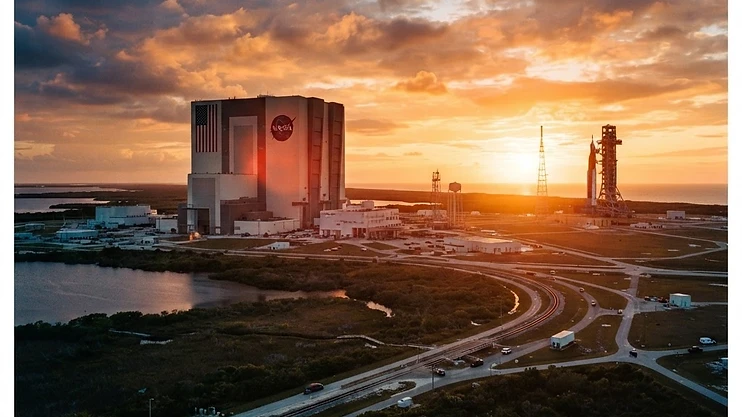
The aerospace giant is pursuing multiple projects and new facilities across Brevard County as it ramps up manufacturing and launch operations.
The landscape of the Space Coast is undergoing a physical and economic metamorphosis that is unprecedented in the history of the American space program. As of late October 2026, the region is witnessing a massive land-use shift, with SpaceX seeking a 400-acre expansion at the Kennedy Space Center and Blue Origin securing new leases at the Space Coast Regional Airport in Titusville. These are not merely incremental growth projects; they are the foundational steps toward creating a permanent, high-volume industrial base for the next generation of heavy-lift launch vehicles and lunar landers.
This expansion is happening against the backdrop of a global space economy that is increasingly reliant on the infrastructure of the Space Coast. The sheer scale of these projects—involving hundreds of acres of land and billions of dollars in capital investment—signals that the major players in the industry are betting their long-term future on the stability and capability of the Florida corridor. For businesses in Melbourne, Viera, and Titusville, this means a sustained period of growth, but it also brings significant challenges regarding infrastructure, housing, and the competition for a finite pool of highly skilled labor.
Why this matters right now is that we are moving from the "experimental" phase of private spaceflight to the "operational" phase. When companies like SpaceX and Blue Origin commit to massive, long-term land leases, they are signaling that their launch cadence will be measured in hundreds, not dozens, of flights per year. This requires a level of industrial support that is fundamentally different from what existed even five years ago. The local economy must now adapt to support a permanent, high-intensity industrial presence that will define the character of the Space Coast for decades to come.
What happened
In October 2026, the aerospace industry saw a flurry of activity regarding land expansion on the Space Coast. SpaceX has initiated plans for a 400-acre expansion at the Kennedy Space Center, specifically tied to the advancement of its Starship program. This expansion is part of a broader $1.8 billion push to increase launch capacity and manufacturing throughput. Simultaneously, Blue Origin has expanded its footprint at the Space Coast Regional Airport in Titusville, securing new leases to support its growing manufacturing and launch operations. These moves follow a series of successful test flights and the increasing demand for heavy-lift capabilities to support both commercial and government missions.
These expansions are being reviewed by NASA and local authorities, reflecting the complex regulatory environment that governs the use of federal land for private enterprise. The projects are designed to accommodate the massive scale of next-generation rockets, which require specialized facilities for assembly, testing, and integration. The investment is not just in the launch pads themselves, but in the entire supply chain infrastructure that feeds them. This includes everything from specialized logistics centers to advanced testing laboratories that can handle the extreme conditions required for deep-space hardware.
Why it matters
The deeper consequence of this expansion is the solidification of the Space Coast as the world’s primary "spaceport city." This is not just about the jobs created at the launch sites; it is about the entire ecosystem that must grow to support them. We are seeing a shift where the Space Coast is becoming a self-contained industrial hub. In two to three years, the region will likely be the most concentrated area of aerospace engineering talent in the world. This will create a "gravity well" effect, pulling in more startups, research institutions, and service providers.
However, this growth is not without its threats. The primary risk is infrastructure strain. The rapid influx of capital and personnel will put immense pressure on housing, transportation, and utilities in cities like Titusville and Melbourne. If the local government cannot keep pace with the infrastructure needs, the region risks becoming a victim of its own success, with rising costs and congestion potentially stifling the very innovation that is driving the growth. Furthermore, the reliance on a few "mega-players" creates a vulnerability; if one of these companies shifts its strategy or faces a major setback, the local economy could feel the shockwaves immediately.
The breakdown
- Industrial scale-up: The 400-acre expansion by SpaceX and the new leases by Blue Origin represent a massive increase in the physical footprint of the aerospace industry. This scale is necessary to support the high-frequency launch cadence required for future lunar and Mars missions.
- Supply chain integration: These expansions are designed to bring more of the manufacturing process in-house or to local partners. This reduces the reliance on external suppliers and allows for faster iteration cycles, which is critical for the development of complex vehicles like Starship.
- Regulatory complexity: The expansion plans are subject to rigorous review by NASA and other federal agencies, highlighting the ongoing challenge of balancing private innovation with public land use. This regulatory process is a key bottleneck that could impact the speed of development.
- Infrastructure pressure: The rapid growth of these facilities will necessitate significant upgrades to local roads, power grids, and water systems. Titusville and Melbourne must work closely with state and federal partners to ensure that the infrastructure can support this industrial intensity.
- Talent competition: The demand for specialized aerospace engineers and technicians will skyrocket, potentially driving up wages and creating a "war for talent" that could make it difficult for smaller local firms to compete.
- Economic concentration: While the growth is positive, it creates a high level of economic concentration. The region’s prosperity is becoming increasingly tied to the success of a few major aerospace companies, which requires a proactive approach to economic diversification.
- Long-term commitment: These investments are not short-term bets; they are multi-decade commitments. This provides a level of stability that allows for long-term planning by local businesses and educational institutions, but it also locks the region into a specific industrial trajectory.
Key takeaways
- SpaceX and Blue Origin are significantly expanding their physical footprint on the Space Coast.
- These expansions are essential for the next generation of heavy-lift launch vehicles.
- The growth brings both massive economic opportunity and significant infrastructure challenges.
- Local governments must prioritize infrastructure development to support this industrial surge.
Our view
Most coverage of this story focuses on the "cool factor" of the rockets, but the real story is the industrialization of the Space Coast. We believe that the region is on the verge of a permanent transformation that will make it the most important aerospace hub in the world. The biggest mistake most observers make is assuming this growth will be linear. It will be volatile, driven by the successes and failures of these massive, experimental projects. We expect that the next three years will be defined by a "growing pain" phase where the region struggles to balance the needs of these industrial giants with the quality of life for its residents. The winners will be the local businesses that can provide the specialized services these companies need, while the losers will be those who fail to adapt to the rapid pace of change.
What to do about it
- For business leaders: Evaluate your supply chain and identify opportunities to provide specialized services to the expanding aerospace sector. The demand for high-quality, reliable local partners will only increase.
- For local government: Prioritize the development of affordable housing and transportation infrastructure to ensure that the workforce can live and work in the region without being priced out.
- For technical professionals: Focus on developing skills that are transferable across the aerospace industry, such as advanced manufacturing, systems engineering, and project management.
- For investors: Look for opportunities in the secondary and tertiary markets that support the aerospace industry, such as commercial real estate, logistics, and specialized software development.
The bottom line
The massive expansion of SpaceX and Blue Origin on the Space Coast is a defining moment for the region. It marks the transition from a launch-focused hub to a permanent, high-intensity industrial center. While the challenges of this growth are significant, the potential for long-term economic prosperity is immense. The Space Coast is no longer just a place to watch history; it is the place where the future of spaceflight is being built.