


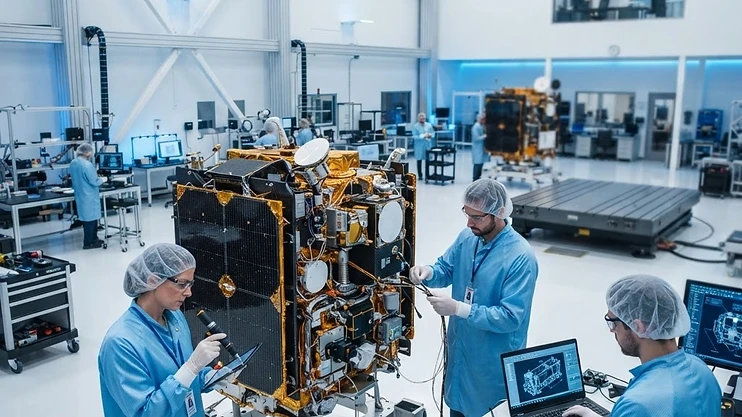
Melbourne gives us direct access to the Space Coast’s aerospace talent and infrastructure while adding dedicated engineering and manufacturing capacity.
The aerospace landscape in Melbourne, Florida, is undergoing a profound structural transformation as the region shifts from a launch-centric hub to a comprehensive engineering and manufacturing powerhouse. This week’s announcement that CesiumAstro will invest $25 million to establish a new facility in Melbourne is not merely a corporate expansion; it is a validation of the Space Coast’s maturing ecosystem. By integrating semiconductor design and AI-driven signal analysis directly into the local supply chain, the company is positioning itself to capture the next wave of mission-critical defense and commercial satellite demand.
This move matters because it addresses the 'last mile' of aerospace production: the ability to design, test, and manufacture high-performance hardware in close proximity to the launch pads at Kennedy Space Center. As global supply chains for critical components remain volatile, the concentration of specialized engineering talent in Brevard County provides a strategic hedge for companies like CesiumAstro. The integration of AI into their signal analysis workflows suggests that the future of the Space Coast will be defined as much by software-defined radio and autonomous systems as it is by the rockets that carry them into orbit.
For local stakeholders, this investment represents a shift toward higher-value, high-paying technical roles that require advanced degrees and specialized training. With the Economic Development Commission of Florida’s Space Coast facilitating this growth, the region is effectively building a moat around its aerospace industry. The challenge now lies in scaling the workforce to meet this demand, ensuring that the local talent pipeline—supported by institutions like Eastern Florida State College—can keep pace with the rapid influx of capital and technical complexity.
What happened
On October 15, 2026, the Economic Development Commission of Florida’s Space Coast announced that CesiumAstro, an Austin-based aerospace and defense firm, would invest $25 million to open a new engineering and manufacturing facility in Melbourne. The project is expected to create 100 high-paying jobs, adding to the company’s existing global workforce of over 850 employees. This expansion follows a series of strategic acquisitions by CesiumAstro throughout 2026, which brought semiconductor design, AI-driven signal analysis, and mission-critical software capabilities in-house. According to Brett Paulson, Chief Operating Officer of CesiumAstro, the Melbourne location was chosen specifically for its direct access to the region’s aerospace talent pool and its proximity to key customers and mission partners. The facility will focus on the development, integration, and testing of next-generation space and defense technologies, effectively bridging the gap between theoretical design and flight-ready hardware. This announcement comes on the heels of other major regional developments, including Northrop Grumman’s recent unveiling of a 300,000-square-foot engineering facility in Melbourne and the ongoing expansion of commercial aerospace infrastructure at Kennedy Space Center. The convergence of these investments underscores a broader trend of aerospace firms consolidating their operations within the Space Coast to reduce lead times and enhance collaboration with government and commercial launch providers.
Why it matters
The significance of this investment lies in the vertical integration of the Space Coast’s aerospace sector. Historically, the region was defined by assembly and launch operations, but the arrival of firms like CesiumAstro signals a transition toward deep-tech manufacturing. By bringing semiconductor design and AI-driven signal analysis to Melbourne, the region is moving up the value chain, capturing more of the intellectual property and high-margin engineering work that was previously outsourced to other tech hubs. This structural change creates a more resilient local economy that is less susceptible to the boom-and-bust cycles of launch schedules alone. In the next two to three years, we expect to see a 'clustering effect' where smaller, specialized suppliers emerge to support these larger engineering hubs, creating a self-sustaining ecosystem of innovation. Furthermore, the integration of AI into these local facilities will likely accelerate the development of autonomous satellite constellations, a key priority for both the Department of Defense and commercial operators. The threat here is to regions that rely solely on legacy manufacturing; if they cannot pivot to include software-defined hardware and AI-integrated systems, they risk becoming obsolete as the Space Coast sets the new standard for aerospace agility.
The breakdown
- Vertical Integration: CesiumAstro’s move to bring semiconductor design and AI-driven signal analysis in-house allows for tighter control over the product lifecycle. This reduces reliance on external vendors and speeds up the iteration cycle for mission-critical hardware. By controlling the silicon, they control the performance of the entire satellite system.
- Talent Concentration: The 100 new jobs represent a high-value addition to the Melbourne workforce, requiring specialized skills in aerospace engineering and software development. This concentration of talent attracts further investment, creating a virtuous cycle of growth for the region. Local universities and colleges must now align their curricula to support these specific technical requirements.
- Proximity to Launch: Being located in Melbourne provides immediate access to the Kennedy Space Center and the broader Space Coast launch infrastructure. This proximity is a competitive advantage for testing and integration, allowing for faster 'lab-to-launch' timelines. It also facilitates closer collaboration with major defense contractors already present in the area.
- AI-Driven Innovation: The focus on AI-driven signal analysis is a direct response to the increasing complexity of space-based communications. As satellite constellations grow in size and density, AI is required to manage signal interference and optimize data throughput. This capability is becoming a standard requirement for modern defense and commercial space missions.
- Economic Resilience: By diversifying the types of companies operating in the region, the Space Coast is building a more robust economic base. The shift from pure launch services to engineering and manufacturing provides a buffer against fluctuations in the commercial space market. This stability is crucial for long-term regional planning and infrastructure development.
- Supply Chain Localization: The trend of bringing manufacturing closer to the point of use is a global shift that is landing hard in Florida. By localizing the supply chain, companies can mitigate the risks associated with global logistics and geopolitical instability. This makes the Space Coast a more attractive destination for companies looking to secure their production lines.
- Infrastructure Investment: The influx of capital from companies like CesiumAstro and Northrop Grumman necessitates continued investment in local infrastructure, including power, data, and transportation. This creates secondary opportunities for local businesses and service providers. The region must manage this growth carefully to maintain its competitive edge.
Key takeaways
- Melbourne is evolving from a launch site into a high-tech engineering and manufacturing hub.
- Vertical integration of semiconductor and AI capabilities is the new competitive standard for aerospace firms.
- Proximity to launch infrastructure remains the primary driver for corporate site selection in the region.
- The local workforce must rapidly adapt to higher-level technical demands to sustain this growth.
- Regional economic stability is increasing as the aerospace sector diversifies beyond launch services.
Our view
Most industry analysts view the CesiumAstro expansion as a simple 'jobs announcement,' but this misses the forest for the trees. This is a clear signal that the Space Coast is successfully executing a strategy to capture the 'brain' of the aerospace industry, not just the 'muscle.' We believe that the next three years will see a massive consolidation of software-defined aerospace firms in Melbourne, effectively turning the city into the Silicon Valley of space-based hardware. The biggest mistake observers make is assuming that launch volume is the only metric of success; in reality, the value is shifting toward the companies that can build the intelligent, autonomous systems that operate in orbit. CesiumAstro is betting that being in Melbourne allows them to iterate faster than their competitors in Austin or California, and they are likely correct. The winners in this new era will be the companies that can seamlessly blend AI, semiconductor design, and rapid manufacturing. The losers will be the legacy contractors who are too slow to integrate these technologies into their existing workflows. We expect to see more 'Project Horseshoe' style mystery investments as firms scramble to secure their footprint in this high-growth corridor.
What to do about it
- For Local Business Leaders: Evaluate your current service offerings to see how they can support the specialized needs of high-tech aerospace firms. There is a growing demand for precision manufacturing, specialized logistics, and advanced IT infrastructure that local firms are uniquely positioned to provide.
- For Technical Professionals: Focus on upskilling in areas like AI-driven signal processing, embedded systems, and semiconductor design. These are the skills that will command the highest salaries and provide the most job security in the evolving Space Coast economy.
- For Educational Institutions: Partner directly with incoming firms to create tailored certification programs that meet their specific workforce needs. The model established by the Aerospace Center of Excellence in Titusville should be replicated and scaled to ensure a steady pipeline of qualified talent.
- For Policy Makers: Prioritize infrastructure projects that support high-tech manufacturing, such as reliable high-speed data networks and specialized power grids. The ability to support these facilities is just as important as the tax incentives used to attract them.
The bottom line
CesiumAstro’s $25 million investment in Melbourne is a definitive marker of the Space Coast’s transition into a sophisticated, high-tech aerospace hub. By integrating semiconductor design and AI-driven systems into the local manufacturing base, the region is securing its position at the forefront of the next generation of space exploration. This shift toward high-value engineering will define the economic future of Brevard County for the coming decade. As the industry continues to consolidate, the companies that master the intersection of software and hardware will lead the market. The Space Coast is no longer just a place to launch rockets; it is the place where the future of aerospace is being designed and built.