


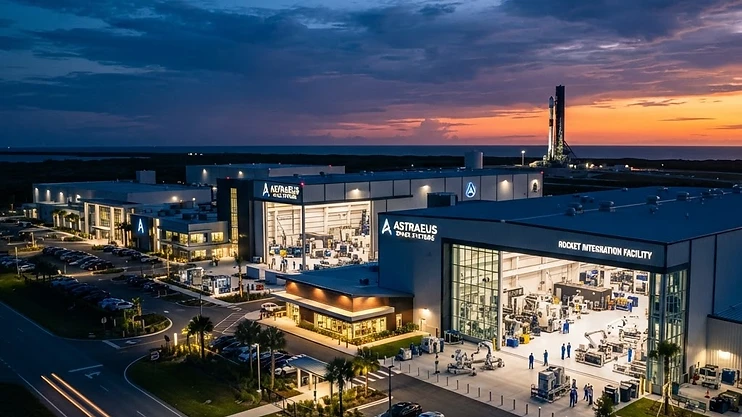
This is the moment where the Space Coast moves from being a testing ground to becoming the primary factory floor for the global space economy.
The landscape of Brevard County is undergoing a structural metamorphosis that transcends the typical boom-and-bust cycles of the aerospace industry. As of October 2026, the convergence of state-backed infrastructure financing and private sector ambition has created a unique economic gravity well centered on the Space Coast. This is not merely about launching rockets; it is about building the permanent, high-capacity industrial backbone required to sustain a multi-launch-per-day cadence for the next decade.
For leaders in Melbourne, Viera, and Titusville, this shift represents a transition from a 'launch site' economy to a 'manufacturing and integration' economy. The recent authorization of $277 million in potential funding by Space Florida, coupled with massive private capital commitments from firms like Relativity Space and Blue Origin, signals that the region is preparing for a permanent increase in industrial density. This is the moment where the Space Coast moves from being a testing ground to becoming the primary factory floor for the global space economy.
This development matters because it fundamentally alters the local labor market and real estate requirements. With companies like Relativity Space committing to over half a billion dollars in infrastructure and thousands of high-wage jobs, the demand for specialized engineering talent and advanced manufacturing facilities is reaching a fever pitch. Organizations that fail to adapt their supply chains, recruitment strategies, and infrastructure planning to this new reality will find themselves sidelined as the region matures into a global aerospace powerhouse.
What happened
In September 2026, Space Florida moved to authorize a massive $277 million financial package aimed at bolstering the aerospace infrastructure across the Space Coast. This funding is not a singular grant but a strategic deployment of capital designed to support a diverse array of industry giants and emerging players, including Relativity Space, Blue Origin, United Launch Alliance, and SpaceX. The scope of these projects is comprehensive, covering everything from payload processing facilities and launch-exhaust treatment plants to critical wastewater system improvements necessary for high-frequency operations.
Simultaneously, the Space Coast Innovation Park at the Space Coast Regional Airport in Titusville has become a focal point of this expansion. With a $230 million project currently underway, the park is set to deliver approximately 640,000 square feet of industrial space, creating over 900 jobs. This development is being managed by global real estate firm Hines, which is navigating the complex web of permitting, infrastructure, and workforce requirements to bring these facilities online. Furthermore, the emergence of 'Project Horseshoe'—an unidentified space infrastructure firm seeking up to $200 million in bond financing—highlights the aggressive nature of the current investment climate.
Relativity Space has also solidified its footprint, with plans to invest over $500 million in rocket-related infrastructure, including upper-stage testing and expanded launch capabilities at LC-16. This follows a pattern of state-supported growth, such as the $24.2 million awarded to Blue Origin for 'Project Horizon' on Merritt Island. These investments are being funneled through the Florida Department of Transportation’s Spaceport Improvement Program, ensuring that the physical infrastructure of the spaceports keeps pace with the rapid technological advancements of the private companies operating within them.
Why it matters
This surge in infrastructure investment represents a structural shift in the regional economy. By moving beyond simple launch pads to integrated manufacturing and testing facilities, the Space Coast is effectively 'locking in' the aerospace industry for the long term. When a company invests half a billion dollars in fixed assets like payload processing plants and testing rigs, they are not going anywhere. This creates a stable, high-value tax base and a permanent demand for specialized labor that will insulate the region from the volatility often associated with the space sector.
For local businesses in Melbourne and Viera, the second-order consequences are profound. The influx of thousands of high-wage employees—with average salaries in the $86,000 range—will drive demand for housing, services, and secondary technology support. However, it also creates a 'talent squeeze.' Local firms in non-aerospace sectors will find it increasingly difficult to compete for engineering and technical talent against the massive compensation packages offered by the likes of Relativity Space and SpaceX. This will force a rapid evolution in how local businesses approach employee retention and automation.
Structurally, the region is moving toward an 'airport-style' operational model for space. As SpaceX and others push for multiple launches per day, the regulatory and logistical burden on the local infrastructure will increase. The integration of maritime solutions, such as the 'Project Manta' initiative with Seagate Space, further diversifies the region's capabilities, allowing for offshore launch support that complements land-based operations. In 2-3 years, we expect the Space Coast to function as a seamless, high-throughput industrial zone where the distinction between 'aerospace' and 'general manufacturing' becomes increasingly blurred.
The breakdown
- Capital intensity: The $277 million in state-backed funding acts as a catalyst for billions in private investment, ensuring that the region remains the most cost-effective place to build and launch space hardware.
- Infrastructure integration: The focus on wastewater, exhaust treatment, and payload processing shows that the industry is moving from 'experimental' to 'industrial-scale' operations, requiring permanent utility upgrades.
- Talent competition: With thousands of high-wage jobs being created, local businesses must prepare for a significant tightening of the labor market, particularly for roles in mechanical engineering, software, and project management.
- Real estate expansion: The development of the Space Coast Innovation Park in Titusville provides the necessary square footage for the supply chain companies that will inevitably follow the major launch providers.
- Regulatory evolution: The collaboration between the FAA, the U.S. Air Force, and local authorities to manage increased launch frequency is setting a new standard for how airspace is managed in a high-density launch environment.
- Maritime diversification: Initiatives like Project Manta demonstrate that the region is looking beyond the coastline, utilizing maritime industrial bases in places like the Port of Tampa Bay to support space access.
- Long-term commitment: The scale of capital investment by companies like Relativity Space and Blue Origin serves as a 'moat' that protects the region's status as the global leader in space transportation.
Key takeaways
- The Space Coast is transitioning from a launch site to a permanent, high-capacity manufacturing and integration hub.
- Over $277 million in new state-backed infrastructure funding is currently fueling a massive industrial building boom.
- Local businesses must prepare for a severe talent shortage as aerospace giants aggressively recruit for thousands of high-wage roles.
- The region is adopting an 'airport-style' operational model, requiring significant upgrades to local utilities and logistics.
- Strategic investments in maritime and offshore launch capabilities are diversifying the local aerospace ecosystem.
Our view
Most coverage of the Space Coast focuses on the spectacle of the launches themselves, but the real story is the boring, expensive, and essential industrial infrastructure being built behind the scenes. We believe that the 'Space Coast' brand is currently undervalued by the broader tech market. While Silicon Valley obsesses over software-defined everything, the real value is being created here in the physical world, where capital is being converted into tangible, high-throughput manufacturing capacity. The companies that win in the next decade will be those that master the integration of these physical assets with the digital workflows of modern aerospace engineering.
We expect that the 'Project Horseshoe' and similar initiatives will lead to a consolidation of the supply chain within a 50-mile radius of the Kennedy Space Center. This will create a 'cluster effect' that makes it nearly impossible for other regions to compete on cost or speed. The biggest risk to this growth is not a lack of demand, but a failure of local infrastructure to keep up with the pace of industrial expansion. If the region cannot solve the housing and utility challenges, the growth will be throttled. However, given the current momentum, we are bullish on the region's ability to navigate these hurdles.
What to do about it
- Audit your talent pipeline: If your business relies on technical or engineering talent, you must benchmark your compensation and benefits against the aerospace sector immediately to avoid losing your best people.
- Invest in local partnerships: Engage with the Economic Development Commission of Florida’s Space Coast to understand how your business can integrate into the growing aerospace supply chain.
- Prepare for infrastructure strain: If you operate in the industrial or logistics sectors, anticipate increased traffic and utility demand, and plan your facility upgrades accordingly.
- Leverage the 'cluster effect': Look for opportunities to provide specialized services—such as cybersecurity, cloud infrastructure, or advanced manufacturing support—to the aerospace companies moving into the region.
The bottom line
The transformation of the Space Coast into a global industrial powerhouse is no longer a projection; it is a reality currently being poured in concrete and steel. With hundreds of millions in state and private capital flowing into the region, the infrastructure for the next generation of space exploration is being built in our own backyard. For businesses in Melbourne, Viera, and beyond, this represents both a significant challenge and an unprecedented opportunity. Those who align their operations with this industrial surge will thrive, while those who ignore it will find themselves left behind in a rapidly evolving economic landscape.