


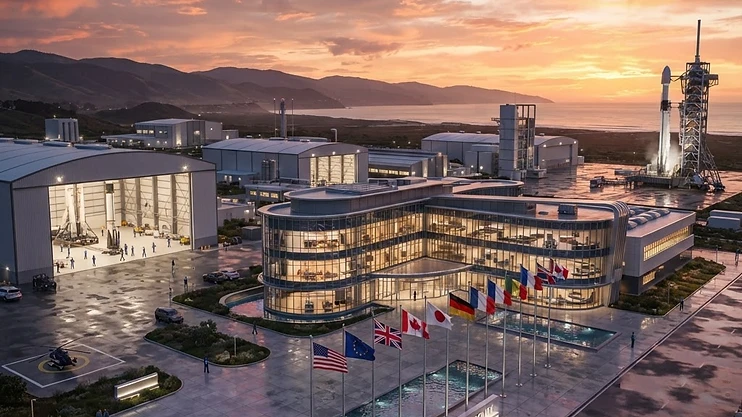
The space industry is inherently global, and the Space Coast is the place where that global reality is being built.
The Space Coast has long been synonymous with American ambition, but in 2026, it is becoming something much more: a global nexus for aerospace innovation. The recent agreement between Space Florida and the United Kingdom’s Department for Science, Innovation and Technology is just the latest indicator that the region is no longer just a launch site for domestic missions. It is a strategic partner in a global network of research, innovation, and commercialization that spans continents and industries.
This internationalization of the Space Coast is a direct response to the growing complexity of the space economy. As missions become more ambitious and the technology required to support them becomes more specialized, no single country or company can go it alone. The arrival of firms like Argotec, an Italian space company, to Melbourne is a testament to the 'gravitational pull' of the region. Companies from around the world are recognizing that if they want to compete in the global aerospace market, they need to have a presence on the Space Coast.
This global shift is not just about prestige; it is about practical, economic reality. By fostering international partnerships, the Space Coast is ensuring that it remains at the center of the global aerospace supply chain. This brings in foreign investment, creates high-paying jobs, and ensures that the region remains a hub for the latest technological advancements. For organizations in Melbourne, Viera, and beyond, this means that the local economy is increasingly tied to the success of global space missions, creating a unique and resilient industrial base.
What happened
The landscape of the Space Coast has been fundamentally altered by a series of international agreements and investments throughout 2026. In April, Argotec officially opened its first U.S.-based satellite production facility in Melbourne, a move designed to support rapid, scalable satellite delivery for both U.S. government and commercial missions. This was followed in July by the announcement of a new agreement between Space Florida and the UK’s Department for Science, Innovation and Technology, aimed at funding joint aerospace research and commercialization projects. These developments are part of a broader trend of internationalization that is transforming the region. Space analysts like Dr. Ken Kremer have noted that the growth of the space launch market is phenomenal, and the need for companies to invest in the region is becoming a strategic imperative. This is supported by the ongoing expansion of major players like Relativity Space, which is creating thousands of jobs in the area. The result is a vibrant, globalized ecosystem where international firms, domestic giants, and local startups are working together to push the boundaries of what is possible in space.
Why it matters
The deeper significance of this global integration is that it creates a 'network effect' that is incredibly difficult to replicate. When international companies set up shop in Melbourne, they bring with them their own supply chains, their own talent, and their own unique approaches to engineering. This cross-pollination of ideas and resources is what drives innovation. For the Space Coast, this means that the region is becoming a 'must-have' location for any company that wants to be a serious player in the global aerospace market. In 2-3 years, we expect to see the Space Coast become the primary hub for international aerospace collaboration, with a constant flow of talent, capital, and technology between Florida and the rest of the world. This will have a profound impact on the local economy, as it will create a more diverse and resilient industrial base that is less dependent on any single market or government. Furthermore, this global focus will ensure that the region remains at the cutting edge of aerospace technology, as it will be the first to benefit from the latest advancements developed by international partners. The Space Coast is no longer just a place where rockets launch; it is a place where the future of space is being designed, built, and tested in collaboration with the best minds from around the world.
The breakdown
- International Satellite Production: The arrival of companies like Argotec in Melbourne is a major milestone, as it demonstrates that the region is now a preferred destination for international aerospace firms looking to scale their production for the U.S. market.
- Joint Research Agreements: The partnership between Space Florida and the UK’s Department for Science, Innovation and Technology is a model for future international collaboration, providing a framework for joint research and commercialization projects.
- Global Supply Chain Integration: By attracting international firms, the Space Coast is becoming a central node in the global aerospace supply chain, ensuring that it remains a critical part of the international space economy.
- Talent Mobility: The influx of international companies is bringing a diverse range of talent to the region, creating a more vibrant and innovative workforce that is better equipped to tackle complex, global challenges.
- Strategic Imperative: For companies looking to compete globally, having a presence on the Space Coast is becoming a strategic imperative, as it provides access to the world's most advanced launch infrastructure and a highly skilled aerospace workforce.
- Economic Diversification: The internationalization of the region is helping to diversify the local economy, making it more resilient to the cyclical nature of domestic government contracts and more attractive to a wider range of investors.
- Innovation Ecosystem: The combination of international firms, domestic giants, and local startups is creating a unique innovation ecosystem where ideas can be rapidly prototyped, tested, and scaled for the global market.
Key takeaways
- The Space Coast is becoming a global nexus for aerospace innovation through international partnerships and investment.
- International firms are choosing Melbourne as their U.S. base to access the region's unique launch infrastructure and talent pool.
- Global collaboration is driving a 'network effect' that is accelerating the pace of aerospace innovation.
- The region's economy is becoming more diverse and resilient as it integrates into the global aerospace supply chain.
- The Space Coast is now a 'must-have' location for any company that wants to be a serious player in the global space market.
Our view
Most coverage of the Space Coast focuses on the 'American' nature of the industry, but this is a fundamental misunderstanding of the current reality. The space industry is inherently global, and the Space Coast is the place where that global reality is being built. We believe that the region's future success depends on its ability to continue attracting international partners and fostering a collaborative, global environment. The 'new space race' is not a competition between nations; it is a race to build the most efficient, reliable, and innovative infrastructure for the space economy, and that race is being won by the regions that can best integrate global talent and resources. We expect to see more international firms following in the footsteps of Argotec, and we believe that the Space Coast will continue to be the primary beneficiary of this trend. The most successful companies will be those that can navigate this global landscape, leveraging the unique advantages of the Space Coast while tapping into the expertise and resources of their international partners. This is a massive opportunity for the region, and we believe it will lead to a period of unprecedented growth and innovation that will define the next generation of aerospace technology.
What to do about it
- Think Globally: If you are a local business, look for opportunities to partner with international firms that are moving into the region. There is a massive opportunity to provide services and support to these new entrants.
- Leverage International Networks: Engage with organizations like Space Florida to stay informed about international partnerships and to identify opportunities for collaboration.
- Focus on Scalability: As the region becomes a global hub, the demand for scalable, high-quality services will only increase. Focus on building systems and processes that can handle the increased volume and complexity of a globalized aerospace industry.
- Invest in Cross-Cultural Competence: As the workforce becomes more international, invest in training and development that fosters cross-cultural competence and collaboration.
The bottom line
The internationalization of the Space Coast is a clear signal that the region is at the center of the global aerospace revolution. By fostering international partnerships and attracting global talent, the region is building a unique and resilient industrial base that will define the future of space. This is not just about launching rockets; it is about building a global network of innovation that will support human expansion for generations. The Space Coast is proving that the future of space is a collaborative, global endeavor, and it is leading the way.