


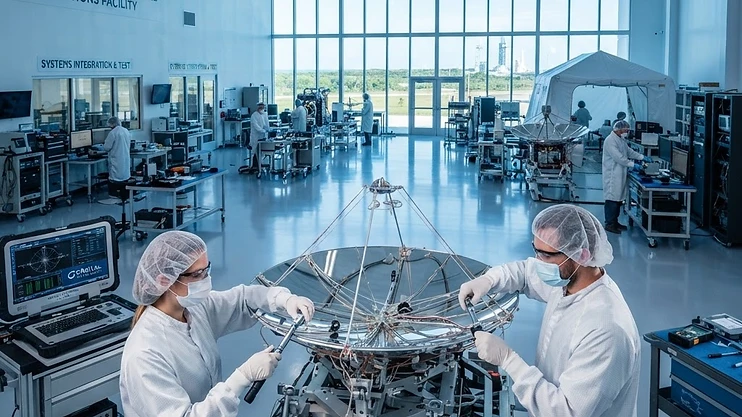
The Melbourne investment builds on several years of rapid growth, during which CesiumAstro has grown to more than 850 employees.
The recent announcement that CesiumAstro will invest $25 million to establish a new engineering and manufacturing hub in Melbourne, Florida, is more than just a corporate expansion; it is a structural pivot for the Space Coast economy. By bringing 100 high-paying engineering roles to the region, the company is signaling that the next phase of the local aerospace boom is not just about building rockets, but about the sophisticated, AI-integrated hardware that goes inside them. This move underscores a broader transition toward high-value, mission-critical technology development that leverages the existing talent pool in Brevard County.
For years, the narrative of the Space Coast has been dominated by the sheer volume of launches from Kennedy Space Center and the massive infrastructure projects supporting them. However, the arrival of CesiumAstro—a company specializing in active electronically steered antenna (AESA) systems and AI-driven signal analysis—shifts the focus toward the 'brains' of the satellite. This transition is critical for the long-term sustainability of the region, as it moves the local economy up the value chain from logistics and assembly to advanced semiconductor design and software-defined radio integration.
This development matters because it validates the Space Coast’s ability to attract companies that are not just launch providers, but deep-tech innovators. As CesiumAstro integrates its recent acquisitions in semiconductor design and mission-critical software, the Melbourne facility will serve as a nexus for testing and deploying technologies that are essential for modern defense and commercial space operations. The local ecosystem is no longer just a launchpad; it is becoming a comprehensive laboratory for the future of space-based communications.
What happened
On October 15, 2026, the Economic Development Commission of Florida’s Space Coast officially announced that CesiumAstro, an Austin-based aerospace leader, had selected Melbourne for a $25 million expansion. The project is expected to create 100 high-paying jobs, focusing on engineering, integration, and manufacturing. According to Brett Paulson, Chief Operating Officer of CesiumAstro, the Melbourne team will be tasked with developing and testing new space and defense technologies, drawing directly from the deep pool of aerospace talent already present in the region. This expansion follows a period of rapid growth for the company, which now employs over 850 people globally and has recently completed three strategic acquisitions to bolster its in-house capabilities in AI-driven signal analysis and semiconductor design. The decision to locate in Melbourne was driven by the proximity to existing aerospace contractors and the robust support network provided by local economic development bodies. The facility is expected to be operational by early 2027, serving as a critical node in the company’s national network of engineering hubs.
Why it matters
This investment represents a maturation of the Space Coast’s industrial base. While launch cadence remains a vital metric for the region, the ability to attract companies that design and manufacture the underlying hardware—specifically semiconductors and AI-integrated communication systems—is what creates a resilient, diversified economy. In two to three years, we expect to see a 'clustering effect' where more specialized electronics and software firms follow CesiumAstro to Melbourne, drawn by the availability of specialized labor and the proximity to major defense contractors like L3Harris. This shift reduces the region's reliance on the cyclical nature of launch contracts and creates a more stable, high-wage employment environment. Furthermore, the integration of AI into signal analysis at the Melbourne site suggests that the Space Coast will become a hub for 'smart' satellite technology, which is increasingly essential for both commercial broadband and national security applications. The long-term consequence is a more sophisticated workforce that is capable of handling the complexities of modern software-defined space systems, effectively insulating the region from the volatility of pure-play launch services.
The breakdown
- Strategic Talent Acquisition: The 100 new roles in Melbourne will require a high level of expertise in RF engineering, software development, and AI integration. This will likely force local universities and technical colleges to accelerate their curriculum updates to meet the specific demands of the semiconductor and signal-processing sectors.
- Supply Chain Integration: By establishing a manufacturing hub in Melbourne, CesiumAstro is positioning itself to integrate more closely with the existing defense and aerospace supply chain in Brevard County. This proximity allows for faster iteration cycles and more collaborative R&D efforts with local partners.
- AI-Driven Hardware Evolution: The focus on AI-driven signal analysis is a direct response to the increasing congestion in orbital spectrums. As satellites become more autonomous, the hardware designed in Melbourne will be at the forefront of managing complex data streams in real-time.
- Economic Diversification: Moving beyond launch services into high-end manufacturing helps stabilize the local economy against potential downturns in the commercial space launch market. This diversification is a key goal for the Economic Development Commission of Florida’s Space Coast.
- Semiconductor Reshoring: The investment highlights the broader national trend of bringing critical semiconductor design and manufacturing back to the United States. Melbourne is proving to be a competitive location for this, thanks to its existing aerospace infrastructure and favorable business climate.
- Infrastructure Synergy: The Melbourne facility will benefit from the existing logistics and testing infrastructure that has been built up over decades to support the space industry. This 'plug-and-play' capability is a major competitive advantage for the region.
- Long-term Growth Trajectory: With over 850 employees globally, CesiumAstro’s commitment to Melbourne suggests that this facility is intended to be a long-term anchor for their operations. This provides a level of certainty for local planners and developers looking to expand the region's industrial footprint.
Key takeaways
- CesiumAstro’s $25M investment marks a shift toward high-value semiconductor and AI-driven aerospace manufacturing in Melbourne.
- The creation of 100 high-paying engineering jobs will further solidify the Space Coast as a hub for advanced space technology.
- Proximity to existing defense contractors like L3Harris makes Melbourne an ideal location for specialized aerospace R&D.
- The move signals a broader trend of diversifying the local economy away from pure-play launch services.
Our view
Most industry analysts view this as a simple 'jobs announcement,' but that misses the forest for the trees. The real story is the transition of the Space Coast from a launch-centric 'port' to a high-tech 'factory.' We believe that the next five years will see Melbourne and the surrounding areas become the primary domestic hub for software-defined satellite hardware. The biggest mistake observers make is assuming that the Space Coast is only about the rocket; the real value is being captured by the companies that build the payloads. CesiumAstro is the vanguard of this shift. We expect to see a significant increase in venture capital flowing into local startups that can support this new ecosystem, particularly those focused on AI and edge computing for space. The winners in this new era will be the companies that can bridge the gap between traditional aerospace engineering and modern software-driven development. Those who continue to focus solely on launch infrastructure will find themselves increasingly marginalized as the industry moves toward more autonomous, intelligent satellite constellations.
What to do about it
- For Local Businesses: Evaluate how your current service offerings can support the needs of high-tech manufacturing firms like CesiumAstro, particularly in areas like precision machining, specialized logistics, and software testing.
- For Technical Leaders: Invest in upskilling your workforce in AI-driven signal processing and semiconductor design, as these will be the most in-demand skills in the region over the next decade.
- For Policy Makers: Continue to prioritize infrastructure projects that support high-tech manufacturing, such as reliable power grids, high-speed data connectivity, and specialized industrial zoning in areas like the Space Coast Innovation Park.
- For Investors: Look for opportunities in the local startup ecosystem that are developing software or hardware components for the next generation of autonomous satellite systems.
The bottom line
CesiumAstro’s arrival in Melbourne is a clear indicator that the Space Coast is evolving into a sophisticated hub for advanced aerospace technology. By focusing on the intersection of AI, semiconductors, and satellite communications, the region is securing its place in the future of the space economy. This investment is a catalyst for further high-tech growth that will benefit the entire community for years to come. The transition from launchpad to innovation hub is well underway, and the results are already beginning to reshape the local landscape.