


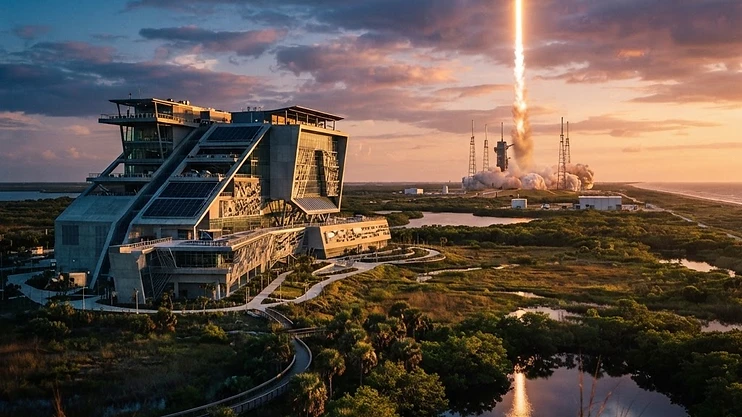
The proposal to relocate NASA headquarters from Washington, D.C., to Florida’s Space Coast is more than just a political maneuver; it is a fundamental challenge to the status quo of federal aerospace policy.
The proposal to relocate NASA headquarters from Washington, D.C., to Florida’s Space Coast, known as the Cape Canaveral Act, is more than just a political maneuver; it is a fundamental challenge to the status quo of federal aerospace policy. By seeking to place the agency’s leadership in the heart of its most active launch site, proponents argue that the move would increase operational efficiency, foster closer collaboration with the private sector, and solidify the region’s position as the nation’s undisputed aerospace hub. This proposal, backed by Senator Ashley Moody, reflects a growing sentiment that the future of space exploration is being written in the private sector, and that federal policy must adapt to this new reality.
For the Space Coast, the potential relocation of NASA headquarters would be a transformative event. It would bring a massive influx of federal resources, high-level decision-makers, and a new layer of prestige to the region. However, it also raises significant questions about the role of government in an increasingly commercialized space industry. If the agency is physically embedded in the hub of private aerospace activity, how will it balance its regulatory responsibilities with its role as a partner to the companies it oversees? This is the central tension that will define the debate over the Cape Canaveral Act in the coming months.
For business leaders in Melbourne, Viera, and the surrounding areas, the potential move is a double-edged sword. On one hand, it promises unprecedented access to federal decision-makers and a massive boost to the local economy. On the other hand, it could lead to increased regulatory scrutiny and a shift in the regional focus toward federal priorities. As the debate unfolds, it is essential for local organizations to understand the potential impacts and to engage in the conversation, ensuring that the interests of the local aerospace community are represented at the highest levels of government.
What happened
In September 2026, Senator Ashley Moody introduced legislation aimed at bringing the U.S. Space Academy to Florida’s Space Coast, a move that is part of a broader effort to strengthen the region’s position as the nation’s aerospace hub. This proposal is accompanied by the Cape Canaveral Act, which seeks to relocate NASA headquarters from Washington, D.C., to the Space Coast. These initiatives are being driven by the region’s phenomenal growth, with the Space Coast recording 109 launches in 2025, nearly triple the number from previous years. The goal is to leverage this momentum to create a more integrated and efficient aerospace ecosystem.
Senator Moody’s proposals have sparked a significant debate about the future of federal aerospace policy. Proponents argue that moving NASA headquarters would bring the agency closer to the action, allowing for faster decision-making and better collaboration with the private sector. They point to the success of the Space Coast’s existing aerospace ecosystem as evidence that the region is the natural home for the nation’s space agency. Opponents, however, raise concerns about the logistical challenges of such a move, as well as the potential for political influence to interfere with the agency’s mission.
The debate is also being shaped by the broader context of the global space race. With other countries and private companies rapidly advancing their space capabilities, there is a sense of urgency to ensure that the U.S. remains at the forefront of innovation. The Cape Canaveral Act is seen by its supporters as a necessary step to modernize the nation’s space policy and to ensure that the U.S. can maintain its competitive edge. As the legislation moves through the political process, it will be closely watched by stakeholders across the aerospace industry, from major contractors to small startups.
Why it matters
The potential relocation of NASA headquarters to the Space Coast would be a seismic shift in the landscape of the U.S. aerospace industry. It would fundamentally change the relationship between the federal government and the private sector, creating a more direct and integrated partnership. This would have significant implications for the way that space missions are planned, funded, and executed, and it would likely lead to a more agile and responsive aerospace policy.
In two to three years, we expect to see a significant increase in the influence of the Space Coast on federal aerospace policy. If the Cape Canaveral Act is passed, the region will become the center of gravity for the nation’s space program, attracting top-tier talent, investment, and political attention. This will create a virtuous cycle of growth, as the presence of NASA headquarters will attract even more private companies and research institutions to the region, further cementing its status as the nation’s aerospace hub.
However, this shift also brings risks. The concentration of power in a single region could lead to a lack of diversity in the aerospace industry, and it could create a 'groupthink' mentality that stifles innovation. Furthermore, the logistical and political challenges of moving a federal agency are immense, and there is a real risk that the process could be disruptive and costly. The success of the move will depend on the ability of the government to manage the transition effectively and to ensure that the agency’s mission remains the top priority.
The breakdown
- Operational efficiency and proximity: The primary argument for moving NASA headquarters is that it would bring the agency’s leadership closer to the launch sites and manufacturing facilities. This would allow for faster decision-making and better collaboration with the private sector, which is essential for maintaining a competitive edge in the global space race.
- Integration of public and private sectors: The move would create a more direct and integrated partnership between NASA and the private aerospace industry. This would allow for a more efficient allocation of resources and a more coordinated approach to space exploration, which is critical for achieving long-term goals.
- Economic impact on the Space Coast: The relocation would bring a massive influx of federal resources, high-level decision-makers, and prestige to the region. This would create thousands of jobs, attract new businesses, and stimulate further investment in infrastructure and education, making the Space Coast an even more attractive destination for the aerospace industry.
- Political and logistical challenges: The move would be a massive undertaking, with significant logistical and political challenges. There is a real risk that the process could be disruptive and costly, and it would require a high level of political will and coordination to succeed.
- Regulatory and mission-related concerns: There are concerns that the move could lead to increased regulatory scrutiny and a shift in the agency’s focus toward federal priorities. It is essential that the agency’s mission remains the top priority and that the move does not interfere with its ability to carry out its responsibilities.
- Impact on the broader aerospace industry: The move would have significant implications for the entire U.S. aerospace industry, from major contractors to small startups. It would change the way that space missions are planned, funded, and executed, and it would likely lead to a more agile and responsive aerospace policy.
- Long-term strategic implications: The move is a long-term strategic decision that will define the future of the U.S. space program. It is a bold move that reflects a growing sentiment that the future of space exploration is being written in the private sector, and that federal policy must adapt to this new reality.
Key takeaways
- The Cape Canaveral Act proposes moving NASA headquarters to the Space Coast to increase efficiency and collaboration.
- The move would be a transformative event for the region, bringing federal resources and prestige.
- The proposal reflects a shift toward a more private-sector-led space industry.
- There are significant logistical and political challenges to the move that must be addressed.
- The move would fundamentally change the relationship between the federal government and the private aerospace industry.
Our view
We believe that the Cape Canaveral Act is a necessary and overdue step in the modernization of U.S. space policy. The current model of having NASA headquarters in Washington, D.C., while the action happens on the Space Coast, is a relic of a bygone era. We expect that the move will be highly disruptive in the short term, but that it will ultimately lead to a more efficient and effective space program. The biggest mistake in the current debate is the focus on the logistical challenges rather than the strategic benefits of the move.
We believe that the move will be a catalyst for a new era of innovation in the aerospace industry. By bringing the agency’s leadership closer to the private sector, the move will foster a more collaborative and agile approach to space exploration. The winners in this transition will be the companies that can successfully navigate the new regulatory and partnership landscape. The losers will be those that cling to the old ways of doing business. The Space Coast is ready for this challenge, and we believe that it will emerge as the undisputed leader in the global space economy.
What to do about it
- Monitor the legislative process: Keep a close eye on the progress of the Cape Canaveral Act and the U.S. Space Academy proposal. These initiatives will have a significant impact on the future of the aerospace industry, and it is essential to stay informed.
- Engage with industry associations: Work with local and national aerospace associations to ensure that your organization’s interests are represented in the debate. This is a critical time to make your voice heard and to influence the direction of federal policy.
- Prepare for potential changes: If the move goes ahead, be prepared for significant changes in the regulatory and partnership landscape. This may require you to adjust your business strategy and to invest in new capabilities to remain competitive.
- Focus on long-term strategic planning: The move is a long-term strategic decision that will have lasting implications for the aerospace industry. Ensure that your organization’s long-term plans are aligned with the potential changes in the federal aerospace policy.
The bottom line
The Cape Canaveral Act represents a bold and necessary step toward modernizing U.S. space policy. By seeking to relocate NASA headquarters to the Space Coast, the legislation aims to create a more integrated and efficient aerospace ecosystem that is better equipped to meet the challenges of the 21st century. While the move would be a massive undertaking with significant logistical and political hurdles, the potential benefits for the region and the nation are immense. For businesses in the aerospace sector, this is a time of great uncertainty but also of great opportunity. Those who can adapt to the changing landscape and align their strategies with the new reality will be the ones to thrive in the future of space exploration.