


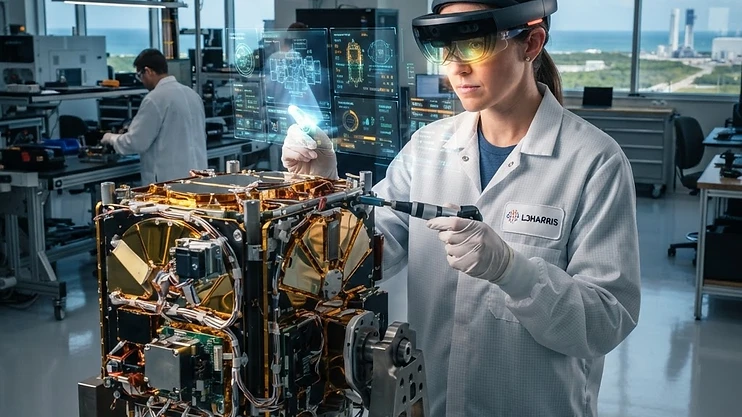
The goal of these AI tools is to empower the existing workforce, not replace it.
The integration of Artificial Intelligence into operational workflows is no longer a theoretical exercise for businesses in Melbourne; it is a competitive necessity. As the region’s industrial base expands, the complexity of managing infrastructure—whether it be satellite production lines, defense systems, or commercial cloud networks—has outpaced traditional human-centric management models. The solution, increasingly, is the deployment of AI-driven maintenance and analytics platforms that can predict failures before they occur and optimize performance in real-time.
This shift is particularly evident in the way local firms are approaching the 'maintenance gap.' In industries where downtime is measured in thousands of dollars per minute, the ability to move from reactive to predictive maintenance is the difference between market leadership and obsolescence. Melbourne has become a surprising hotbed for this type of innovation, with companies developing sophisticated AI SaaS solutions that are being adopted not just locally, but by global enterprises looking to streamline their own operations.
For the business leader in Viera or Melbourne, the lesson is clear: the data you are already collecting is a goldmine, provided you have the right AI tools to extract value from it. The current wave of AI adoption is not about replacing human expertise; it is about augmenting it with the speed and precision of machine learning. As we move into the latter half of 2026, the organizations that successfully integrate these AI-driven maintenance and analytics engines will be the ones that define the next decade of operational excellence on the Space Coast.
What happened
The landscape of AI adoption in Melbourne has been significantly bolstered by the presence of specialized firms that are pushing the boundaries of machine learning in industrial settings. Companies like LexX Technologies, which has a presence in the region, are revolutionizing maintenance by using AI to interpret complex technical documentation and provide real-time guidance to technicians. This is a critical development for the aerospace and defense sectors, where the sheer volume of technical manuals and maintenance protocols can be overwhelming for even the most experienced personnel.
Furthermore, the PI.EXCHANGE AI & Analytics Engine has emerged as a key tool for local businesses, allowing even non-technical users to build high-performance machine learning applications. This democratization of AI is enabling small-to-medium enterprises in the Melbourne area to implement predictive maintenance models that were previously the exclusive domain of large corporations with massive data science teams. These tools are being applied across a variety of sectors, from chemical processing to cloud infrastructure management, proving that the 'AI-first' approach is applicable far beyond the tech sector. The rapid adoption of these technologies is being driven by a clear ROI: reduced downtime, lower maintenance costs, and increased operational longevity for critical assets.
Why it matters
The deeper significance of this trend lies in the shift from 'human-in-the-loop' to 'AI-augmented' operations. In the past, maintenance was a reactive process: something breaks, you fix it. Today, the goal is to ensure that something never breaks in the first place. This requires a massive amount of data processing and pattern recognition that is simply beyond human capability. By deploying AI-driven maintenance platforms, companies in Melbourne are effectively creating a 'digital nervous system' for their operations, where every sensor, every log, and every maintenance record is analyzed in real-time to predict potential failures.
This has profound second-order consequences. First, it changes the nature of the workforce. Technicians are becoming 'AI-operators,' spending less time performing manual diagnostics and more time interpreting the insights provided by the AI. Second, it creates a new layer of intellectual property for local firms. The data models developed to maintain a specific type of satellite component or a unique manufacturing process become valuable assets in their own right. In two to three years, we expect to see a 'maintenance-as-a-service' market emerge, where companies in Melbourne export their AI-driven operational expertise to global clients. Those who fail to adopt these tools will find themselves at a significant cost disadvantage, as their competitors achieve higher uptime and lower operational overhead through the power of machine learning.
The breakdown
- Predictive Maintenance Models: By analyzing historical data and real-time sensor inputs, AI platforms can predict when a component is likely to fail. This allows for maintenance to be scheduled during planned downtime, preventing costly, unexpected outages in critical aerospace and manufacturing environments.
- Democratization of AI: Tools like the PI.EXCHANGE AI & Analytics Engine are lowering the barrier to entry for AI adoption. This allows smaller businesses in Melbourne to leverage machine learning without needing a massive investment in specialized data science talent.
- Knowledge Management: AI platforms like those from LexX Technologies are transforming how technical knowledge is accessed and applied. By digitizing and indexing vast libraries of maintenance manuals, these tools provide technicians with instant, accurate guidance, reducing errors and training time.
- Operational Efficiency Gains: The primary driver for AI adoption is the measurable improvement in operational efficiency. Companies are reporting significant reductions in downtime and maintenance costs, which directly impacts the bottom line and increases competitiveness.
- Data-Driven Decision Making: AI-driven analytics are moving decision-making from intuition to evidence-based. Leaders can now see the 'health' of their entire operation in real-time, allowing for more strategic allocation of resources and capital.
- Workforce Augmentation: The goal of these AI tools is to empower the existing workforce, not replace it. By automating the routine and data-heavy aspects of maintenance, employees can focus on higher-value tasks that require human judgment and creativity.
- Scalability and Flexibility: Modern AI platforms are designed to be scalable, allowing businesses to start with a small pilot project and expand as they see results. This flexibility is crucial for companies in the fast-paced environment of the Space Coast.
Key takeaways
- AI-driven maintenance is moving from a 'nice-to-have' to a 'must-have' for operational efficiency.
- Melbourne is becoming a hub for AI-powered industrial maintenance solutions.
- Democratized AI tools are allowing smaller firms to compete with larger corporations.
- The focus is on augmenting human expertise, not replacing it.
- Early adopters of AI-driven maintenance will gain a significant competitive advantage in the coming years.
Our view
Most coverage of AI in the enterprise focuses on generative AI for content creation or customer service. We believe this misses the real story: the 'industrial AI' revolution. The most significant value of AI in the next five years will be in the physical world—maintaining machines, optimizing supply chains, and managing complex infrastructure. Melbourne is perfectly positioned to lead this charge because of its unique concentration of high-tech manufacturing and aerospace expertise.
We think the biggest mistake companies make is trying to build their own AI models from scratch. The winners will be those who integrate best-in-class, off-the-shelf AI platforms into their existing workflows. The 'build vs. buy' debate is over; in the world of industrial AI, you buy the platform and build the expertise to use it. We expect to see a surge in 'AI-native' maintenance firms in Melbourne that will eventually become the standard-bearers for operational excellence in the aerospace and defense sectors. The companies that ignore this shift will be left with legacy systems that are too expensive to maintain and too slow to compete.
What to do about it
- Identify your 'maintenance pain points': Start by identifying the areas of your operation where downtime is most costly and where data is currently underutilized.
- Pilot an AI-driven solution: Don't try to overhaul your entire operation at once. Choose a single, high-impact process and implement an AI-driven maintenance or analytics tool to test the results.
- Upskill your workforce: Invest in training your existing staff to work alongside AI tools. The goal is to create a team that is comfortable with data-driven decision-making.
- Focus on data quality: AI is only as good as the data it is fed. Ensure your systems are collecting clean, accurate, and consistent data from your machines and processes.
The bottom line
The AI-driven maintenance revolution is fundamentally changing how businesses in Melbourne operate. By leveraging machine learning to predict failures and optimize performance, local firms are setting a new standard for efficiency in complex industries. As this technology continues to mature, the gap between those who embrace AI and those who resist it will only widen. The future of the Space Coast is not just in the stars, but in the intelligent, automated systems that keep our industries running on the ground.