


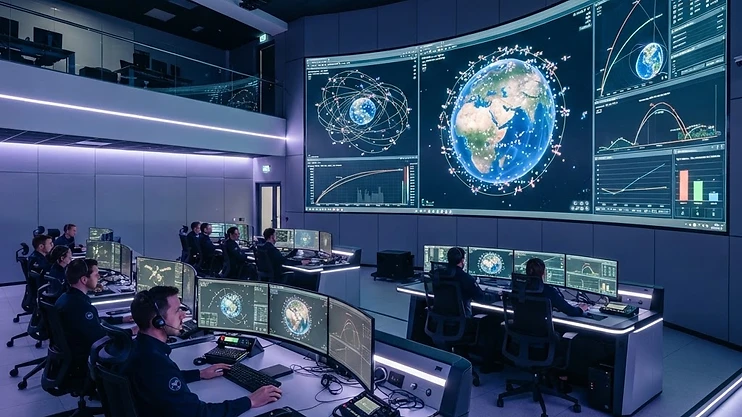
The integration of artificial intelligence into the aerospace and defense sectors on the Space Coast is no longer a theoretical exercise; it is a operational necessity.
The integration of artificial intelligence into the aerospace and defense sectors on the Space Coast is no longer a theoretical exercise; it is a operational necessity. As launch cadences hit triple digits and the complexity of in-space operations increases, the human-in-the-loop model is reaching its breaking point. In Melbourne and across the Space Coast, companies are now deploying AI to manage everything from autonomous refueling depots to the complex logistics of multi-provider launch traffic. This shift is fundamentally changing how we think about space operations, moving from a 'mission-by-mission' approach to a continuous, automated flow of activity.
This technological leap is being driven by a unique combination of local expertise and the urgent need for efficiency. With major employers like L3Harris headquartered in Melbourne and a growing ecosystem of startups like Spargo Space, the region is uniquely positioned to lead the development of autonomous space systems. The challenge, however, is that this AI-driven future requires a level of digital infrastructure and cybersecurity that many traditional aerospace firms are only just beginning to build. The transition to an AI-first operational model is not just about software; it is about re-engineering the entire aerospace stack to be data-centric.
For the organizations operating in Viera, Melbourne, and the surrounding tech corridors, the implications are clear: the ability to leverage AI for operational efficiency will be the primary differentiator in the coming years. As we look toward 2027, the companies that can successfully integrate AI into their core workflows—whether in manufacturing, logistics, or mission control—will be the ones that dominate the Space Coast's next phase of growth. This is the new frontier of the space economy, and it is being written in code as much as it is in rocket fuel.
What happened
The Space Coast has seen a surge in AI-focused aerospace activity, driven by both established defense contractors and a new wave of deep-tech startups. In Melbourne, companies like Spargo Space are pioneering autonomous in-space refueling depots, a critical technology for long-duration space missions that relies heavily on AI for docking and fuel transfer. Simultaneously, the broader aerospace industry is grappling with the challenge of managing record-breaking launch volumes. SpaceX, for instance, has been working with federal partners to develop systems that allow launch sites to operate more like airports, using AI to manage airspace and minimize disruptions. This is supported by state-level initiatives, such as the Space Florida–Israel Innovation Partnership, which has awarded hundreds of thousands of dollars to advance autonomous traffic management technologies. These efforts are not happening in a vacuum; they are part of a broader push to modernize the region's aerospace infrastructure. The integration of AI is also extending to the defense sector, where companies like L3Harris are leveraging their deep expertise in communications and sensor systems to develop AI-driven solutions for the Navy, Marine Corps, and Coast Guard. This convergence of AI, autonomous systems, and defense technology is creating a new, highly specialized sector within the local economy that is attracting significant venture capital and state support.
Why it matters
The deeper significance of this AI integration is the shift toward 'autonomous space operations.' For decades, space missions were characterized by high-touch, manual control. As we move toward a future of frequent, multi-provider launches, this model is unsustainable. AI is the only way to scale these operations. The second-order consequence is a massive increase in the demand for high-bandwidth, low-latency data infrastructure on the ground. Companies that can provide the 'plumbing' for this AI-driven future—secure cloud networks, edge computing, and advanced cybersecurity—will become as important as the rocket manufacturers themselves. Furthermore, this shift threatens traditional aerospace firms that are slow to adopt AI, as they will be unable to compete with the operational efficiency of their more agile, AI-native counterparts. In 2-3 years, we expect to see a 'Space Coast AI Stack' emerge, where local firms provide a standardized set of tools for autonomous mission management, refueling, and logistics. This will create a new layer of the local economy that is less dependent on the physical launch and more focused on the digital management of space assets. The winners will be the firms that can bridge the gap between traditional aerospace engineering and modern software development, a skill set that is currently in high demand in Melbourne and Viera.
The breakdown
- Autonomous refueling as a catalyst: The development of autonomous refueling depots, such as those being built by Spargo Space, is a game-changer for the space economy. By enabling in-space refueling, these systems extend the life of satellites and enable more ambitious missions, all while relying on AI to handle the complex docking maneuvers.
- The 'Airport-style' launch model: As SpaceX and other providers move toward a high-cadence launch model, the use of AI to manage airspace and ground operations is essential. This shift is forcing a rethink of how we manage the entire launch ecosystem, from scheduling to safety protocols.
- Defense-sector AI integration: The work being done by companies like L3Harris to integrate AI into defense systems is a critical component of the region's economic strength. By applying AI to communications and sensor data, these firms are providing the military with a significant tactical advantage.
- State-backed innovation programs: The Space Florida–Israel Innovation Partnership is a prime example of how state-level funding can catalyze high-tech development. By focusing on autonomous traffic management, these programs are addressing the most pressing challenges of the new space economy.
- The need for edge computing: As space assets become more autonomous, the need for edge computing on the ground increases. This creates a massive opportunity for local cloud and network infrastructure providers to build the secure, low-latency networks that these systems require.
- Cybersecurity as a core competency: With the increased reliance on AI and autonomous systems, cybersecurity is no longer an 'add-on'—it is a core requirement. Firms that can provide secure, AI-hardened systems will be the most sought-after partners in the aerospace and defense sectors.
- The talent gap: The biggest challenge to this AI-driven future is the shortage of talent that understands both aerospace engineering and AI. This is a major opportunity for local universities and technical colleges to pivot their curricula to meet this demand.
Key takeaways
- AI is becoming the operational backbone of the Space Coast, enabling autonomous refueling and high-cadence launch management.
- The shift toward autonomous space operations is creating a new, high-value sector focused on digital mission management.
- Local defense contractors are leading the way in integrating AI into communications and sensor systems.
- Cybersecurity and edge computing are the critical infrastructure components of the AI-driven space economy.
- The talent gap in AI-aerospace engineering is the primary bottleneck to growth and a major opportunity for local education.
Our view
Most coverage of AI in aerospace focuses on the 'cool' factor of autonomous rockets, but the real story is the boring, essential work of operational integration. We believe that the Space Coast is on the verge of becoming the world's leading hub for autonomous space operations. The companies that are currently building the AI-driven infrastructure for refueling and traffic management will be the 'Intel' of the space economy—the essential, behind-the-scenes providers that every other company relies on. The biggest mistake local businesses can make is to treat AI as a separate 'IT project.' It must be integrated into the core of every aerospace and defense operation. We expect that within three years, the firms that have successfully made this transition will be the dominant players in the region, while those that have not will be struggling to compete with the efficiency and speed of their AI-native rivals. The future of the Space Coast is not just in the sky; it is in the code that manages it.
What to do about it
- Prioritize AI integration: If you are in the aerospace or defense sector, start by identifying the most manual, repetitive processes in your operations and look for ways to automate them with AI. This is the first step toward building an AI-first organization.
- Invest in cybersecurity: As your operations become more reliant on AI and autonomous systems, your attack surface will grow. Invest in robust, AI-hardened cybersecurity solutions to protect your intellectual property and operational integrity.
- Build a data-centric culture: AI is only as good as the data it is trained on. Start building the infrastructure to collect, store, and analyze the data generated by your operations, as this will be your most valuable asset in the coming years.
- Partner with local tech firms: Don't try to build everything in-house. Partner with local startups and tech firms that specialize in AI and autonomous systems to accelerate your development and gain access to cutting-edge technology.
The bottom line
The integration of AI into the Space Coast's aerospace and defense sectors is a fundamental shift that will define the region's economic future. By embracing autonomous systems and AI-driven operations, local companies are positioning themselves at the forefront of the global space economy. For those who can successfully navigate this transition, the rewards will be significant. The future of the Space Coast is being written in code, and the time to start building is now.