


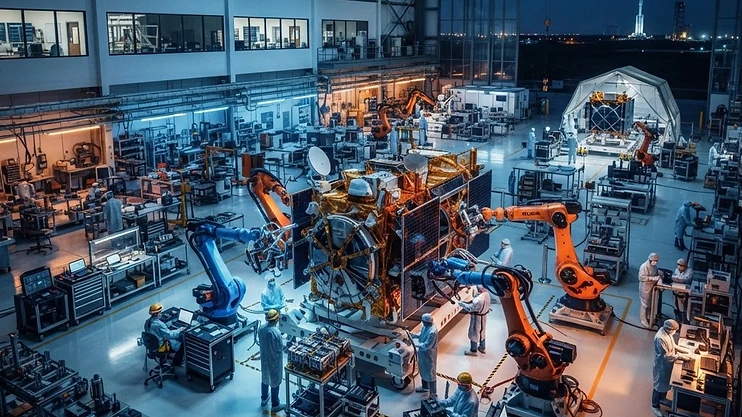
Argotec is a strong indicator of the gravitational pull to the Space Coast.
The landscape of Florida’s Space Coast is undergoing a structural transformation that transcends the traditional rhythm of rocket launches. While the roar of engines at Kennedy Space Center remains the region's heartbeat, a new, quieter, and more permanent industrial revolution is taking root in the business parks of Melbourne and Viera. This shift is defined by the arrival of high-scale manufacturing facilities and the integration of international aerospace players into the local ecosystem, signaling that the region is no longer just a place to launch hardware, but a place to build it at scale.
This evolution is not merely a matter of local economic development; it represents a fundamental change in how the United States approaches the aerospace supply chain. By clustering production facilities, research institutions, and venture capital in close proximity to the launch pads, companies are drastically reducing the friction of the 'factory-to-pad' pipeline. For organizations operating in Melbourne, this means the local economy is becoming increasingly insulated from the volatility of global logistics, creating a self-sustaining hub of deep-tech innovation that is attracting talent and capital from across the globe.
As we look toward the end of 2026, the implications for local businesses are profound. The influx of thousands of high-paying jobs, as evidenced by the recent expansion announcements from major players like Relativity Space, is creating a ripple effect that touches everything from cloud infrastructure requirements to the demand for specialized cybersecurity services. This is the new reality of the Space Coast: a high-velocity, high-stakes environment where the proximity to the stars is matched by the intensity of the industrial activity on the ground.
What happened
The recent surge in industrial activity on the Space Coast has been marked by several high-profile commitments that solidify Melbourne’s status as a premier aerospace hub. In July 2026, Relativity Space announced a massive expansion plan for the Florida coast, a move projected to create thousands of high-paying jobs over the next eight years. This expansion is not just about headcount; it is about establishing a permanent, large-scale manufacturing footprint that leverages the unique logistical advantages of the region. This follows the April 2026 inauguration of Argotec’s first U.S.-based satellite production facility in Melbourne, a strategic move by the Italian aerospace firm to be closer to its primary U.S. government and commercial customers.
These developments are supported by a broader trend of international and domestic collaboration. Space Florida, the state’s aerospace economic development agency, has been instrumental in facilitating these moves, including a recent agreement with the United Kingdom’s Department for Science, Innovation and Technology to fund joint aerospace research. The Economic Development Commission (EDC) of Florida’s Space Coast has been the primary engine behind this 'gravitational pull,' as CEO Lynda Weatherman described it, ensuring that the infrastructure—from specialized manufacturing zones to workforce development programs—is ready to support these rapid, scalable satellite delivery requirements. The presence of established giants like L3Harris Technologies in Melbourne provides a stable foundation, while newer entrants like Argotec and the growing interest from venture groups like New World Angels, which recently launched a Space Coast chapter, create a vibrant, multi-layered ecosystem.
Why it matters
The structural shift occurring in Melbourne is a move toward 'localized vertical integration.' Historically, aerospace manufacturing was fragmented, with components built in disparate states and shipped to the coast for final assembly. By bringing the entire production cycle—design, manufacturing, testing, and launch—into a single geographic corridor, companies are achieving unprecedented speed-to-orbit. This is a direct response to the Pentagon’s push for 'spiral development,' where satellite constellations are refreshed regularly rather than built as one-off, exquisite assets. The Space Development Agency’s aggressive launch schedule for 2026 and 2027 requires a supply chain that can keep pace, and Melbourne is positioning itself as the only logical choice for that level of agility.
For the local economy, this means a transition from a service-based economy supporting launch operations to a high-tech manufacturing economy. The second-order consequences are significant: a massive increase in demand for specialized cloud infrastructure to manage satellite telemetry, a surge in the need for cybersecurity firms to protect dual-use technology, and a requirement for advanced automation in manufacturing. In two to three years, we expect to see a 'Space Coast Silicon Valley' effect, where the density of aerospace engineers and software developers creates a self-reinforcing cycle of startup formation. Companies that fail to adapt their digital infrastructure to support this high-velocity environment will find themselves sidelined as the region matures into a global aerospace nexus.
The breakdown
- Localized Supply Chain Density: The concentration of manufacturing facilities like Argotec’s satellite hub in Melbourne reduces the logistical complexity of satellite deployment. By eliminating the need for cross-country shipping of sensitive hardware, companies can iterate on designs faster and respond to mission requirements in weeks rather than months.
- Workforce Evolution: The influx of thousands of high-paying jobs from companies like Relativity Space necessitates a shift in local education and training. Florida Tech and other regional institutions are increasingly aligning their curricula with the specific needs of the aerospace and defense sectors to ensure a steady pipeline of talent.
- International Integration: The partnership between Space Florida and the UK’s Department for Science, Innovation and Technology highlights the global nature of the modern space economy. Melbourne is becoming a landing pad for international firms looking to access the U.S. market, which brings foreign direct investment and diverse engineering perspectives to the region.
- Venture Capital Maturation: The launch of the New World Angels Space Coast chapter is a critical development for the local startup ecosystem. By providing early-stage funding for space, satellite, and dual-use tech, this group is filling a vital gap that previously forced local innovators to look to Miami or Silicon Valley for capital.
- Infrastructure Scaling: The rapid growth of the aerospace sector is putting pressure on local cloud and network infrastructure. Businesses in Melbourne must invest in robust, low-latency connectivity to support the data-intensive nature of modern satellite operations and the digital twins used in advanced manufacturing.
- Defense-Commercial Synergy: The blurring lines between commercial space ventures and defense requirements are creating a unique market for dual-use technology. Companies that can navigate the regulatory landscape of both sectors are finding significant opportunities for growth in the Melbourne area.
- Regulatory Support: The proactive role of the EDC of Florida’s Space Coast in attracting and retaining aerospace firms is a key competitive advantage. By streamlining the permitting and site-selection process, the region is making it easier for companies to scale their operations quickly.
Key takeaways
- Melbourne is transitioning from a launch site to a full-cycle aerospace manufacturing hub.
- The arrival of major players like Relativity Space and Argotec is creating a high-density industrial ecosystem.
- Local businesses must upgrade their digital and cloud infrastructure to support the high-velocity demands of the aerospace supply chain.
- The emergence of local venture capital, such as New World Angels, is critical for sustaining the startup pipeline.
- Proximity to the Kennedy Space Center is now a strategic imperative for global aerospace firms.
Our view
Most analysts view the expansion of the Space Coast as a simple function of launch frequency. We believe this is a fundamental misunderstanding of the current trajectory. The real story is the 'industrialization of orbit' happening on the ground in Melbourne. We are witnessing the creation of a specialized manufacturing corridor that will eventually rival any aerospace cluster in the world. The winners in this transition will not be the companies that simply provide services to the launch pads, but those that integrate themselves into the digital and physical supply chains of the new space economy.
We expect to see a wave of consolidation in the local tech sector as smaller firms are acquired by larger aerospace contractors looking to 'buy' rather than 'build' their digital capabilities. Furthermore, the 'Space Coast' brand will become synonymous with high-tech manufacturing, not just tourism or launch viewing. The biggest risk for local organizations is complacency; assuming that the current growth is a temporary boom rather than a permanent structural shift. Those who invest in the infrastructure and talent required to support this new era will thrive, while those who remain tethered to the old model of the Space Coast will find themselves obsolete.
What to do about it
- Audit your digital infrastructure: Ensure your cloud and network capabilities can handle the high-bandwidth, low-latency requirements of modern aerospace data flows.
- Align with the aerospace supply chain: If you are a local service provider, identify how your offerings—whether in cybersecurity, logistics, or software—can be tailored to the specific needs of aerospace manufacturers.
- Invest in specialized talent: Partner with local universities like Florida Tech to create internship and recruitment pipelines that target the specific engineering skills required by the growing aerospace sector.
- Engage with local economic bodies: Stay connected with the EDC of Florida’s Space Coast to stay informed about upcoming infrastructure projects and partnership opportunities.
The bottom line
The transformation of Melbourne into a global aerospace manufacturing powerhouse is not a future possibility; it is a current reality. As companies like Relativity Space and Argotec solidify their presence, the region is establishing a new standard for industrial agility and innovation. For local businesses, the message is clear: the Space Coast is no longer just a place to watch history happen, but a place to build the future of the space economy. Those who adapt to this high-velocity environment will find themselves at the center of a new, thriving industrial era.