


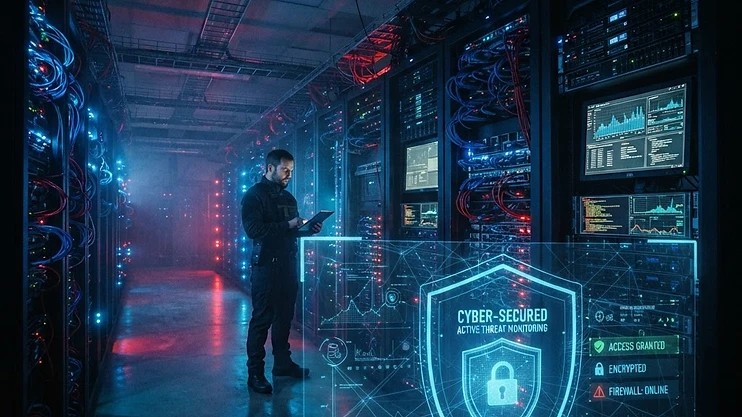
The security of this infrastructure is no longer just an IT concern; it is a matter of national security and economic stability for the entire region.
The rapid industrialization of the Space Coast, while a boon for the local economy, has introduced a new set of vulnerabilities that cannot be ignored. As Melbourne and Viera transform into a nexus of aerospace manufacturing and satellite operations, the underlying cloud and network infrastructure that supports these activities has become a prime target for state-sponsored actors and cybercriminals. The security of this infrastructure is no longer just an IT concern; it is a matter of national security and economic stability for the entire region.
This vulnerability is exacerbated by the highly interconnected nature of the modern aerospace supply chain. When a single manufacturer in Melbourne is compromised, the ripple effects can be felt across the entire global aerospace industry. This reality has forced local companies to rethink their approach to cybersecurity, moving away from traditional perimeter-based defenses toward a more robust, zero-trust architecture that assumes the network is already compromised. This shift is driving a new wave of investment in cybersecurity services and expertise within the region, creating a secondary market for security-focused tech firms.
For business leaders in the region, the message is clear: your security is only as strong as the weakest link in your supply chain. As we integrate more AI, cloud-based manufacturing, and real-time data processing into our operations, the attack surface grows exponentially. Protecting this infrastructure requires a proactive, collaborative approach that involves not just individual companies, but the entire regional ecosystem. Understanding the threats and implementing a comprehensive security strategy is now a fundamental requirement for doing business on the Space Coast.
What happened
The recent increase in cyber-threat activity targeting the aerospace and defense sectors has been well-documented, with reports of state-sponsored actors attempting to infiltrate the supply chains of major contractors. In October 2026, reports surfaced regarding the movement of U.S. bombers from the UK due to emerging threats, a reminder that the global security environment is increasingly volatile. Locally, companies like L3Harris Technologies, which has a significant presence in Melbourne, are constantly navigating this complex threat landscape. The company provides advanced defense and commercial technologies across space, air, land, sea, and cyber domains, making it a critical player in the regional security ecosystem.
Furthermore, the FAA’s recent policy changes regarding flight paths through space debris risk zones have highlighted the need for secure, reliable communication networks that can handle the increased complexity of orbital management. Any disruption to these networks, whether through cyber-attack or technical failure, could have catastrophic consequences for both commercial and government missions. The convergence of these factors has led to a heightened focus on cybersecurity among local industry bodies and government agencies. The Economic Development Commission of Florida’s Space Coast and other regional stakeholders are increasingly emphasizing the need for a secure, resilient infrastructure as a prerequisite for attracting and retaining high-tech companies in the region.
Why it matters
The structural change here is the recognition that cybersecurity is a foundational element of the Space Coast’s economic competitiveness. In the past, security was often treated as an overhead cost—a necessary evil to be managed at the lowest possible price. Today, it is a competitive advantage. Companies that can demonstrate a superior security posture are more likely to win government contracts and attract high-value commercial partners. This is leading to a "security-first" culture in the region’s tech sector, where security is integrated into the design phase of every product and service.
In the next two to three years, we expect to see a consolidation of the regional cybersecurity market, with smaller, specialized firms being acquired by larger players looking to bolster their security offerings. We also anticipate a greater emphasis on public-private partnerships to secure the region’s critical infrastructure, including power grids, data centers, and communication networks. Organizations that fail to prioritize security will find themselves increasingly excluded from the most lucrative contracts and partnerships. The long-term consequence is a more secure and resilient regional economy, but one that requires constant vigilance and investment to maintain.
The breakdown
- Supply chain security: The interconnected nature of the aerospace industry means that a breach in one company can compromise the entire supply chain. This requires a rigorous, end-to-end security strategy that includes all vendors and partners.
- Zero-trust architecture: The shift toward zero-trust models is essential for protecting sensitive data in a cloud-based, distributed environment. This approach assumes that no user or device is inherently trustworthy, regardless of their location.
- Public-private collaboration: Securing the region’s critical infrastructure requires a coordinated effort between local government, law enforcement, and private industry. This is the only way to effectively counter sophisticated, state-sponsored threats.
- Cybersecurity as a competitive advantage: Companies that invest in robust security are better positioned to win government contracts and attract high-value commercial partners. Security is now a key differentiator in the market.
- Talent shortage: The demand for cybersecurity professionals is far outstripping supply, creating a critical need for local training and certification programs. This is a major bottleneck for the region’s growth.
- Regulatory compliance: As the aerospace industry becomes more digital, the regulatory burden is increasing. Companies must stay ahead of these requirements to avoid costly fines and reputational damage.
- Resilience and recovery: It is not enough to prevent attacks; companies must also have robust plans for recovery in the event of a breach. This includes regular testing, backups, and incident response training.
Key takeaways
- Cybersecurity is now a foundational element of the Space Coast’s economic competitiveness.
- The interconnected nature of the aerospace supply chain makes every company a potential target.
- A zero-trust architecture is essential for protecting sensitive data in a modern, cloud-based environment.
- Public-private collaboration is critical for securing the region’s infrastructure against sophisticated threats.
Our view
Most companies in the region are still underestimating the threat. They view cybersecurity as an IT problem rather than a business-critical risk. We believe this is a dangerous oversight. The reality is that the Space Coast is a high-value target, and the threats are only going to become more sophisticated. We expect to see a major security incident in the region within the next two years that will serve as a wake-up call for the entire industry.
What most people get wrong is the idea that you can "buy" security. You cannot. Security is a process, not a product. It requires a cultural shift within the organization, where every employee understands their role in protecting the company’s assets. The winners in this new era will be the companies that treat security as a core value, not a checkbox. If you are a local business leader, you need to be asking yourself: "If we were compromised today, could we survive?" If the answer is no, you are already behind.
What to do about it
- Implement a zero-trust architecture: Move away from perimeter-based security and adopt a model that verifies every access request, regardless of where it originates.
- Conduct regular security audits: Don't wait for a breach to find your vulnerabilities. Regularly test your systems and processes to identify and address weaknesses.
- Invest in employee training: Your employees are your first line of defense. Provide regular, high-quality security training to ensure they can recognize and respond to potential threats.
- Build a culture of security: Make security a core value of your organization. Ensure that every employee, from the CEO down, understands the importance of protecting the company’s data and infrastructure.
The bottom line
The security of the Space Coast’s infrastructure is the bedrock upon which its future prosperity is built. As the region continues to grow as a global aerospace hub, the threats to its digital and physical assets will only increase. By prioritizing cybersecurity and fostering a culture of resilience, local businesses can turn this challenge into a competitive advantage. The time to act is now, before the next major threat emerges.